
...

By Hugh Cameron
Reporter
0
Share
Newsweek is a Trust Project member
See more of our trusted coverage when you search.Prefer Newsweek on Googleto see more of our trusted coverage when you search.
President Donald Trump is set to attend a dedication ceremony for the Theodore Roosevelt Presidential Library, honoring one of America’s most influential presidents while also inviting comparisons between the two leaders.
As the country marks its 250th anniversary on July 4, the Theodore Roosevelt Presidential Library in Medora, North Dakota, will open to the public as part of these semiquincentennial celebrations. Both Trump and Interior Secretary Doug Burgum, the state’s former governor, will be visiting the library on Wednesday.
The event will honor Roosevelt’s “enduring contributions to conservation, public service, American leadership, and the pioneering spirit that remains at the heart of the American story,” according to a press release from Freedom 250, the group set up by the administration to organize and promote this year’s anniversary events.
Read More on Politics
And while Trump shares some traits with the “Bull Moose," including their views on nationalism, executive power and a willingness to challenge political establishments, historians and advocacy groups have in recent days said that the current president’s record conflicts with many of Roosevelt's most notable positions, particularly when it comes to conservation and the treatment of public lands.
“President Trump is honoring Theodore Roosevelt's legacy by championing the kind of active stewardship that has always made America strong,” the White House told Newsweek on Wednesday. “America's public lands are a national treasure, not a museum. They should be protected, managed responsibly, and put to work for the American people through sustainable timber, grazing, energy production, recreation, and wildfire prevention.”
Where Donald Trump and Theodore Roosevelt Share Common Ground
Ideologically and in terms of political style, the two presidents find several areas of common ground.
Both were at times considered outsiders in Washington. Trump entered the political arena with no prior experience in office, and his anti-establishment, populist messaging has since reshaped the GOP and its electorate.
Roosevelt, meanwhile, broke entirely from the Republican establishment in 1912, forming the progressive “Bull Moose” party after an ideological split with his handpicked successor, William Howard Taft.
...
And as well as both being widely regarded as nationalists—"New Nationalism” being the basis of Roosevelt’s third-term campaign—the pair also share an expansionist view of presidential power.
Roosevelt saw the president as the “steward of the people,” who should be permitted to do “anything that the needs of the Nation demanded unless such action was forbidden by the Constitution or by the laws.”
Trump, meanwhile, has aggressively used executive orders when carrying out his agenda, while employing a maximalist interpretation of Article II of the Constitution and telling Axios in June that he had yet to encounter any “limits” on executive power.
And according to his interior secretary, both share a “conviction in American greatness” and the belief “that this nation’s finest age is yet to come.”

...
Trump's Conservation Agenda and Theodore Roosevelt's Legacy
The sharpest disconnect, according to critics and historians, is in the presidents’ approach to conservation and environmental stewardship.
“Roosevelt became the father of modern conservation,” the group Freedom 250 said last month, “protecting millions of acres of public lands, creating national parks and monuments, and establishing a legacy of stewardship that continues to preserve the natural birthright of every American citizen.”
During his 1901-1909 presidency, Roosevelt created five national parks, established 18 national monuments and protected an estimated 230 million acres of public land. This earned him the title of the "Conservation President," but conservation advocates have charged Trump with undermining what is considered the most enduring aspect of Roosevelt’s legacy.
“They are polar opposites on this score,” said Iwan Morgan, emeritus professor of United States Studies at University College London’s Institute of the Americas.
“Trump appears to believe in unrestrained development as essential for economic growth,” he told Newsweek. “Roosevelt sought to ensure that the new industrialization did not despoil the great outdoors.”

...
During his first and second terms, the president has significantly scaled down federal protections for national monuments, such as Bears Ears in Utah—established under former President Barack Obama using the Antiquities Act Roosevelt signed in 1906—whose size was reduced by 85 percent in 2017.
And while Roosevelt expanded the role of the federal government in conservation projects, strengthening agencies such as the United States Forest Service, the second Trump administration has moved to slash funding and staffing for the National Park Service.
The Impact of 'Drill Baby, Drill'
And conservation groups also argue that Trump's promotion of drilling and energy development—“drill baby, drill”—further threatens the federal lands that Roosevelt sought to protect.
“If we lose these places to oil and gas development, we forfeit a century-old legacy that we will not pass on to our grandchildren. We can’t let that happen on our watch,” said National Parks Conservation Association President Theresa Pierno, following the Trump administration’s 2025 order on “Unleashing American Energy.”
And in the lead-up to Wednesday’s event, critics have likewise accused the administration of “desecrating” this legacy.
“Teddy Roosevelt is the one who ended the Gilded Age, using his power to protect public lands and stop the exploitation of America’s natural resources,” Aaron Weiss, executive director of the Center for Western Priorities, told the North Dakota Monitor this week. “Donald Trump and Doug Burgum are using their power to do the opposite. They have taken every step imaginable to hand our public lands over to the industrialists who want to exploit America’s natural resources for private profit.”
“They’re coming to crown themselves the heirs of Theodore Roosevelt,” reads a post from the public lands advocacy project More Than Just Parks. “They’ve spent the last year taking his life’s work apart, piece by piece.”
“The Trump Department of the Interior believes conservation requires action, not abandonment,” the White House told Newsweek, in response to such criticisms. “Locking up public lands and refusing to manage them isn't stewardship, it's neglect. America's forests, rangelands, and natural resources deserve the same practical, results-driven leadership that defined Roosevelt's vision and helped build this nation.”
Related Story
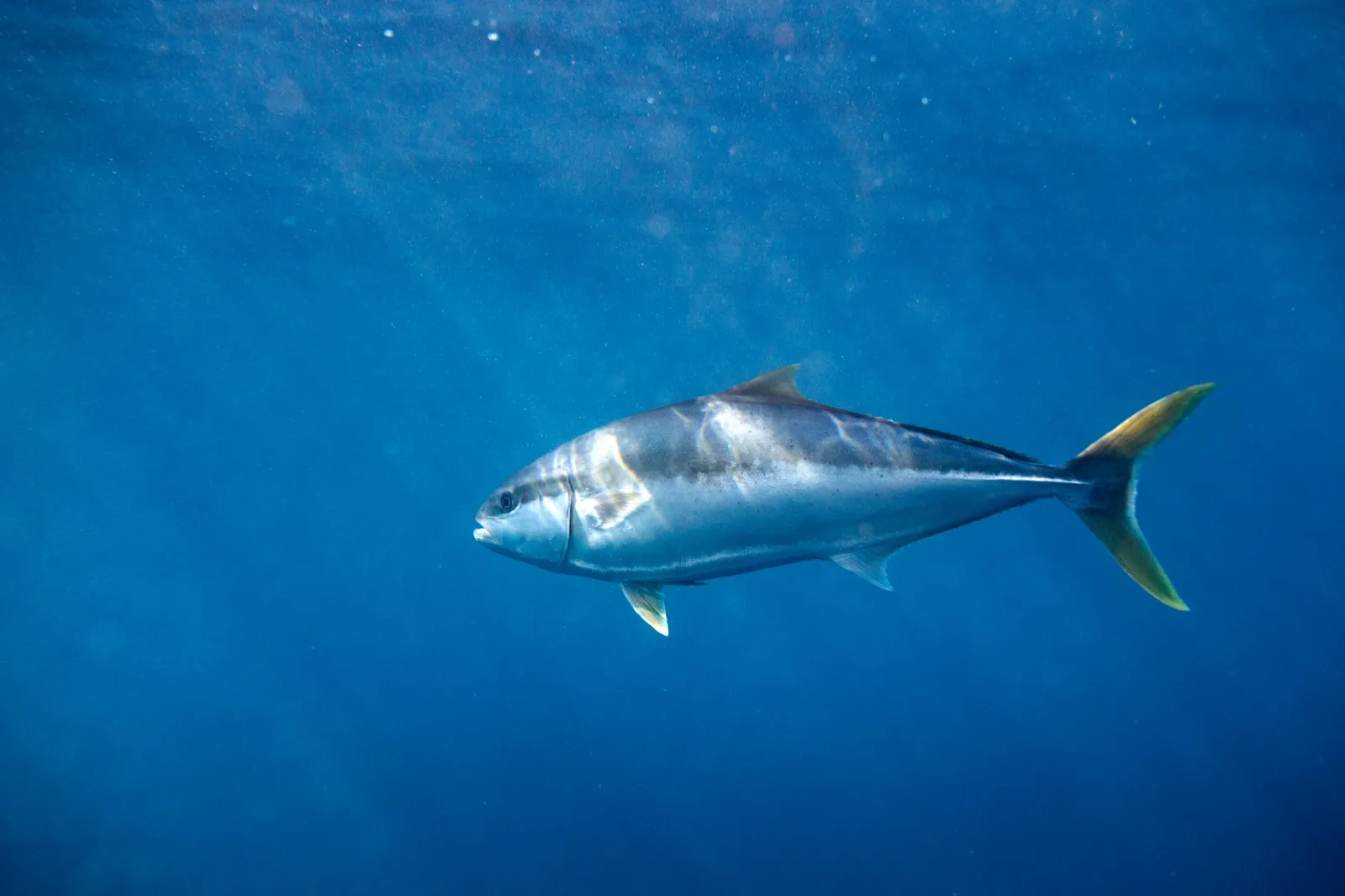
List of Protected Marine Areas Opened to Fishing Under Trump Order
Trump Offers a 'Mixed Bag' on Conservation
However, Joy Porter, a professor of Indigenous and Environmental History at the University of Birmingham in the United Kingdom, described Trump’s environmental and conservation legacy as a “mixed bag.”
She cited Operation Lady Justice, the president’s first-term effort to address the crisis of missing and murdered American Indians and Alaskan natives, as well as recently announced plans to phase out mammalian animal testing.
Porter also described the promotion of energy development on tribal lands as economically “game changing” for certain tribes.
But beyond personal likenesses—“big personalities” and a desire to be the “center of attention”—Porter said Trump is “not doing anything on the same scale” as Roosevelt when it comes to conservation, having also lifted protections on over 100 million acres of public lands across both terms.
And descendants of Roosevelt are likewise skeptical of an ideological affinity between the pair. Kermit Roosevelt III, an author, lawyer and great-great-grandson of the president, told Newsweek that his ancestor “believed Americans had a duty to preserve the great gifts nature has given us and to pass them on to future generations.”
“We should leave this land an even better land for our descendants than it is for us,” he said. “Wasteful use or exploitation of our natural resources is short-sighted selfishness that robs future generations.”
Supreme Court Decisions Reviving Debate Over the Civil Service
This week has also brought up another area of comparison between the two presidents.
On Monday, the Supreme Court significantly expanded presidential authority to remove leaders of independent agencies. In a 6-3 ruling, the court overturned a nearly century-old precedent which had protected members of independent regulatory commissions, such as the Federal Trade Commission (FTC), from removal by a president except for specific cause.
Roosevelt similarly sought and achieved an expansion of executive power over the federal workforce, while promoting the professionalization of a merit-based bureaucracy.

...
Where they differ, however, is in the perception of bureaucratic autonomy.
Roosevelt helped legitimize the idea that the federal government should be subject to independent regulators, experts and administrators. Trump, by contrast, has often argued that these institutions have accumulated too much independence and should be placed more firmly under presidential control.
“Roosevelt had an expansive view of presidential power but on a smaller scale than Trump's, saw his office as the steward of the popular will against private concentrations of economic and political power, and was respectful of the Constitution,” Morgan told Newsweek. “Like most early 20th century Progressives, he prized a politically neutral and competent civil service as essential for good government.”
“Trump wants to turn the executive branch into the vassal of his unitary presidency, to undermine the independence of regulatory commissions,” he continued, “and to gut the civil service in order to staff it with his loyalists regardless of their suitability for the posts they hold.”
As Trump helps dedicate a library honoring Roosevelt in North Dakota, debates over public lands, the federal workforce and presidential power are shaping Washington in ways that echo some of the same arguments Roosevelt confronted more than a century ago.
“I am happy that President Trump is attending the Library dedication because I think that Theodore Roosevelt’s life, work, and values have the potential to unite Americans across the political spectrum,” said Roosevelt III. “We all could learn a lot from him.”
Whether Trump is carrying forward Roosevelt's legacy or moving away from it may depend largely on which aspect of this legacy Americans choose to emphasize.
Contact Newsweek editors on this story: Daniel Orton, Edward Pearcey, and Sam Wilson.
View 0 Comments
Submit Correction
View Editorial & AI Guidelines