
Getty Images

By Hugh Cameron
Reporter
0
Share
Newsweek is a Trust Project member
See more of our trusted coverage when you search.Prefer Newsweek on Googleto see more of our trusted coverage when you search.
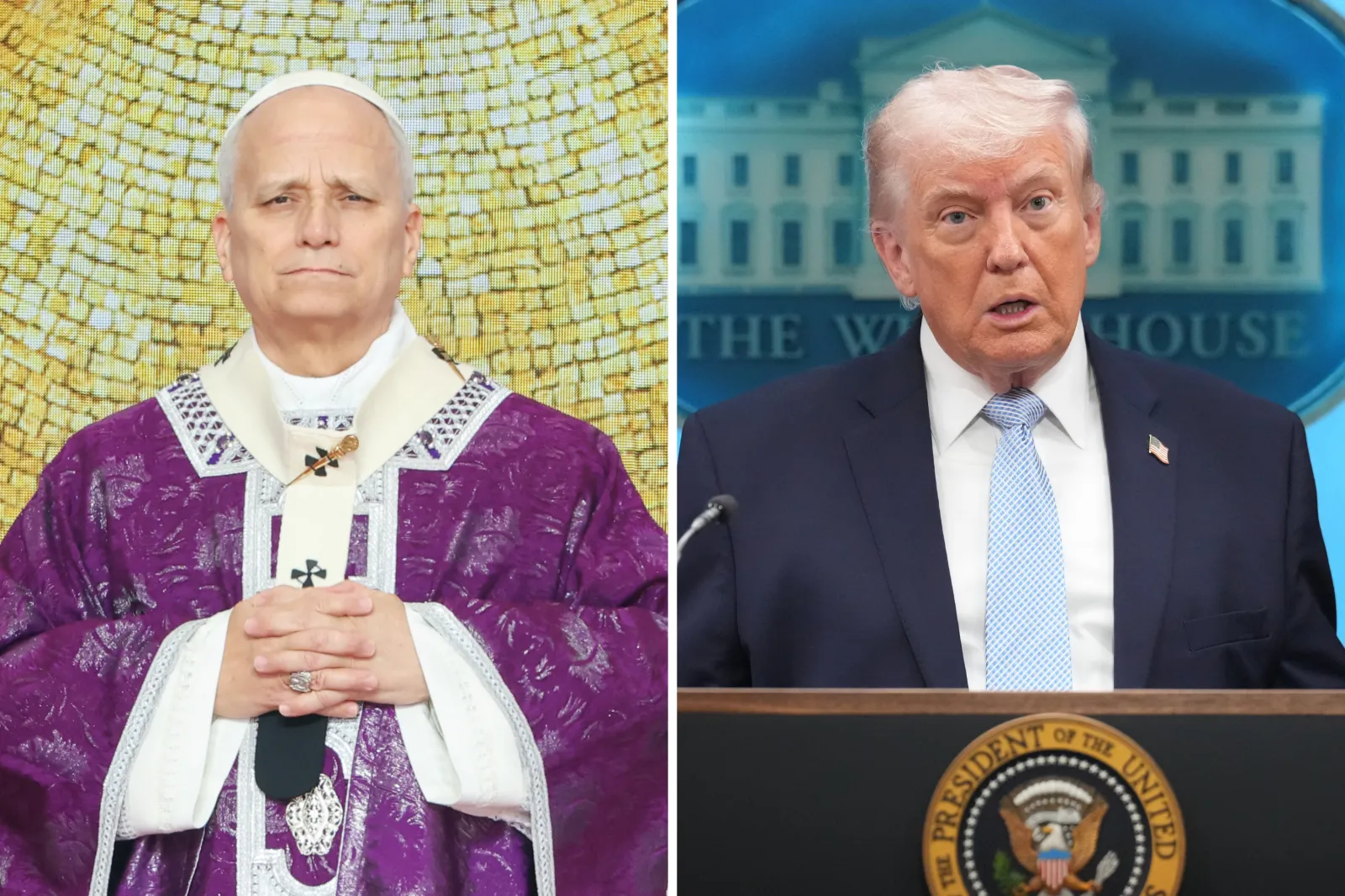
The growing tensions between the U.S. administration and the Vatican over the conflict in the Middle East may be creating new political risks for the GOP among Catholic voters, potentially adding to the challenges facing Republican candidates in tight 2026 midterm races.
Pope Leo XIV has emerged as a significant critic of President Donald Trump’s actions in the Iran war. In response to Trump saying the U.S. would wipe out “a whole civilization” if Tehran did not abide by his deadline to reopen the Strait of Hormuz, the pope called this threat “truly unacceptable,” and has routinely cautioned against bellicose rhetoric since the beginning of "Operation Epic Fury."
“What we can see already is that Pope Leo has been able to reunite around the Vatican position more bishops, even those who were more sympathetic to Donald Trump, because they have understood that MAGA now is different from MAGA before,” said Massimo Faggioli, a historian of the Catholic Church and professor of theology.
Read More on News
Tensions escalated after The Free Press reported that a closed‑door meeting between Vatican and Pentagon officials took place in January, during which U.S. officials lectured representatives of the Catholic Church. According to the outlet, one participant invoked the Avignon Papacy—a 14th‑century period when the French monarchy used military pressure to bend the papacy to its will—as a warning about American power, telling a cardinal that “America has the military power to do whatever it wants in the world” and that “the Catholic Church had better take its side.”
The Pentagon denied the account, telling Newsweek that the outlet’s characterization of the meeting was “highly exaggerated and distorted,” and describing the encounter instead as “a respectful and reasonable discussion” between U.S. and Vatican officials.
“It is not clear what will be the political impact of this stand-off on American Catholics,” Faggioli told Newsweek.
...
How Catholics Vote in the US
The Catholic vote in the U.S. has shifted considerably over time, the base being viewed as a core Democratic constituency for much of the 20th Century before emerging as a more politically diverse bloc since 2000.
Some 55 percent of Catholics supported Trump over then-Vice President Kamala Harris in 2024, according to Pew Research, marking a swing from the 2020 election when the group helped make Joe Biden the country’s second-ever Catholic commander-in-chief.
The base is far from homogenous, and elections like 2024 have shown that the contemporary position of the Holy See is insufficient to dictate how Catholics themselves vote in the U.S.—Trump’s victory coming despite years of clashes with Pope Francis and veiled critiques of his policies on immigration in particular.
However, Catholics make up a sizable share of the electorate in several of the most competitive Senate and House races on the 2026 ballot, meaning even small shifts could jeopardize GOP margins and have outsized effects in these close contests.
According to recent polling from Fox News, Trump’s own approval rating with the group now stands at 48 percent, with 52 percent saying they disapprove of the job he is doing as president. The shift comes amid heightened tensions between Washington and the Vatican, and represents a reversal from a February poll, also conducted by Fox News, that found 52 percent of Catholics approved and only 48 percent disapproved.
Which Midterm Races Are at Risk?
Newsweek examined several states and districts where races for the House or Senate are currently rated as battlegrounds or “toss-ups” by polling trackers such as 270toWin, and where a high proportion of Catholic residents could potentially shift the race if recent ideological tensions influence GOP voter behavior.
The districts and states are ranked according to both how close surveys suggest the races are, as well as the state’s Catholic population, employing estimates from the 2020 U.S. Census.
Competitive 2026 House Districts
Pennsylvania, Catholic population: 21.8 percent
- PA‑07 – Incumbent: Ryan Mackenzie (R)
- PA‑08 – Incumbent: Rob Bresnahan (R)
- PA‑01 – Incumbent: Brian Fitzpatrick (R)
Michigan, Catholic population: 14.8 percent
- MI‑07 – Incumbent: Tom Barrett (R)
- MI‑08 – Incumbent: Kristen McDonald Rivet (D)
- MI‑10 – Open
Wisconsin, Catholic population: 21 percent
- WI‑03 – Incumbent: Derrick Van Orden (R)
New York, Catholic population: 30.6 percent
- NY‑17 – Incumbent: Michael Lawler (R)
- NY‑19 – Incumbent: Josh Riley (D)
- NY‑03 – Incumbent: Tom Suozzi (D)
- NY-04 – Incumbent: Laura Gillen (D)
New Jersey, Catholic population: 31.9 percent
- NJ‑07 – Incumbent: Tom Kean (R)
- NJ-09 – Incumbent: Nellie Pou (D)
Texas, Catholic population: 20.3 percent
- TX‑34 – Incumbent: Vicente Gonzalez (D)
- TX-35 – Incumbent: Greg Casar (D)
Senate Battlegrounds
Ranked according to whether these are classed as “toss-up” races or only leaning toward one party in the upcoming elections by 270toWin.
- Michigan, Catholic population: 14.8 percent
- Maine, Catholic population: 16.1 percent
- North Carolina, Catholic population: 8.9 percent
- Georgia, Catholic population: 8.4 percent
- Ohio, Catholic population: 15.4 percent
- Alaska, Catholic population: 5.5 percent
- New Hampshire, Catholic population: 16 percent
What People Are Saying
White House spokesperson Davis Ingle, in response to recent national polling on Trump’s approval among Catholics, told Newsweek: "What matters most to the American people is having a Commander-in-Chief who takes decisive action to eliminate threats and keep them safe, which is exactly what President Trump did with the successful Operation Epic Fury.”
Pope Leo XIV, speaking to reporters early this week, said: “I would simply say…asking all people of good will to search always for peace and not violence; to reject war, especially a war which many people have said is an unjust war, which is continuing to escalate, and which is not resolving anything.”
“We have a worldwide economic crisis, energy crisis, and a situation in the Middle East of great instability, which is only provoking more hatred throughout the world,” he added.
What Happens Next
The U.S. and Iran agreed to a two-week ceasefire on Tuesday evening, hours before Trump's deadline expired for the country to reopen the Strait of Hormuz or else “all Hell will reign down on them.”
The Strait remains largely closed to most ships, missile strikes are ongoing throughout the regions, and both sides have accused the other of violating the terms of the truce.
However, Pope Leo praised the nations for easing away from recent tensions.
"In the wake of these hours of great tension for the #MiddleEast and the entire world, I welcome with satisfaction −and as a sign of living hope − the announcement of an immediate two-week truce. Only by returning to negotiations can the war come to an end,” his official X account posted on Wednesday.
In a polarized era, the center is dismissed as bland. At Newsweek, ours is different: The Courageous Center—it's not "both sides," it's sharp, challenging and alive with ideas. We follow facts, not factions. If that sounds like the kind of journalism you want to see thrive, we need you.
When you become a Newsweek Member, you support a mission to keep the center strong and vibrant. Members enjoy: Ad-free browsing, exclusive content and editor conversations. Help keep the center courageous. Join today.


View 0 Comments
Submit Correction
View Editorial & AI Guidelines