...

By Daniella Gray
Reporter
0
Share
Newsweek is a Trust Project member
See more of our trusted coverage when you search.Prefer Newsweek on Googleto see more of our trusted coverage when you search.
Immigration and Customs Enforcement (ICE) has become an unavoidable part of the national conversation in America.
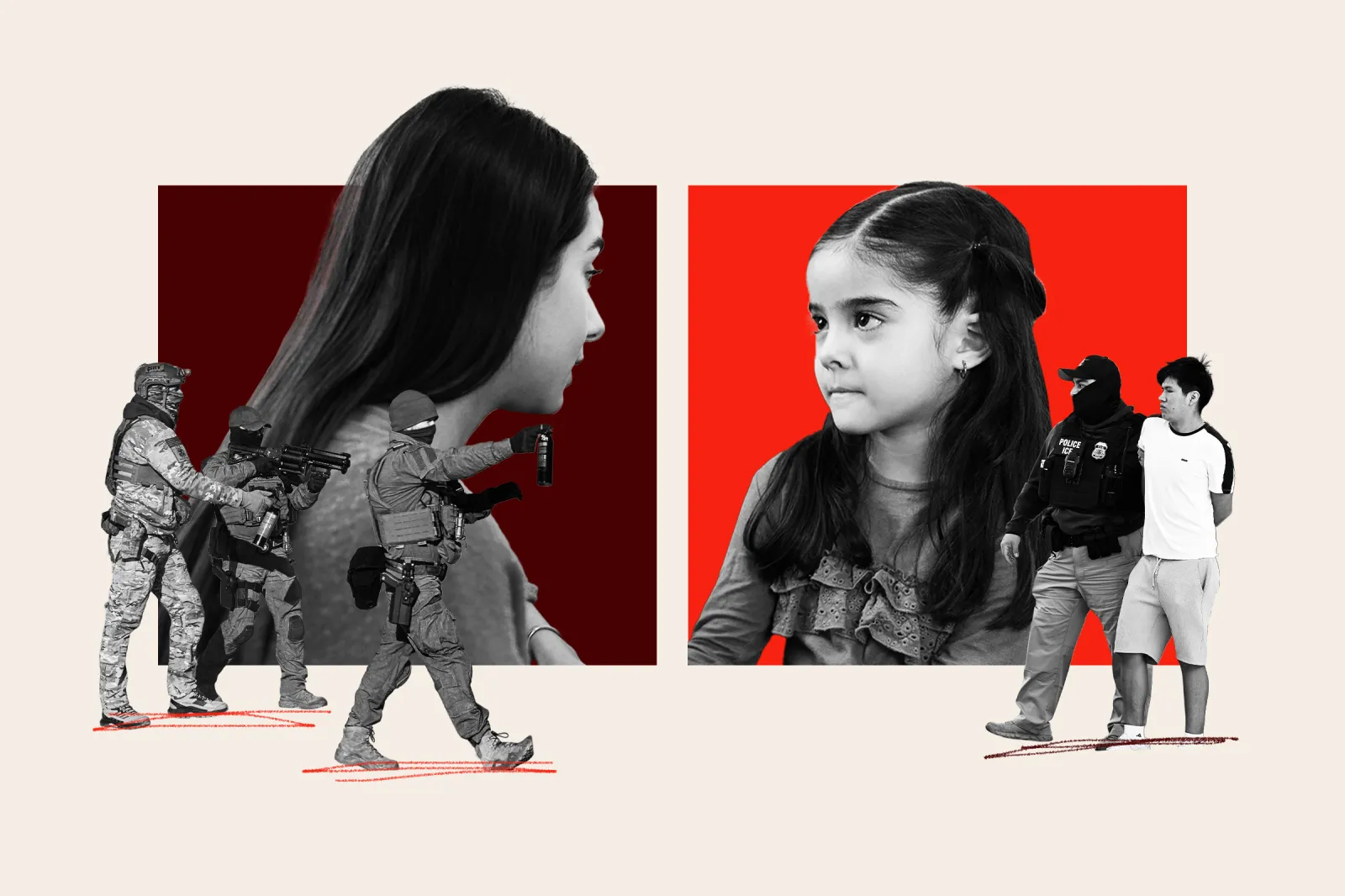
Your kids may have seen social media footage of fatal shootings, agents making arrests and protests outside detention centers which have surfaced in the last week.
That exposure can spark confusion, fear or questions from children who may not fully understand what they’re seeing. So, how can you talk to them about it?
Read More on Family & Parenting
...
Dr. Anna Batho, a clinical psychologist working in critical care, said avoidance is often the wrong approach.
“It's much better to talk about something distressing than [pretending] it isn't happening,” she told Newsweek. “Kids of even young ages pick up on cues everywhere, so talking about it sensibly is a better idea than brushing it under the carpet.”
Timing is key. Batho advised choosing a moment when everyone is relaxed and has time to talk. If you’re not used to having deep and meaningful conversations with your child, she suggested starting with something familiar, such as walking or playing with toys.
Rather than launching into an explanation, parents should start by listening. Ask children what they already know or think about ICE or the videos they’ve seen.
“They might have a good grasp and may be taking it in their stride quite easily,” Batho said. “Be curious.” At the same time, she cautioned against forcing the conversation if a child isn’t interested or doesn’t seem concerned.
When explanations are needed, clarity matters. Adjust language to the child’s age, but avoid euphemisms or metaphors that may cause further confusion. “Keep it simple, but keep it concrete,” Batho said.
After explaining, follow up and check in. “Ask them how they're feeling about it, and try to validate their feelings,” Batho said. “I would ask them if there's anything they're worried about.”
If reassurance is needed, she recommended grounding it in facts. For example, if a child fears a parent could be harmed by ICE, explain concretely why that isn’t likely, based on real circumstances, and then check that the explanation made sense to them.
Equally important is keeping the door open. “Reinforce talking openly and honestly,” Batho said. “Remind them they can talk about it with you whenever they want to.”
Finally, help them return to the present. “This might be a tight squeeze hug if they like that,” Batho said. “It might be refocusing on playing with their toys [or] offering food or drink. You can also talk about something completely different.”
View 0 Comments
Submit Correction
View Editorial & AI Guidelines