...

By Tim Ryan and Justin Zorn
Former 10-term Member of the U.S. House of Representatives; Senior Adviser at the Center for Economic and Policy Research
0
Share
Newsweek is a Trust Project member
See more of our trusted coverage when you search.Prefer Newsweek on Googleto see more of our trusted coverage when you search.
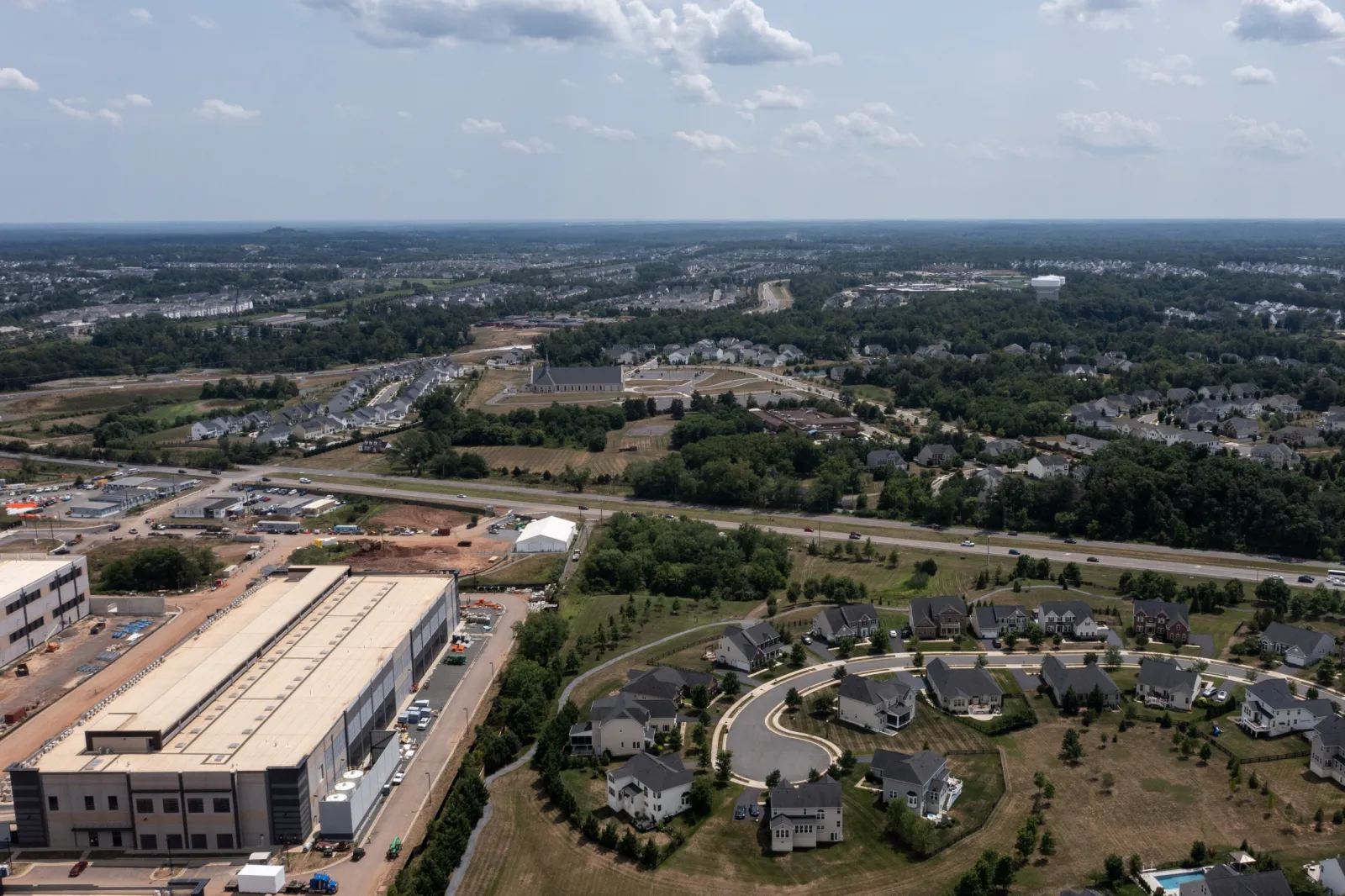
In July, a conservative former Tea Party activist helped organize 142 protests against data centers across 42 states.
Meanwhile, in recent months, Representative Alexandria Ocasio-Cortez stood with rural Georgia residents demanding answers about discolored well water and Senator Bernie Sanders renewed his calls for a national moratorium on data center construction.
In the new politics of data centers, it’s increasingly tough to tell left from right.
Read More on Opinion
Many conservatives sound like environmentalists, defending water, farmland, and children’s health. Many progressives sound like rural populists, challenging distant corporations and the extraction of farm community resources.
Yet Americans across political divides are still struggling to come together to organize around what they actually want.
The core challenge is that communities—red and blue alike—are struggling to communicate productively with data center developers. Some companies rush to secure land and approvals before opposition organizes. Others are making serious commitments on energy, water, jobs, and local benefits. But communities have little way to distinguish meaningful commitments from “opposition management” or greenwashing public relations.

...
So here's an unexpected idea: What if Americans across the left and right could come together to speak with one voice about shared interests in the data center build-out—like preserving affordability, safeguarding water, and providing decent jobs? What if they could then identify and certify practices that meet their standards?
In other words, could people across divides define what “good” looks like, verify who delivers it, and then incentivize developers to do the right thing—creating a “race to the top” in terms of community benefit?
For all the pessimism and polarization of today's data center debates, there are already practical innovations emerging that could seriously reshape projects' social and environmental footprint. Think geothermal power that runs around the clock without combustion. Think clean energy paired with batteries so power is available when needed. Waste heat can warm greenhouses and help grow fresh food in cold places in winter. Rainwater harvesting and recycled-water cooling can reduce pressure on drinking-water supplies. Apprenticeships can turn temporary construction work into skills and careers. Other possibilities include building on abandoned industrial land instead of farmland, reducing electricity use when the grid is strained, and creating local microgrids that keep homes and essential services powered during outages.
Americans, across regions, need a common yardstick for assessing whether these kinds of commitments are for real. Communities need a way to distinguish responsible projects from extractive ones–while developers need a credible way to demonstrate to the public that their promises are genuine.
In other fields, we already rely on national standards to make complicated choices more understandable. For example, Energy Star helps consumers identify efficient household appliances. USDA Organic defines which growers and products meet quality standards. LEED allows buildings to compete for certifications around environmental performance. B Corp evaluates whether businesses meet broader standards on social and environmental responsibility. With each of these approaches, companies know what they need to demonstrate, the public can distinguish serious performance from marketing, and society as a whole can raise the bar.
Data centers need a similar accountability architecture.
This doesn’t need to be a large new bureaucracy. A light-touch model could publish standards, score projects, and convene independent experts. A more ambitious version could provide technical assistance, model community-benefit agreements, public comparisons, and ongoing verification programs.
Unlike standard-setting in many other fields, this challenge isn’t just technical. It’s about values and trust. Any national coalition should be so broad that neither side can dismiss it—for example, it could bring together MAHA moms, labor leaders, farmers, environmental experts, ratepayer advocates, and respected voices from across the political spectrum. They need not agree on every issue. They just need to agree on evidence around shared priorities like clean air and water, good jobs, transparency, accountability, and tangible economic benefits.
Of course, any national coalition should complement, not replace, local organizing by providing trusted technical analysis, verifying company claims, and giving local communities clearer information as a basis for negotiation.
Some developers may still seek the cheapest land, weakest requirements, and fastest possible approval. But many others will recognize that a permanently adversarial relationship with host communities is untenable. If some developers are already investing in better power, water, workforce, and community models, then they’ll recognize Americans coming together to define high standards can be an asset. It’s an opportunity to get recognition and win support when they take the high road.
This could be a way to break the current stalemate between communities and developers. Better, it could result in a “race to the top” on standards for sustainability and community benefit.
Looking at the news today, it’s understandable to think the data center boom will be just another wedge driving Americans apart.
But, against the odds, it could compel us to speak with one voice.
Tim Ryan is a former 10-term member of the U.S. House of Representatives from Ohio. Justin Zorn is a senior adviser at the Center for Economic and Policy Research in Washington.
The views expressed in this article are the writer's own.
View 0 Comments
Submit Correction
View Editorial & AI Guidelines