...

By Newsweek Editors
0
Share
Newsweek is a Trust Project member
See more of our trusted coverage when you search.Prefer Newsweek on Googleto see more of our trusted coverage when you search.
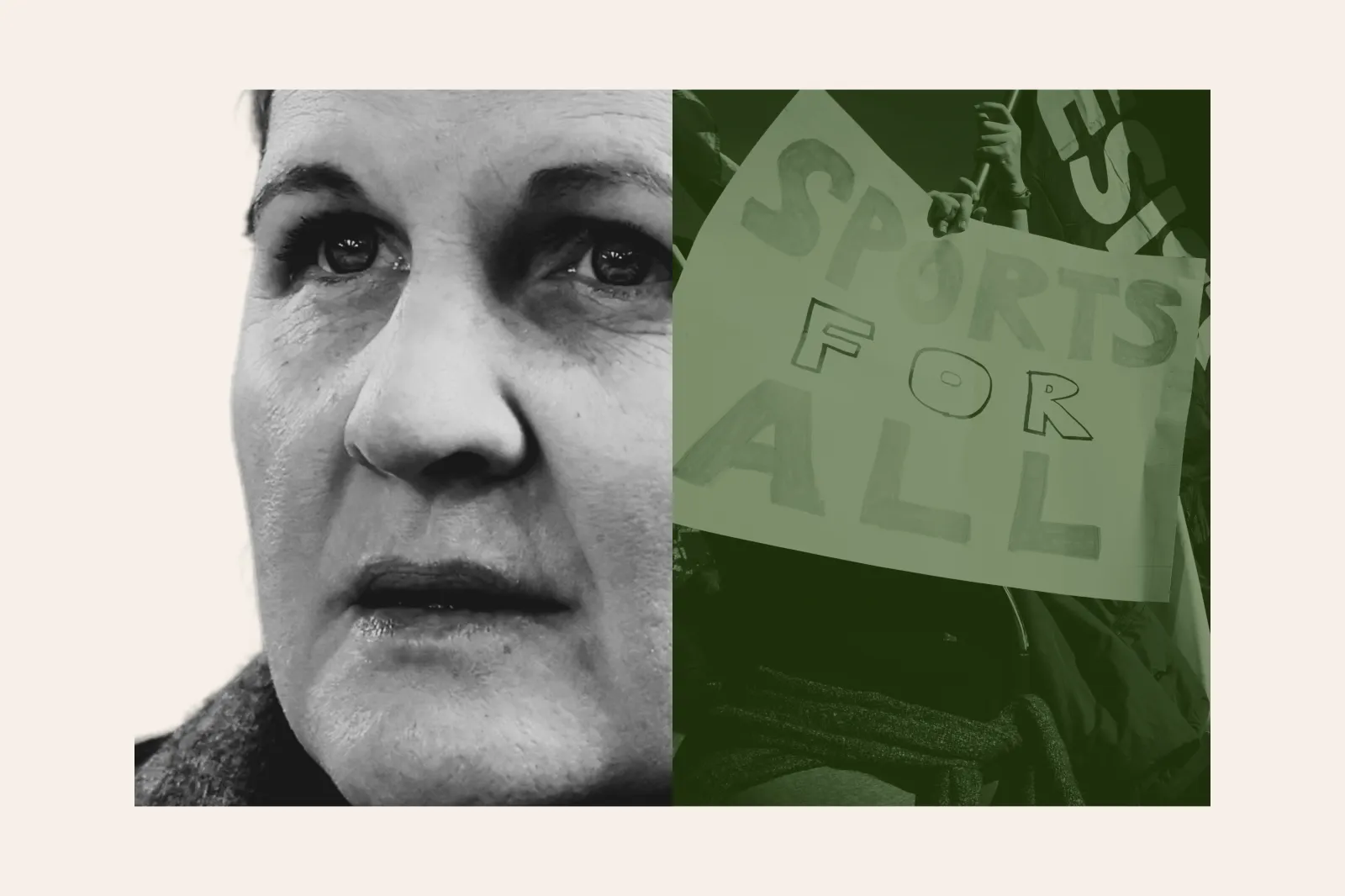
The International Olympic Committee’s (IOC) decision to bar transgender women from female Olympic events marks one of the most consequential eligibility shifts in modern Olympic history.
It will shape the competitive, political, and legal terrain of the Los Angeles 2028 Games far beyond sport.
The New IOC Policy on Transgender Women
Under the new IOC policy, eligibility for women’s events is restricted to "biological females," determined via a one-time genetic screening for the SRY gene.
Read More on Analysis
The rule applies across Olympic competition and parallels an executive order issued by President Donald Trump targeting transgender participation in women's sports ahead of LA 2028.
Athletes who test negative for SRY meet the criteria permanently (unless results are in error), while SRY-positive athletes are ineligible.
There are narrow exceptions, such as Complete Androgen Insensitivity Syndrome (CAIS) and certain rare differences of sex development (DSD) conditions that do not benefit from testosterone’s effects.
This marks a major departure from the IOC's 2021 framework, which was non-binding and left federations to set sport-specific rules based on inclusion, evidence, and privacy—producing an uneven patchwork.
Impacts Limited for 2028
In competitive terms, the immediate impact may be limited.
No openly transgender women competed at the Paris 2024 Games, following the participation of weightlifter Laurel Hubbard in Tokyo.
Several federations—World Athletics, World Aquatics and cycling’s UCI—had already adopted restrictive rules.
But the IOC's move ends years of decentralization, replacing sport-by-sport standards with a single framework just two years before qualification cycles intensify.
That matters for LA 2028, where selection disputes typically escalate, and uniformity may reduce last-minute chaos while raising the stakes of legal challenges.
'Fairness, Safety and Integrity'
The policy’s broader significance lies in governance and optics.
IOC President Kirsty Coventry framed it as protecting "fairness, safety and integrity," citing evidence that male puberty confers lasting performance advantages.
But it would also restrict some athletes with DSD, including cases like two-time Olympic champion Caster Semenya, reviving debates over how the Olympics define sex.
Similar questions have surrounded boxing gold medalist Imane Khelif, who has said she would accept testing for 2028.
The Games may face fewer disputes at venues, but more in courts and legislatures.
The IOC says the rule is not retroactive and does not apply to grassroots sport, but critics argue genetic testing raises privacy and discrimination concerns, particularly in the U.S.
The U.S. Political Backdrop
In the U.S., transgender participation in women’s sports has become a central political issue.
Democrats and civil rights groups argue bans are discriminatory and require nuance, while Republicans and women’s sports activists have pushed for restrictions.
The result is a country split between competing legal regimes.
At the federal level, Trump signed a February 2025 order barring transgender athletes from teams matching their gender identity, using Title IX enforcement.
The NCAA followed, limiting women’s competition to athletes "assigned female at birth" while keeping an open men’s category.
A large bloc of states has enacted bans, while others protect participation, often with court battles complicating enforcement.
The Movement Advancement Project, which tracks LGBTQ-related laws, reports 27 states with statutory bans, with some enforcement blocked by courts.
The Supreme Court has agreed to hear cases involving Idaho and West Virginia bans, putting the issue on a national legal track.
That context makes LA 2028 uniquely charged.
The IOC's rule parallels Trump's order, a point the administration highlighted, with the White House celebrating the move.
As a U.S.-hosted Games, LA will sit within a media and political environment primed to turn eligibility disputes into headline politics.
The IOC says its policy is evidence-based, not political. But in practice, the U.S. climate makes such decisions hard to separate from broader debates over gender identity and civil rights.
The ban all but guarantees these questions will accompany the Games as a cultural subplot. What was once a sport-by-sport issue is now a single Olympic rule, ensuring eligibility—not just medals—will define part of the 2028 story.
What LA 2028 Will Look Like
The IOC's bet is that one standard reduces disputes at the Games.
But it also concentrates risk. A universal rule invites broad challenges, especially as gene screening raises privacy and discrimination concerns.
The IOC emphasizes one-time testing and limited intrusiveness, while critics point to concerns about dignity, data governance, and the treatment of athletes with atypical sex development.
LA 2028 may be less about disqualifications—there may be few—and more about the Olympics becoming the global stage for a question already central to American politics.
Who counts as eligible for women’s sport, who decides, and what "fairness" means when biology, identity, and law collide?
Hey gang, Carlo Versano here. I hope you enjoyed this article. As Newsweek's Director of Politics and Culture and editor of the 1600 newsletter, I'm keen to hear what you think. Now, Newsweek is offering a new service to allow you to communicate directly with me in the form of a text message chat. You can sign up and get a direct line to me, as well as the reporters who work for me. You can shape our coverage.
As a Newsweek member, we're offering this service to you for free. You can sign up below, or read more about how it works here. Let's talk!
View 0 Comments
Submit Correction
View Editorial & AI Guidelines