...

By Jordan King
Reporter
0
Share
Newsweek is a Trust Project member
See more of our trusted coverage when you search.Prefer Newsweek on Googleto see more of our trusted coverage when you search.
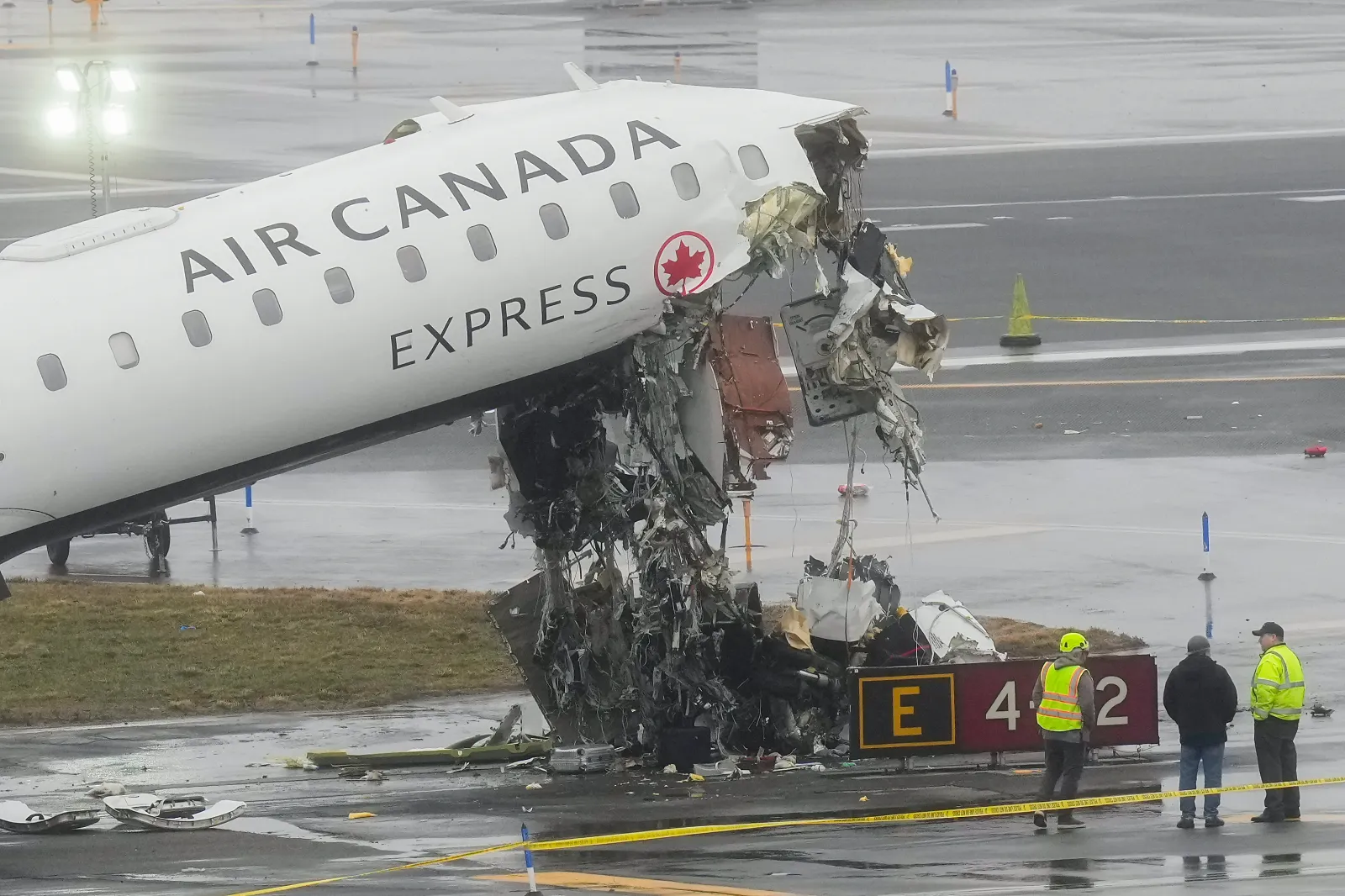
Newsweek has put together a timeline of how the deadly collision between an Air Canada Express regional jet and a fire truck occurred at LaGuardia Airport in New York on Sunday night by using the air traffic audio.
Flight AC8646, a Jazz Aviation flight operating on behalf of Air Canada, collided with a Port Authority fire truck on Runway 4 at around 11:38 p.m. ET on Sunday, killing the flight’s pilot and copilot and injuring dozens.
The airport will remain closed until at least 2 p.m. Monday to allow for a thorough investigation. The National Transportation Safety Board (NTSB) is also on site.
Read More on News
Air traffic audio reviewed by Newsweek reveal the moments before, during and after the collision, with a controller saying: “I tried to reach out…We were dealing with an emergency earlier. I messed up.”
LaGuardia Plane Crash Timeline
10:12 p.m. ET—Air Canada flight AC8646 departs Montreal, two hours and 13 minutes later that it was scheduled to, according to FlightAware.
Between 11:32 p.m. and 11:34 p.m.—United Flight 2384 declares an emergency due to an odor and ill crew members, with controllers and ramp staff scrambling to find a gate or alternate deplaning option.
Between 11:34 p.m. and 11:37 p.m.—With no gate available, discussions shift to alternative deplaning methods, including mobile stairs.
**Around 11:37 p.m.—**United Flight 2384 is told it can proceed to a ramp.
**Just before 11:38 p.m.—**A fire truck is addressed and then urgently told to stop; moments later, the collision occurs
**Between 11:40 p.m. and 11:56:19 p.m.—**Aircraft are held away as the field shuts down; a controller later references the earlier emergency.
Minutes after the crash: Controllers discuss the collision and the airport being closed, with one controller saying, “I got the word that we’re going to be closed for a little while…”
Another responds: “Yeah that wasn't good to watch."
The first replies: Yeah, I know. I was here. I tried to reach out…We were dealing with an emergency earlier. I messed up."
The second says: “Nah man, you did the best you could.”
...
Single Controller Handling Both Runway and Ground Movements: Reports
Initial reports suggest that one controller may have been responsible for local (runway) and ground (taxiway and vehicle) operations at the time of the incident.
This is permitted under Federal Aviation Administration rules, particularly during periods of lower traffic.
According to the audio, the controller appears to have cleared a fire truck to cross Runway 4 at Taxiway D and then attempted to rescind that clearance shortly afterward as the Air Canada Express, a CRJ-900, was completing its landing rollout.
While having a single air traffic controller for runway and ground movements may not be unusual—LaGuardia typically reduces staffing at night as scheduled arrivals taper off—it will likely remain under scrutiny whether this was appropriate for the operational context on Sunday night.
Another question will be about staffing—LaGuardia, like many U.S. airports, operates amid broader system-wide pressures, including air traffic controller shortages and fatigue concerns that have been highlighted by unions and lawmakers.
Newsweek has covered what other questions remain unanswered here.
In a polarized era, the center is dismissed as bland. At Newsweek, ours is different: The Courageous Center—it's not "both sides," it's sharp, challenging and alive with ideas. We follow facts, not factions. If that sounds like the kind of journalism you want to see thrive, we need you.
When you become a Newsweek Member, you support a mission to keep the center strong and vibrant. Members enjoy: Ad-free browsing, exclusive content and editor conversations. Help keep the center courageous. Join today.


View 0 Comments
Submit Correction
View Editorial & AI Guidelines