
...



By Brendan Cole, Alia Shoaib, and Gabe Whisnant
0
Share
Newsweek is a Trust Project member
See more of our trusted coverage when you search.Prefer Newsweek on Googleto see more of our trusted coverage when you search.
British Prime Minister Keir Starmer has announced he would resign, paving the way for the U.K. to have its seventh premier in the decade since the 2016 Brexit referendum.
Starmer had insisted he would fight to see out his mandate after leading Labour to a landslide election victory in July 2024, which gave the party a 174-seat majority. But on Monday, he conceded it was clear his party wanted him to step down.
His resignation follows months of pressure over immigration, welfare, defense spending and Labour’s falling support in traditional working-class areas, where Nigel Farage’s Reform U.K. has sought to cast itself as the voice of voters abandoned by both major parties.
Read More
Why Keir Starmer’s Downfall Is a Warning to Democrats10 min read
What Andy Burnham Has Said About Trump As Keir Starmer Resigns4 min read

Andy Burnham, the former Greater Manchester mayor who returned to parliament after defeating Reform in the Makerfield by-election, is now the front-runner to replace Starmer. Labour leadership nominations are due to open July 9, with Burnham potentially entering Downing Street within weeks if he avoids a serious challenge.
...
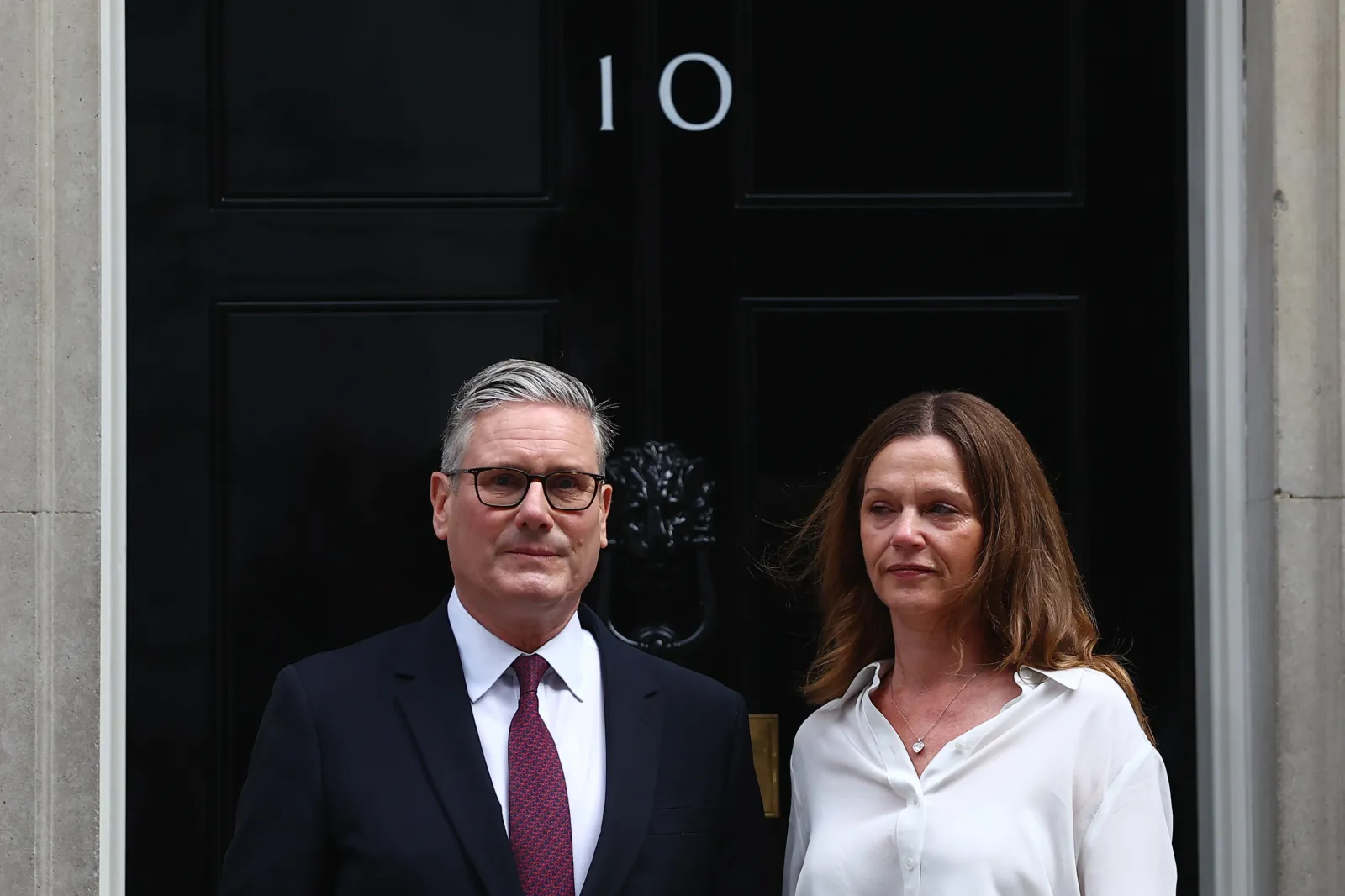
Standing in front of 10 Downing Street on Monday, an at times emotional Starmer said, "the question my party is asking now is whether I am best placed to lead us into the next general election."
"I have heard the answer of my parliamentary party to that question and I accept that answer with good grace," he said, "that is why I will resign as leader of the Labour Party."
Donald Trump Reacts to Keir Starmer Resignation
President Donald Trump offered mixed remarks about Starmer Monday, praising him personally while criticizing his policies.
Speaking about Starmer to reporters in the Oval Office, Trump called him a “lovely man” and “sort of a friend of mine,” adding that he wished him well. At the same time, he took aim at British government policies, particularly on energy, immigration and assistance during the Iran war.
Trump said he raised concerns directly with Starmer about the country’s use of wind power, telling him, “You’re really messing up energy. You have windmills all over the place.” He has long criticized wind turbines as inefficient and harmful to landscapes.
He also pointed to immigration as a weakness of Starmer’s leadership, arguing that current policies could have negative consequences for the United Kingdom.
"He's got two problems, energy and immigration ... and crime," Trump added.
The president also criticized Starmer over his push-back to assisting the U.S. and Israel in its Iran war efforts.
"Starmer wasn't there, and the people of the UK did not like that he wasn't there. Starmer said, 'We will be there as soon as you win.' I said, 'We don't need you when we win.'"
Trump quipped, "This is not Winston Churchill we're dealing with, that I can tell you."
Why Did Starmer Resign?
The U.K.'s political system allows for a change in prime minister between general elections if the premier is ousted by his party or stands down. But Starmer's successor will become the United Kingdom's seventh prime minister in a decade—a period of political turnover not seen before in modern British history.
Since the Brexit referendum—the U.K.’s 2016 vote to leave the European Union—Britain has been led by David Cameron, Theresa May, Boris Johnson, Liz Truss, Rishi Sunak and Starmer, with a seventh prime minister now set to follow.
During his speech on Monday, Starmer listed the Labour Party’s achievements in government.
These included an improving economy compared with Europe, rising wages, falls in public hospital waiting lists and tougher policies on asylum seekers and immigration. He also listed greater investment in defense spending—an area he had previously been criticized for by U.S. President Donald Trump.
However, Starmer had faced criticism for not delivering on some of Labour’s key promises, while also coming under pressure over immigration, welfare reform and a row over defense spending. The defense row became a major blow when Defense Secretary John Healey resigned after arguing that the government’s military funding plans fell short of what was needed.
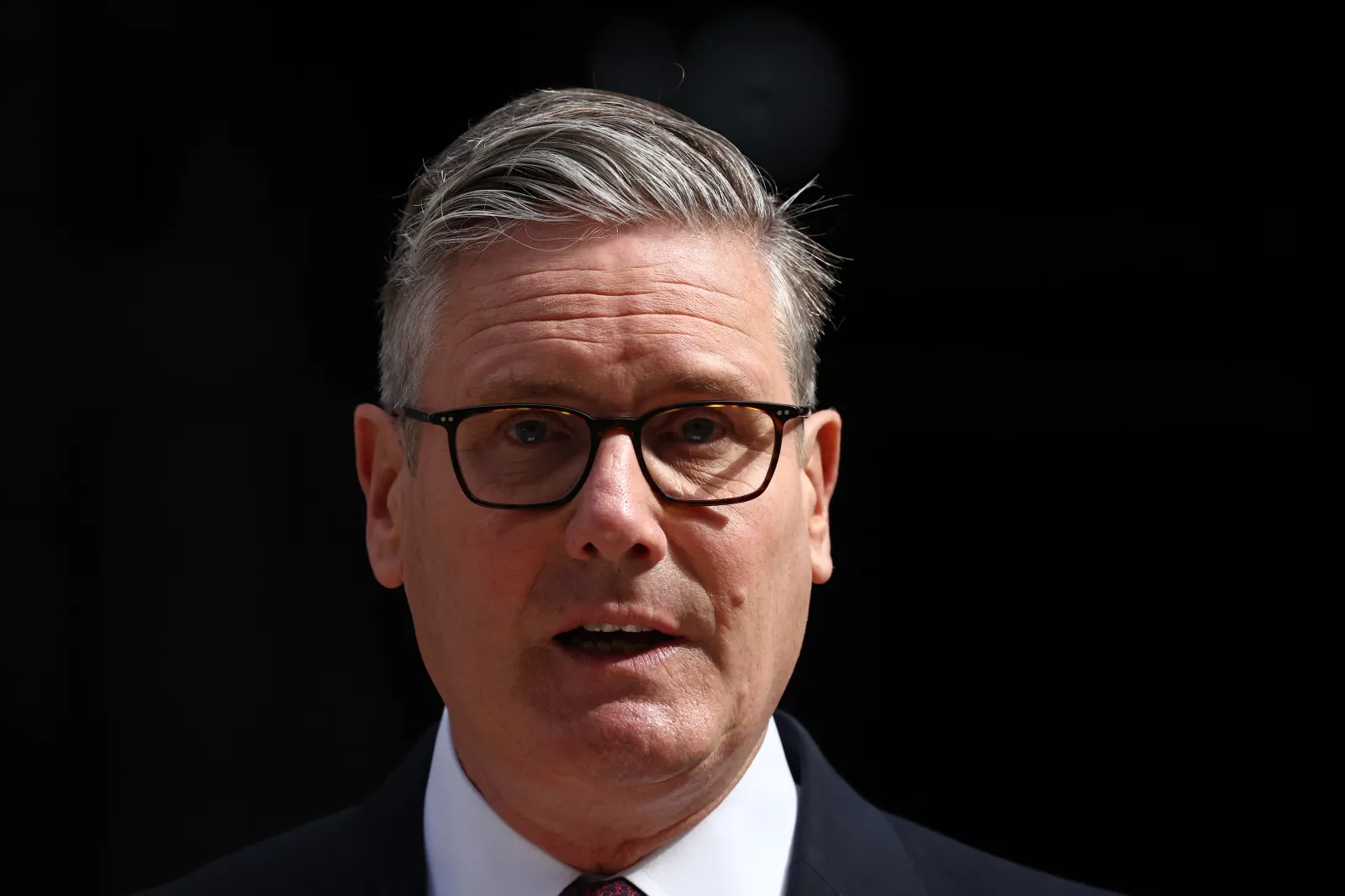
"Keir Starmer, despite having attempted to lead from the political center, has overseen a government that has sundered support to the right and more overtly progressive political parties on the left," Darren Reid, assistant professor of history at Coventry University, England, told Newsweek on Monday.
"The next prime minister will have to attempt to deal with this political situation and rebuild the coalition of voters that put Labour into government."
...
Starmer was badly damaged earlier by the controversy surrounding his appointment of Peter Mandelson as UK ambassador to the United States. Further revelations emerged about Mandelson’s past relationship with convicted sex offender Jeffrey Epstein, triggering questions over Starmer’s judgment and whether a proper vetting process had been followed.
Starmer later said Mandelson had repeatedly lied about the extent of his relationship with Epstein and apologized for appointing him.
How Reform UK Helped Push Starmer Out
Starmer’s departure also reflects a deeper anxiety inside Labour: that Reform U.K. has turned immigration, asylum and cultural dislocation into a direct threat to the party’s traditional working-class base.
Reform has gained ground by arguing that both Labour and the Conservatives have failed to control immigration, protect public services or defend communities outside London. That message has resonated in some of the post-industrial seats that helped deliver Labour its 2024 majority but where voters have remained frustrated over housing, wages, the National Health Service and the cost of living.
For Labour MPs, the danger was not simply that Reform was rising nationally, but that it was making inroads in the kinds of towns and post-industrial seats that Labour needs to hold to remain in power.
Starmer’s government tried to blunt that threat by taking a tougher line on immigration and asylum. Ministers adopted tougher language on small-boat crossings, promised faster removals and presented tighter border controls as proof that Labour could be trusted on an issue long used against it by the right.
But the strategy left Starmer exposed on both sides. To the right, Reform argued Labour had still failed to take control of the borders. To the left, critics accused Starmer of adopting Conservative-style language and policies that alienated progressive voters without winning back those drifting toward Farage.
Burnham’s supporters argue that his Makerfield victory showed he may be better placed to stop Reform’s advance. By convincingly defeating Farage’s party in a Greater Manchester seat with deep Labour roots, Burnham gave Labour MPs a concrete example of what many had been searching for: a politician who could speak to working-class discontent without sounding like he was simply copying Reform’s agenda.
UK To Get 7th PM in 10 Years—Is It a Record?
Since the Brexit referendum in 2016, the U.K. has had three general elections, one change of governing party and six prime ministers, with a seventh to follow. The period has included Liz Truss’ 49-day premiership, the shortest in British history.
The seventh prime minister in just over a decade signals political tumult but it would not be an all-time record for the U.K.
Reid, from Coventry University, England, said Brexit unleashed a period of relative instability in British politics, with numerous prime ministers over the past decade struggling to establish traction once they were in office.
"Labour must have surely hoped they would signal an end to that but the resignation of Starmer tells us that full stability has yet to return to British politics. No doubt, a key focus of any Burnham-led government will be restabilizing the political field," he added.
One of the most rapid periods of government turnover in British history took place between 1827 and 1835, when Britain went through seven governments in eight years. Between 1852—1868, the UK went through eight governments in 16 years.
Between 1922 and 1937, there were seven governments in 15 years, although this also included longer periods of stability under leaders who served multiple years in office.
...
What To Know About Andy Burnham
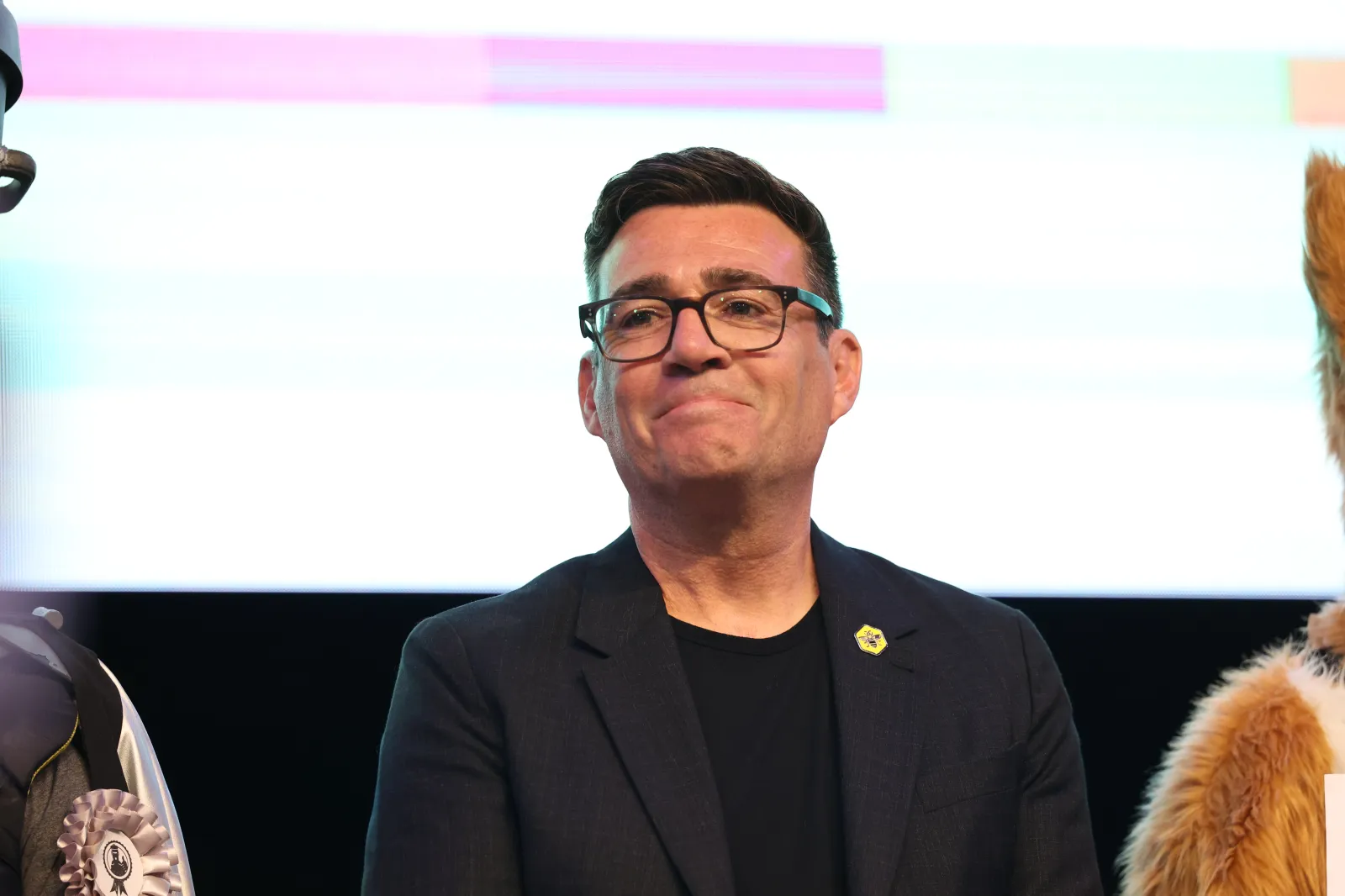
Pressure on Starmer, which had been building for months, increased after Burnham, one of Labour's most popular politicians, won the Makerfield by-election, a constituency in Greater Manchester. Its previous MP, Josh Simons, had stood down to give a pathway to the leadership for Burnham who will be sworn into parliament on Monday.
Born in Liverpool in 1970, Burnham grew up in Culcheth, in Cheshire. The son of a telephone engineer and a receptionist, he has long presented himself as a more grounded, emotionally direct Labour figure than many of the party’s Westminster operators.
He was first elected as an MP in 2001, for Leigh, in Greater Manchester, and was a junior minister under the government of former Prime Minister Tony Blair and later joined the cabinet as chief secretary to the Treasury, and later culture secretary and health secretary, under Blair's successor, Gordon Brown.
He stood down as MP in 2017 and ran to be the first mayor of Greater Manchester, a race he won with more than 60 percent of the vote, a margin he increased in 2021.
Burnham has reframed himself as a champion for forgotten regions and constituents and is the odds-on favorite to replace Starmer, said Reid. "He commands overwhelming support in Parliament, something which makes his ascension to the position of Prime Minister all but inevitable at this point."
That image hardened during his time as Greater Manchester mayor, where he styled himself as a champion of the north against London decision-making. His clashes with Conservative ministers during the pandemic helped cement the "King of the North" label, while his work on transport, housing and devolution gave him a record he can now present as a governing model rather than a protest message.
His allies describe the approach as ‘Manchesterism’: a model built around devolving power from Westminster, investing in regional transport and housing, and using Greater Manchester as evidence that Labour can rebuild places that feel ignored by London.
He will arrive in Westminster carrying the story of Greater Manchester's success, said Josh Wheeler, a political public relations expert and founder of Manchester-based Be Broadcast PR.
"Burnham has spent much of his political career making the case for Greater Manchester from the outside looking in," he told Newsweek. "That underdog mentality has been central to Burnham's appeal. It's always easier to be the challenger brand.
"You can kick the sides, point at what's broken and tell people the grass could be greener somewhere else but governing is different."
Donald Trump and Keir Starmer: What to Know
Trump and Starmer had a relatively good relationship initially but this has deteriorated over the last few months.
Starmer could point to a trade deal in 2025 that gave the UK more favorable tariff levels than faced by other European countries in Trump's trade war. During the U.S. leader’s state visit to the U.K. there were public pronouncements of co-operation.
However, the "special relationship" deteriorated. Trump was critical of Starmer when the prime minister refused to join the Iran war launched by the U.S. in February, arguing it was against the UK's national interest. The Trump administration had cited this as an example of Europe's NATO members not playing their part in helping the U.S.
The day before his resignation, Trump had posted on Truth Social that Starmer would step down. "He failed badly on two very important subjects- IMMIGRATION AND ENERGY (OPEN NORTH SEA OIL!)," said Trump's post, adding: "I wish him well!"
Should Burnham become prime minister, he may have to take over the diplomatic wrangles with the U.S. faced by his predecessor. "It's a pretty safe bet that there will be tension between a Burnham-led government and the Trump administration," said Reid. "Not because of any inherent problem with Burnham, but the political reality created by Trump’s approach to foreign policy."
Contact Newsweek editors on this story: Frances Mao and Mike Hirst.

In a polarized era, the center is dismissed as bland. At Newsweek, ours is different: The Courageous Center—it's not "both sides," it's sharp, challenging and alive with ideas. We follow facts, not factions. If that sounds like the kind of journalism you want to see thrive, we need you.
When you become a Newsweek Member, you support a mission to keep the center strong and vibrant. Members enjoy: Ad-free browsing, exclusive content and editor conversations. Help keep the center courageous. Join today.

View 0 Comments
Submit Correction
View Editorial & AI Guidelines