10
Loading video...

By Hollie Silverman
News Editor
0
Share
Newsweek is a Trust Project member
See more of our trusted coverage when you search.Prefer Newsweek on Googleto see more of our trusted coverage when you search.
A newly disclosed vulnerability in Java could expose widely used enterprise applications to hackers, prompting organizations to patch affected systems as cybersecurity researchers assess the potential reach of the flaw.
The vulnerability, dubbed Java4Shell and tracked as CVE-2026-114938, affects certain versions of OpenJDK, the open-source implementation of the Java platform used to run applications across corporate and government infrastructure.
Security researchers with OpenJDK say exploitation could allow attackers to access sensitive information, crash affected applications or, under certain conditions, remotely execute code without first logging in.
Read More on News
John Walsh, CTO of IGEL Technology, said the concern is that an attacker could potentially target vulnerable application infrastructure directly, rather than first having to compromise an individual user's device.
“Java4Shell exposes a fundamental weakness in the digital infrastructure that banks, hospitals and governments depend on every day," Walsh told Newsweek in an emailed statement Wednesday.

...
Walsh said a successful exploit could potentially expose customer information or disrupt transactions at banks, interfere with clinical systems or patient information at hospitals, and expose sensitive records or interrupt public services at government agencies.
“The particularly troubling aspect is that an attacker may not need to compromise a user's computer first. The attack can potentially target the application infrastructure directly, exploiting a weakness in the underlying software," he said. "For banks, hospitals and governments, cyber resilience is ultimately about ensuring that the compromise of one application does not become the failure of an entire essential service.”
Java is deeply embedded in enterprise computing and is used in software supporting authentication, development, data processing and other business-critical operations. That makes a vulnerability in the Java runtime potentially more consequential than a security flaw confined to a single application.
Related Story
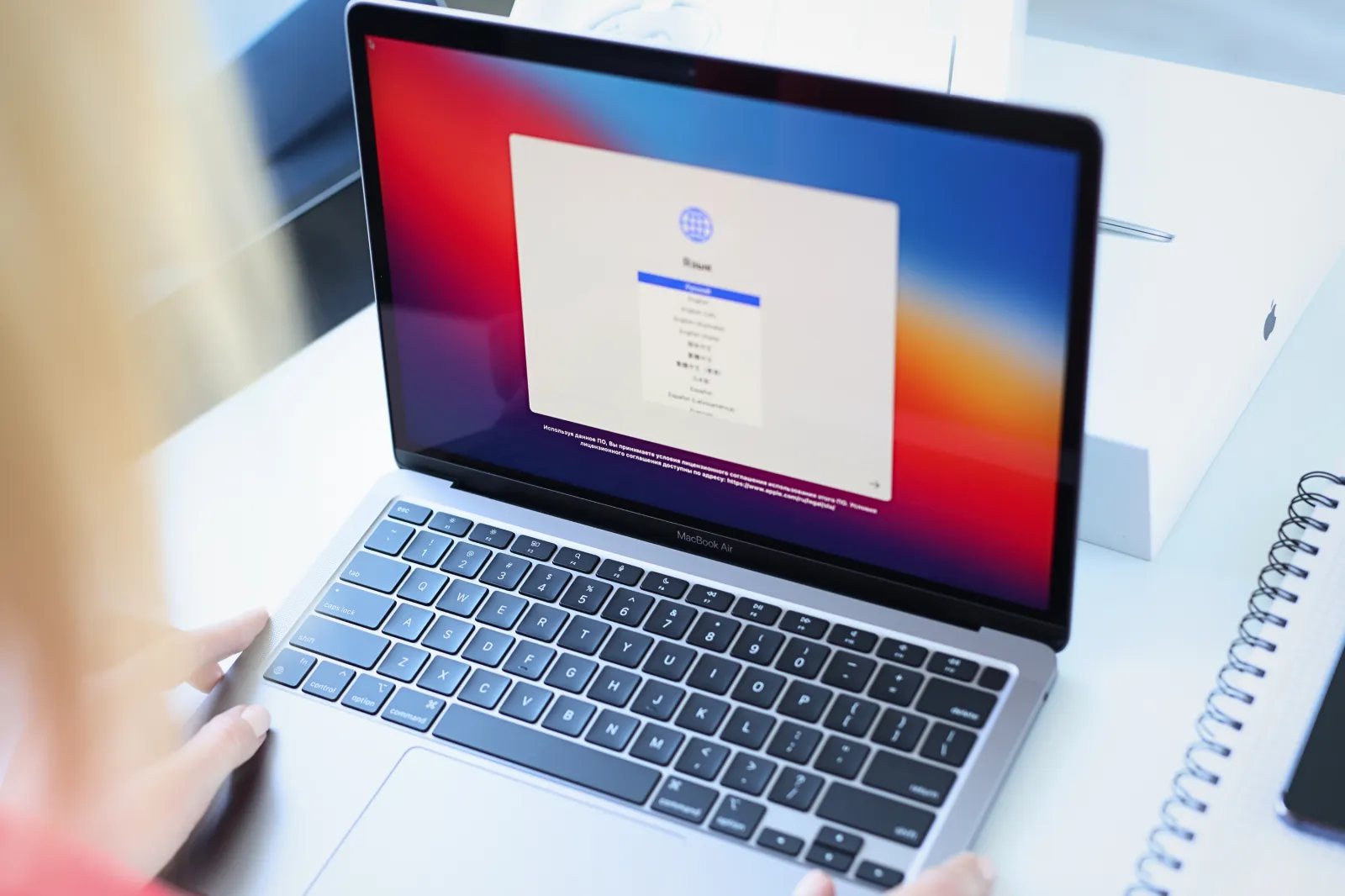
Apple Users Warned Macs Face New Security Threat
Researchers said they demonstrated unauthenticated remote-code execution against default test installations of several widely used enterprise products, including Keycloak, Atlassian Jira and Confluence, JFrog Artifactory, Jenkins and PingFederate.
The vulnerability has received a CVSS 3.1 severity score of 8.1, rated "high."
It comes amid a surge of cyberattacks across multiple businesses and platforms this week. The vulnerability does not mean every organization using Java is exposed. Exploitation depends on factors including the Java version, the processor being used and whether a vulnerable application passes attacker-controlled data to the affected component.
Newsweek reached out to OpenJDK and other experts by email Wednesday for comment.
Recent Widespread Outages in the U.S.
Java4Shell's disclosure follows several widespread technology disruptions in the United States. There is no evidence that the incidents were caused by Java4Shell or that they are part of one coordinated event.
Microsoft 365: A major outage beginning November 12 disrupted Microsoft services including Outlook and other Microsoft 365 products. Microsoft said servers unexpectedly becoming unavailable contributed to increased load on the remaining infrastructure. The company reported no indication of malicious activity.
Federal Aviation Administration: The FAA ordered a nationwide ground stop on November 13 after a major telecommunications failure. Officials blamed problems involving network equipment and said there was no evidence at the time of a cyberattack or connection to Microsoft's outage.
JPMorgan Chase and bank transactions: Banking customers reported problems several days later. JPMorgan Chase said a software bug in an on-premises hardware system caused its disruption and said there was no evidence the issue was cyber-related.
The concentration of highly visible outages has fueled speculation about whether the U.S. is experiencing a coordinated cyberattack, which officials have not confirmed.
While Java4Shell is a genuine and potentially serious cybersecurity vulnerability, security researchers had reported no confirmed exploitation of it in the wild as of Wednesday.
For organizations, the immediate concern is determining whether they are running an affected Java version under the conditions necessary for exploitation and applying patched Java builds where required.
Were Recent Bank Outages Caused by the Java Bug?
There is currently no evidence that Java4Shell caused recent disruptions involving U.S. banks.
Customers reported problems involving JPMorgan Chase and apparent disruptions involving transactions at other financial institutions.
However, JPMorgan Chase attributed its problem to a software bug in an on-premise hardware system and said there was no evidence the incident was cyber-related.
Some problems reported by customers of other banks were also linked to transactions involving Chase rather than outages of those banks' own systems.
The timing of those problems, coming as Java4Shell was publicly disclosed and amid several other high-profile technology outages, prompted speculation that the events could be connected.
There is currently no evidence establishing such a link.
Cybersecurity companies monitoring Java4Shell also said as of Wednesday that they were not aware of confirmed real-world exploitation of the vulnerability.
What Caused the Recent Technology Outages?
A string of major technology disruptions in November has affected everything from workplace software to banking and aviation, but available evidence does not show that they were connected or caused by Java4Shell.
Microsoft experienced a major Microsoft 365 disruption beginning November 12. The company said a number of servers unexpectedly became unavailable after failing health checks, increasing the load on remaining infrastructure. Microsoft said the elevated load was not caused by an increase in traffic and reported no indication of malicious activity.
The following day, the Federal Aviation Administration temporarily halted commercial air traffic nationwide after problems with its telecommunications infrastructure.
Federal officials said aging network equipment became overloaded with data, producing unstable information used by air traffic facilities. Officials said there was no evidence connecting the FAA disruption to the Microsoft outage, artificial intelligence or a cyberattack.
The banking problems reported several days later were similarly attributed to a separate technical issue. JPMorgan Chase said its disruption was caused by a software bug in an on-premise hardware system and was not cyber-related.
Federal officials have also said they have found no evidence that the recent series of technology problems was the work of cybercriminals, foreign governments or another coordinated malicious actor.
What Is Java4Shell?
Java4Shell is the name given to CVE-2026-114938, a vulnerability affecting OpenJDK's HotSpot compiler. Walsh said it demonstrates how a vulnerability in a commonly used software component can create shared exposure across otherwise unrelated industries.
“Researchers have demonstrated how AI can accelerate exploit development, further compressing the time organizations have to respond to newly discovered vulnerabilities,” he said.
Security researchers have traced the underlying problem to memory corruption involving a hardware-accelerated Base64 decoder. Base64 is a commonly used method for converting information into text so it can be stored or transmitted between computer systems. It can be used for data such as security tokens, authentication information and file content.
On certain processors, Java uses specialized instructions to make Base64 decoding faster. Researchers found that specially crafted malformed data could cause data to be written outside its allocated area of memory before Java rejects the invalid input.
Under certain circumstances, researchers say that memory corruption could be exploited to expose data, crash an application or execute code on the targeted machine.
One of the most serious potential scenarios is pre-authentication remote-code execution. In simple terms, that could allow an attacker to compromise some vulnerable systems remotely without first needing a valid account or password.
The flaw affects certain unpatched builds of Java 17, 21, 25 and 27. OpenJDK's official advisory does not list Java 8 or Java 11 as affected by CVE-2026-114938.
Security researchers say successful exploitation also requires specific hardware and software conditions. Systems using ARM64 processors are not known to be affected.
Which Organizations Use Java Programming?
Java is used extensively by companies, governments and other organizations, but an organization's use of Java does not by itself mean its systems are vulnerable to Java4Shell.
The potential scope has drawn attention because researchers successfully demonstrated attacks against test installations of enterprise products from several major software projects and companies.
Researchers said unauthenticated remote-code execution was demonstrated in default test environments involving Keycloak, Atlassian Jira and Confluence, JFrog Artifactory, Jenkins and PingFederate.
Researchers also tested other enterprise applications, including Apache Kafka, Apache Solr, Elasticsearch, Gerrit and Spinnaker, although exploitation in those environments required authentication.
Organizations therefore need to determine not only whether they use Java but also which Java runtime they are running, whether it is an affected version, what processor architecture the system uses and whether outside input can reach the vulnerable component.
Internet-facing applications warrant particular attention because they may make affected functionality accessible to remote attackers.
Walsh noted that critical-infrastructure operators may not always be able to immediately take systems offline for updates because of availability, safety and regulatory requirements.
“Patching is essential, but it cannot be our only defense," he said.
Walsh said organizations should operate on the assumption that vulnerabilities and compromised identities will occur, using Zero Trust principles such as continuous verification, least-privilege access, segmentation and isolation of critical systems to limit the impact of a breach.
Did Oracle Patch the Bug?
Fixed Java builds were released on Tuesday.
OpenJDK's official vulnerability advisory identifies CVE-2026-114938 as affecting certain versions of Java 17, 21, 25 and 27 and recommends upgrading to the latest version of a user's preferred JDK distribution as soon as possible.
Oracle also released its November Critical Security Patch Update, which contained 655 security patches across numerous Oracle product families.
Updating the affected Java runtime is the primary way for organizations to address Java4Shell. Other defenses can potentially reduce the risk of exploitation but should not be treated as replacements for installing patched versions.
Patching Java can also be more complicated than simply updating one program. Organizations may have different Java runtimes embedded inside third-party applications, servers and containers, meaning security teams may first need to identify exactly which runtime each application is using.
Applications generally also need to be restarted after the vulnerable Java runtime is replaced to ensure the fixed version is loaded.
Newsweek’s reporters and editors used Martyn, our AI assistant, to produce this story. Learn more about Martyn
here.
Contact Newsweek editors on this story: Kate Nalepinski and Dave Siminoff.
View 0 Comments
Submit Correction
View Editorial & AI Guidelines