
Newsweek/Getty


By Jasmine Laws and Anna Skinner
0
Share
Newsweek is a Trust Project member
See more of our trusted coverage when you search.Prefer Newsweek on Googleto see more of our trusted coverage when you search.
A small number of Americans are being affected by an Ebola outbreak in Central Africa as U.S. health authorities move to tighten travel controls and prevent the virus from reaching the United States, according to the Centers for Disease Control and Prevention (CDC).
In a new escalation, the CDC and Department of Homeland Security (DHS) on Monday implemented enhanced screening and entry restrictions under a Title 42 public health order, targeting travelers who have recently been in outbreak-affected countries, including the Democratic Republic of the Congo, Uganda, and South Sudan.
The measures are aimed at reducing the already low risk to the U.S. public by strengthening monitoring, limiting entry for some non-citizens, and boosting preparedness at ports of entry and hospitals nationwide.
Read More on News
The order is temporary, set to remain in effect for 30 days, and is part of a broader effort to prevent the virus from entering the United States while response teams work to contain the outbreak at its source. Officials said the steps are based on ongoing risk assessments and the severity of Ebola, even as the immediate risk to the U.S. public remains low.
What Is the Risk to Americans?
Health officials say the risk to Americans from the current Ebola outbreak remains low, with no cases from this outbreak reported in the United States so far.
The Centers for Disease Control and Prevention (CDC) is monitoring the situation and supporting response efforts in the region, including contact tracing and screening travelers at border points.
Lawrence Gostin, a professor of global health law at Georgetown University, told Newsweek that "the likelihood of a sustained Ebola outbreak in the U.S. is low but not zero."
He added that the CDC is "severely weakened by massive staff and funding cuts," and warned that "without specialized support our hospitals are not equipped to detect and safely treat Ebola cases."
"The U.S. is also an international travel hub putting us at increased risk," he said. "Given public health cuts, I have less confidence in our overall ability to prevent, detect and manage Ebola cases if they arrived on our shores."
Travel Warnings In Place
However, authorities have issued travel warnings for affected areas in the DRC and Uganda, noting that U.S. government assistance may be limited in some regions.
The CDC advises travelers to stay alert for symptoms and isolate immediately if they become unwell after a potential exposure, underscoring that risk is primarily tied to travel or direct contact rather than widespread community transmission in the U.S.
What Is Happening With Ebola in the DRC Right Now
A "small number" of Americans are being withdrawn from the Democratic Republic of the Congo (DRC) and Uganda after potential exposure to an Ebola outbreak, U.S. health officials said.
The move comes after the World Health Organization (WHO) declared the situation a public health emergency of international concern, with the Centers for Disease Control and Prevention (CDC) assisting those "directly affected."
The outbreak has so far included 10 confirmed cases and 336 suspected cases—88 of them fatal—in the DRC, along with two confirmed cases and one death in Uganda.
While the risk to the American public remains "low," the CDC said, the outbreak is of notable concern given that associated death rates range from 25 to 50 percent, per CDC data.
This comes shortly after a hantavirus outbreak was declared on the MV Hondius cruise ship in April, leaving 41 people across the U.S. under monitoring who were either passengers on board the ship or who may have been exposed to the virus indirectly.
Newsweek has contacted the CDC via email on Monday morning for comment.
CDC American Preparations
The CDC said it is also increasing preparedness efforts domestically, including strengthening hospital readiness, contact tracing capabilities and laboratory capacity, while continuing to deploy personnel to support outbreak response efforts overseas.
The Americans potentially exposed to Ebola in the Democratic Republic of Congo and Uganda have renewed attention on one of the world’s deadliest viruses—and how it compares to hantavirus, amid a recent outbreak of that disease aboard an Antarctic expedition cruise ship, which has left dozens of Americans under monitoring following possible exposure.
Both infections can be deadly but spread in very different ways, pose different risks to Americans and require distinct public health responses. Here’s how they compare.
Ebola vs. Hantavirus: The Key Differences
Ebola and hantavirus are both severe viral diseases, but they differ most in transmission and outbreak potential.
- Ebola can spread between people through contact with bodily fluids, which can allow outbreaks to escalate quickly without strict containment measures.
- Hantavirus, by contrast, is typically spread through contact with infected rodents and is far less likely to spread from person to person. The CDC highlights that most cases are tied to environmental exposure rather than human interaction.
How Each Virus Spreads
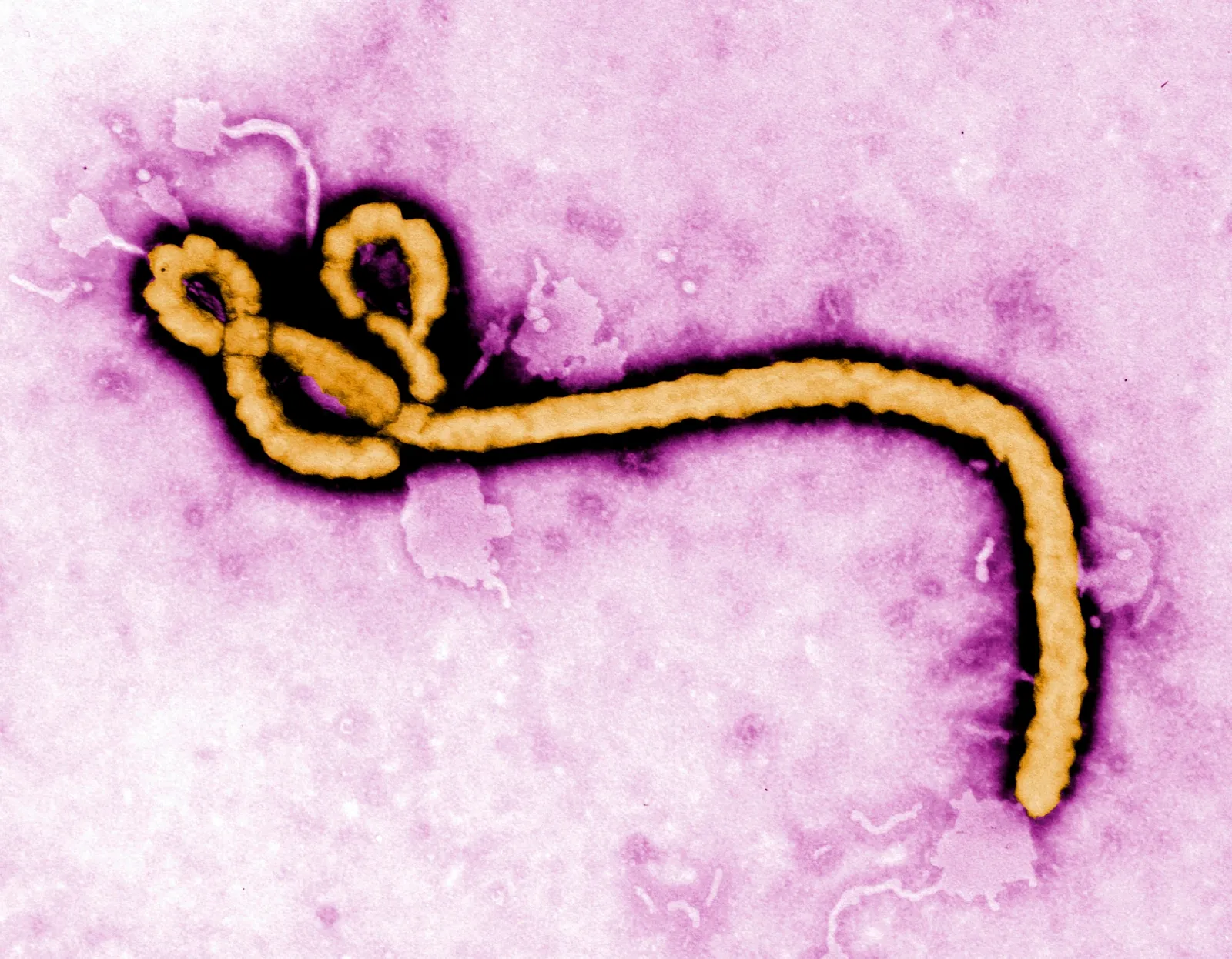
...
Both viruses tend to spread to humans through close contact with infected animals.
- People typically get hantavirus through contact with infected rodents or their urine, droppings or saliva.
- Ebola virus can infect humans when they have been in close contact with the blood, secretions, organs or other bodily fluids of infected animals—usually fruit bats, chimpanzees, gorillas, monkeys, forest antelope or porcupines found ill or dead or in the rainforest.
Both can also spread between humans, with one having more documentation on spread than the other.
- In the case of hantavirus, human-to-human transmission has limited documentation.
- Ebola can spread between people from direct contact with the blood or body fluids of a person who is sick with or has died from Ebola disease, or from surfaces contaminated with those infected fluids.
Dr. Paul Spiegel, director of the Center for Humanitarian Health at Johns Hopkins University, also told Newsweek that direct risk to Americans right now is "low," as Ebola is not airborne, and the Bundibugyo strain driving this outbreak spreads only through contact with the bodily fluids of someone who already has symptoms.
"The governments and health officials in these countries, particularly DRC and Uganda, have decades of experience in Ebola outbreaks," he added. "Furthermore, African CDC as well as U.S. CDC have a great deal of experience containing Ebola; and they have staff on the ground engaged in this response."
Therefore, he said Americans "should not be alarmed, but they should pay attention."
"This current outbreak emerged in a conflict zone in eastern DRC, and it likely went undetected for several weeks before it was reported," he said. "That delay is the part that should worry us. The global systems that catch outbreaks at source, before they cross borders, are exactly what keep Americans safe. Right now those systems are being cut, not strengthened. That is one of the most important points of this evolving outbreak."
Which Virus Is More Deadly?
Both Ebola and hantavirus have high fatality rates, though these can vary.
- Hantavirus can cause hantavirus cardiopulmonary syndrome, which has a fatality rate of 50 percent.
- Ebola fatality rates have varied in the past from between 25 and 90 percent, according to the WHO.
Despite these overlapping ranges, Ebola is often viewed as the greater threat because of its ability to spread between people and the larger number of cases typically seen during outbreaks.
Symptoms Compared
Hantavirus and Ebola share some early symptoms, including fever, headache and muscle aches, but they can develop differently as the illness progresses.
- Hantavirus infections often include gastrointestinal symptoms such as abdominal pain, nausea and vomiting.
- Ebola symptoms can be broader and more severe, including fever, fatigue, malaise, muscle pain, headache, sore throat, vomiting, diarrhea and abdominal pain, as well as rash and signs of impaired kidney and liver function.
How Quickly Symptoms Appear
Symptoms of hantavirus can take longer to develop than Ebola, appearing anywhere from one to eight weeks after exposure.
Ebola symptoms tend to develop more quickly, typically between two and 21 days after exposure, making cases easier to identify in a shorter timeframe.
Why Ebola Outbreaks Raise Global Concern
Ebola outbreaks tend to draw significant international attention because of their potential to spread rapidly in certain conditions, particularly in regions with limited healthcare capacity. Controlling an outbreak requires intensive contact tracing, isolation and protective measures to prevent person-to-person transmission.
Global health agencies closely monitor these situations not only because of the immediate risk in affected areas but also due to the potential for cross-border spread, especially when travel is involved.
Previous Ebola Outbreaks
Ebola has caused multiple outbreaks in Africa over the past several decades, with some becoming large-scale public health emergencies. While isolated cases have been reported outside the continent, sustained transmission has remained largely confined to African countries, according to CDC data.
Update, 05/18/26, 8:01 a.m. ET: This article was updated with additional information
Update, 05/18/26, 9:06 a.m. ET: This article was updated with additional information and comment from Dr Paul Spiegel and Lawrence Gostin
View 0 Comments
Submit Correction
View Editorial & AI Guidelines