

By Alice Gibbs
Senior Reporter
0
Share
Newsweek is a Trust Project member
See more of our trusted coverage when you search.Prefer Newsweek on Googleto see more of our trusted coverage when you search.
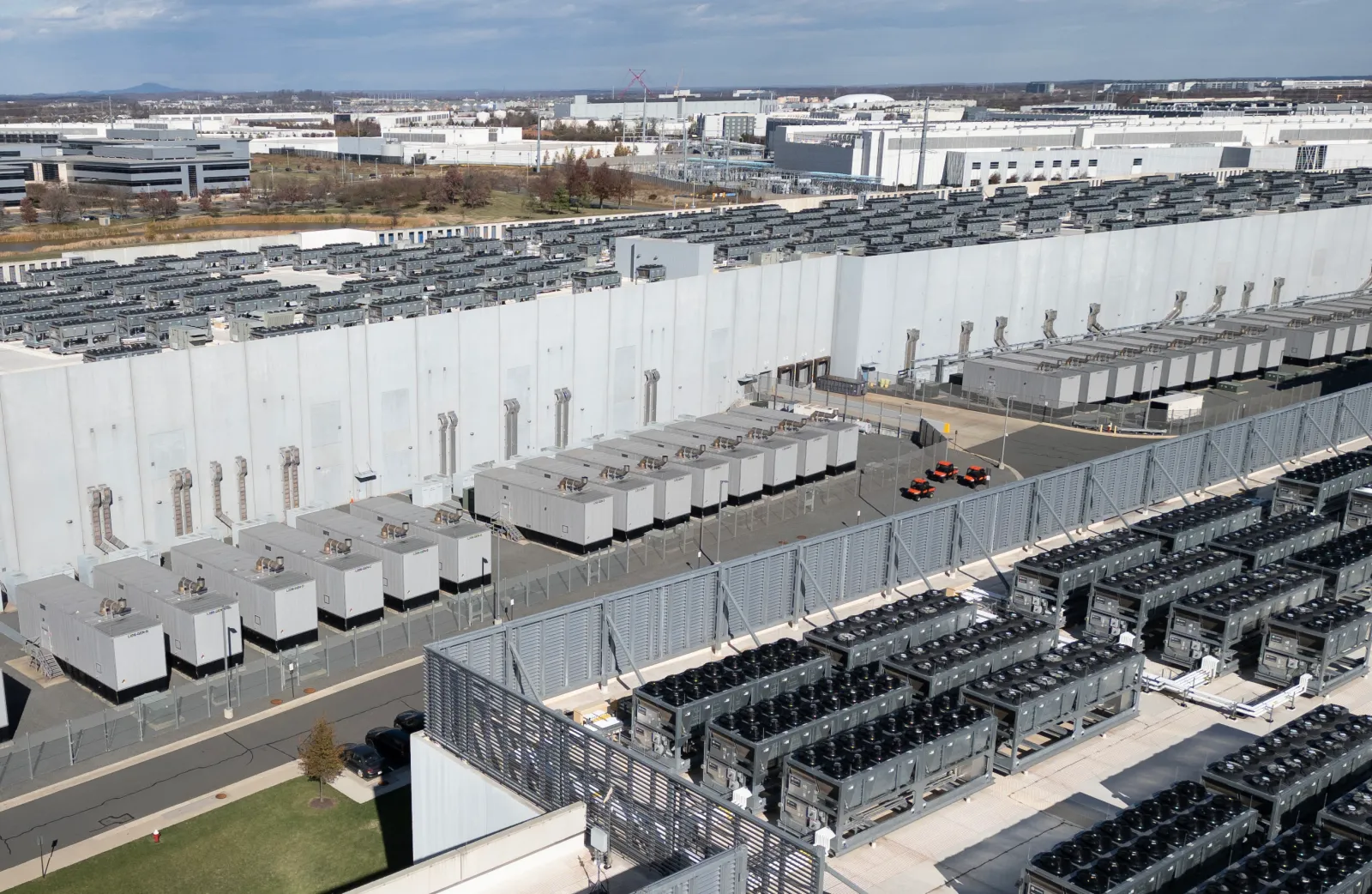
At the edge of towns and farmland across the U.S., windowless buildings are rising fast—some the size of shopping malls, others sprawling across hundreds of acres.
While innocuous from the highway, like blank blocks dropped onto the landscape, to the communities living around them they can cause uproar.
Data centers produce competing pressures—energy demand, land use, noise, and rapid infrastructure expansion—but one of the most persistent concerns may not hold up to scrutiny: whether they depress nearby home values. A new analysis of Northern Virginia suggests the opposite may be true.
Read More on Tech
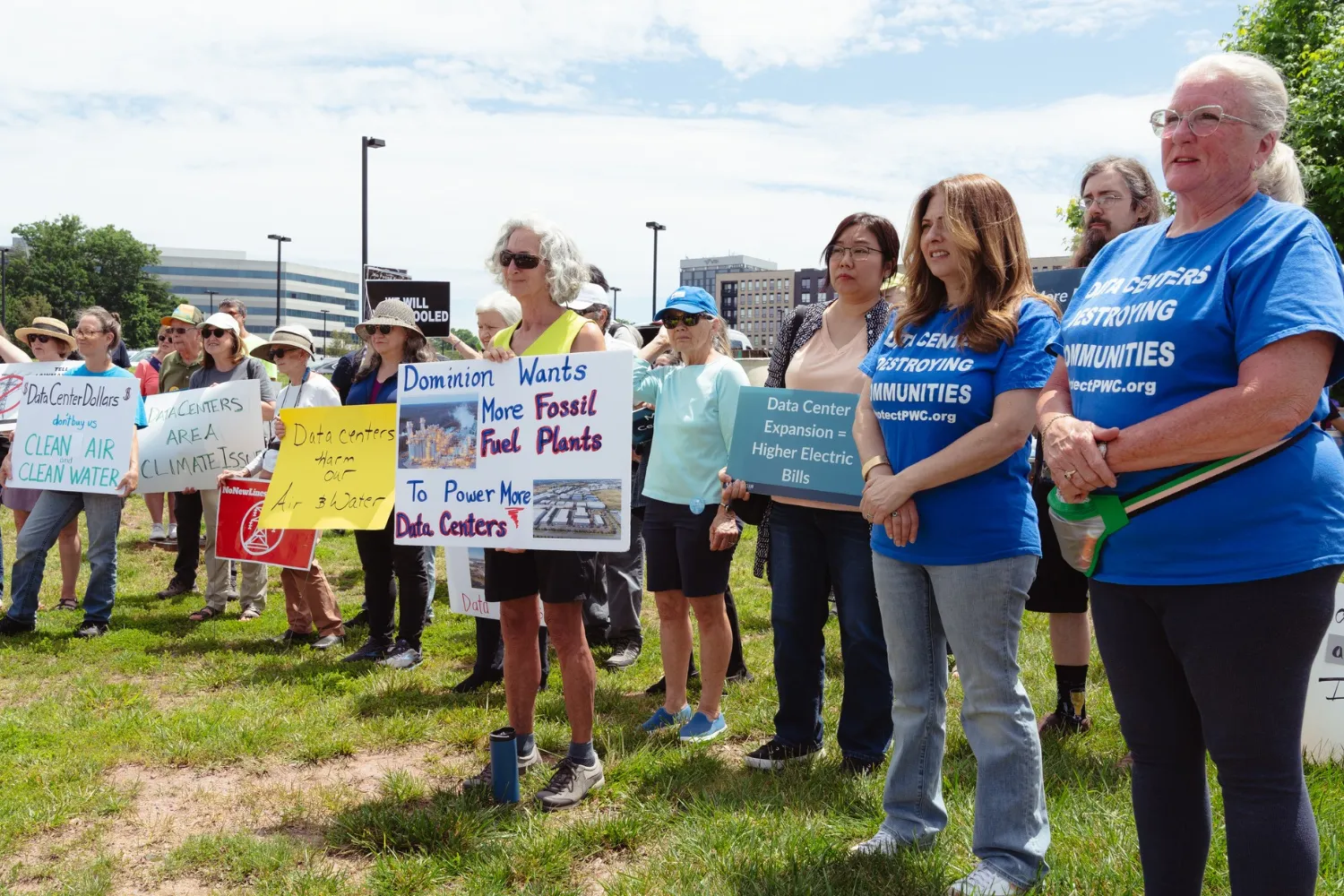
Residents have raised concerns about noise, transmission lines, water use and energy demand. Yet one of the most persistent fears—that data centers drag down nearby home values—may not hold up to scrutiny.
The Assumption Under Pressure
A new analysis from George Mason University’s Center for Regional Analysis examined 2023 BrightMLS home sales against the locations of data centers built or permitted by August 2024 in Northern Virginia, the country’s largest data-center hub.
Researchers found homes closer to data centers sold for higher prices on average, not lower.
The report concluded it could not find statistical evidence that proximity to a data center reduces housing values in Northern Virginia, known as “data-center alley” for its dense cluster of facilities built around fiber routes and power infrastructure.
But as hyperscale projects spread far beyond Virginia, opponents argue housing prices reveal only part of the impact.
Data Centers and the AI Boom
Data centers were once treated like background infrastructure. But AI has changed things.
Training and operating large AI models requires enormous computing power and electricity demand, with some hyperscale facilities drawing power on the scale of tens of thousands of homes.
Developers are chasing places with power, fiber connectivity, highways, tax incentives and enough land to build quickly.
According to Data Centers Map, the U.S. had 4,184 data centers as of April 2026—the highest total worldwide. The U.K., the next highest, had 515.
According to Data Centers Map, the U.S. had 4,184 data centers as of April 2026—the highest total worldwide. The U.K., the next highest, had 515.
And proposals are rapidly spreading beyond Northern Virginia. In Utah, residents are fighting the proposed Stratos campus, a 40,000-acre data-center and energy project.
In Ohio, homeowners sued over a proposed $4 billion facility, alleging they were blindsided by rezoning and public notice issues. In Florida, Governor Ron DeSantis signed legislation aimed at shielding residents from footing the bill for AI-related power costs.
...
What the Northern Virginia Study Actually Shows
The George Mason analysis set out to answer a simple question: do data centers depress nearby home prices?
Using home-sale and location data, researchers found the opposite pattern: prices generally declined as distance from a data center increased.
But Terry L. Clower, director of the Center for Regional Analysis and a co-author of the report, cautioned against overinterpreting the findings.
“At no point am I saying that data centers are an add-on,” he told Newsweek. The more likely explanation, he said, is that data centers “go where the infrastructure exists”—the same infrastructure homebuyers value.
He also stressed the importance of the “on average” caveat. “That doesn’t mean that you can’t find a home” next to a facility where the impact feels obvious, he said.
...
Why Prices Can Rise Even When People Don’t Want the View
Real-estate broker Erik Leland told Newsweek the findings were unsurprising because data centers and homebuyers are often drawn to the same fundamentals.
“Data centers go where the infrastructure exists,” he said, citing reliable power, fiber connectivity and transportation access. “The data centers did not create the desirability. They locate where it already exists.”
The data centers did not create the desirability. They locate where it already exists.
Real‑estate broker Erik Leland
Leland said any boost to values is more likely tied to tax revenue than homeowner enthusiasm for living near server farms. Data centers generate significant property taxes without placing equivalent pressure on schools or other services, potentially giving local governments more room to invest.
But he warned the effects can distort land markets. In Hillsboro, Oregon, a fast-growing data-center hub, he said demand has pushed land values far beyond what agricultural uses can justify.
“The value wasn’t based on grape production,” he said of one winery property. “It was based on what a data center project would pay for the same acreage.”
'You Don’t See the Cost Until the Wires Arrive'
For critics, property values are too blunt a tool to measure community impact.
Elena Schlossberg, executive director of the Coalition to Protect Prince William County, told Newsweek that the real turning point for many communities isn’t the arrival of a data center itself—it’s what comes afterward.
“You don’t see the cost until the wires arrive,” she said.
Schlossberg became involved after learning a major transmission line tied to a nearby data-center campus could cross her property in Haymarket, Virginia.
For her, living near a data center is not just about the buildings themselves, but the infrastructure footprint that spreads across communities and utility systems.

...
“As ratepayers,” she said, “you end up paying for their extension cord.”
Schlossberg said those impacts aren’t limited to what people can see. In communities where on‑site power generation is used to support data centers, residents are also dealing with constant industrial noise and vibration—effects she says are invisible in regional housing data.
“You can hear it in your home, and you can feel it,” she said. In one Prince William County neighborhood, she said, “they had to move their newborn baby to the basement because the vibrations and the sound were so disturbing.”
Residents in other data-center hubs have similarly raised concerns about cooling-fan noise, backup generators and exterior lighting.
Schlossberg also questioned how much home prices reveal during a national housing shortage. “We are not in a typical market,” she said. “I think some people would buy next to a nuclear reactor if they could buy a home right now.”
Dominion Energy Virginia, which oversees major grid upgrades in Northern Virginia, disputed claims that residents subsidize data-center growth.
The utility told Newsweek that studies have concluded data centers pay the full cost of their power and said their share of transmission costs has increased while the residential share has declined.
Newsweek reached out to AWS via email for comment.
What Happens Next
The George Mason study gives developers and officials a powerful argument: in the country’s most established data-center market, proximity has not shown a systemic drag on home prices.
But for many residents, the debate was never only about resale value.
The question communities are still wrestling with is whether the economic benefits of the AI infrastructure boom outweigh the changes arriving alongside it.
View 0 Comments
Submit Correction
View Editorial & AI Guidelines