...

By Joe Edwards
Reporter
0
Share
Newsweek is a Trust Project member
See more of our trusted coverage when you search.Prefer Newsweek on Googleto see more of our trusted coverage when you search.
Dive team operations at Lake Mead National Recreation Area have been temporarily suspended because of staffing shortages and unmet equipment and training needs, according to reporting by The Nevada Independent.
The team’s work included dive-related incident response and the recovery of drowning victims’ bodies. While the suspension is in effect, dive requests are being handled through local partner agencies, including the Las Vegas Metropolitan Police Department Search and Rescue Dive Team, the outlet reported.
The suspension was put in place after a May 14 notice said the team’s membership was “not sufficient to safely or reliably support dive operations” under National Park Service (NPS) standards, readiness expectations and risk-management requirements, The Nevada Independent said, adding that the park planned an assessment of staffing availability and an audit of safety, training, equipment and operations, but no date for the team’s return was given in the notice.
Read More on U.S.
"Lake Mead National Recreation Area made the decision to temporarily stand down its dive team to ensure safe operations while personnel complete required training and certifications. The decision was driven by operational safety requirements and the number of certified dive team personnel available to perform this specialized function," a spokesperson told Newsweek.
The spokesperson said that the temporary standdown would not affect visitor safety. "The park's dive team is a specialized dive recovery capability, and those responsibilities will continue to be carried out through existing mutual aid agreements while the team completes its required training and certifications," they added.
"Based on current training and certification timelines, we anticipate the park's dive team will be fully operational within four to six months."
Lake Mead is not a low-use, low-risk site. The NPS said the recreation area recorded 6,135,586 recreation visits in 2025, placing it among the 10 most-visited sites in the entire National Park System. The NPS describes the park as spanning 1.5 million acres and including two vast reservoirs where visitors boat, swim, fish, hike and camp.
That heavy traffic intersects with documented hazards: The NPS warns that lake conditions can “change in an instant,” that there are no lifeguards or designated swim beaches, and that visitors swim at their own risk. The agency also says pool toys are dangerous in open water and have contributed significantly to drownings and rescues.
...
Lake Mead Already Among Deadliest Parks
A report last year ranked Lake Mead as the deadliest national park in the United States, with an average of approximately 20 deaths yearly, mostly caused by drowning. Since 2000, the national park has had over 7 million visitors, and recorded 355 deaths between 2007 and 2024, the report added. Another study found Lake Mead accounted for roughly 7 percent of national park deaths between 2013 and 2023.
Official NPS mortality materials show why water safety is central to the risk picture across the park system: The NPS says motor vehicle crashes, drownings and falls were the top three causes of unintentional deaths in parks from 2014 to 2019.
The NPS has also tied recent Lake Mead deaths to familiar patterns, including wind-blown swimmers and heat-related illness. In an August 2023 safety notice, the agency said two more people had drowned at the park, bringing that year’s fatality count to 19 at the time, and warned that monsoon winds had caught boaters off guard and created hazardous water conditions.
Physical Risks That Make Lake Mead Uniquely Dangerous
The park contains more than 290 square miles of waterway, according to the NPS, giving boaters wide-open water and private coves, but that scale also means conditions can vary widely across the lake.
The desert climate adds another layer of risk. The NPS currently institutes seasonal closures on several strenuous trails from May 15 to September 30 to protect visitors and first responders from dangerously high temperatures.
Low Water Levels Adding to Safety Concerns
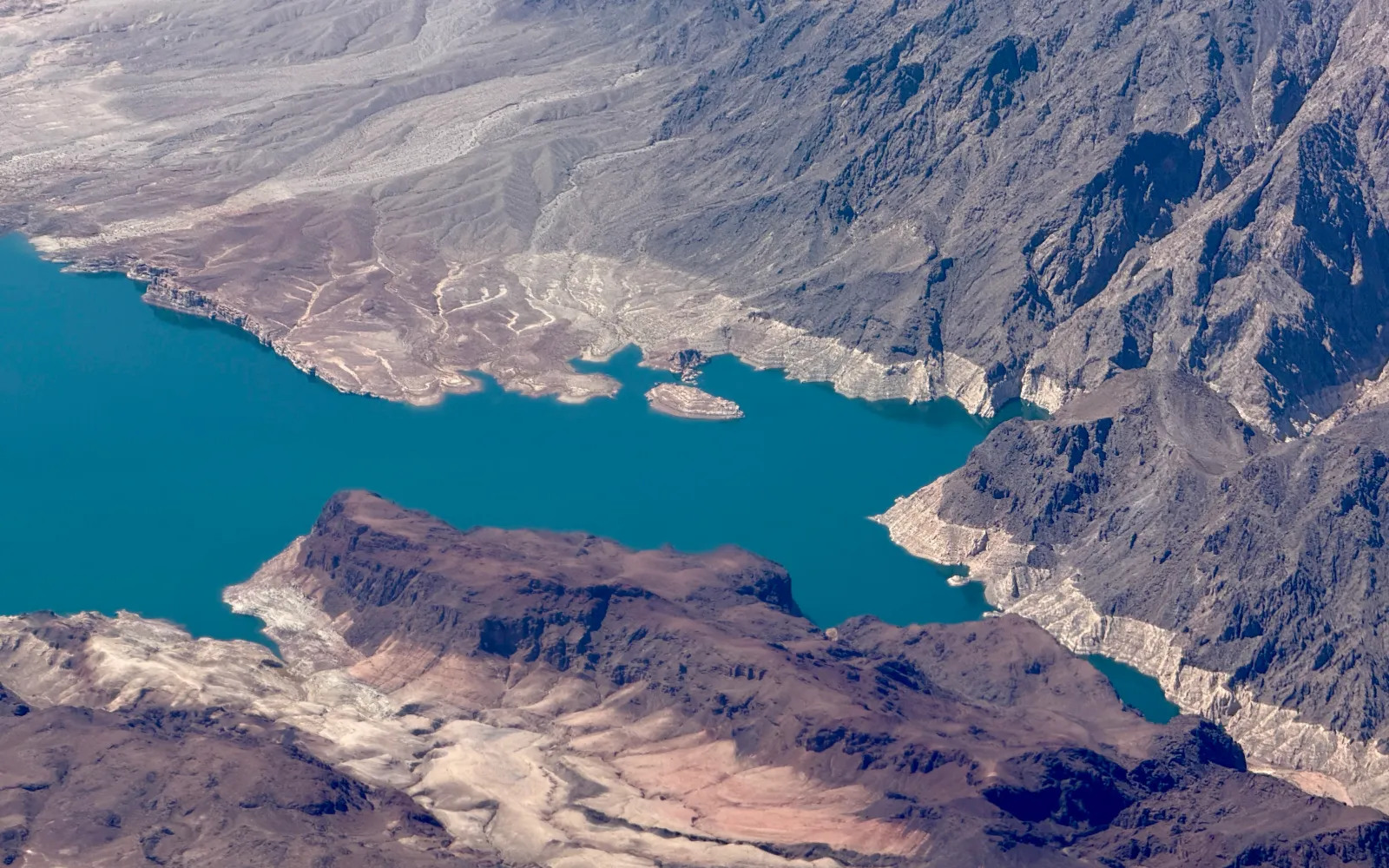
Drought and falling water levels have changed Lake Mead’s recreation landscape. Declining water levels caused by climate change and 20 years of drought have “reshaped the park’s shorelines,” according to the NPS, making launch-ramp extensions more difficult and more expensive because of the lake’s topography and projected water-level decline.
Low water has also left more infrastructure exposed or stranded. The agency said it had spent nearly $50 million over two decades relocating and extending ramps and other infrastructure to maintain boating access, only for unprecedented water-level declines to leave many of those investments “high and dry.” The park’s volunteer program also identifies abandoned and sunken boats and large debris—including car bumpers and appliances—as cleanup targets, and the NPS says abandoned boats harm the shoreline and create safety hazards.
Newly exposed shoreline can itself be unstable. In a 2022 statement reported by the Boulder City Review, Lake Mead’s public affairs office said newly exposed land near the water can be dense mud and silt that is difficult to navigate, with a hardened surface that creates a “false sense of stability” over several feet of unstable mud; the agency said people, vehicles and vessels had become stuck and sometimes required ranger rescues or costly towing.
Contact Newsweek editors on this story: John Fitzpatrick and Sam Wilson.
Update, 7/3/26, 11:35 a.m. ET: This article was updated with comment from a Lake Mead National Recreation Area spokesperson.
View 0 Comments
Submit Correction
View Editorial & AI Guidelines