...

By Gordon G. Chang
Author, Commentator
0
Share
Newsweek is a Trust Project member
See more of our trusted coverage when you search.Prefer Newsweek on Googleto see more of our trusted coverage when you search.
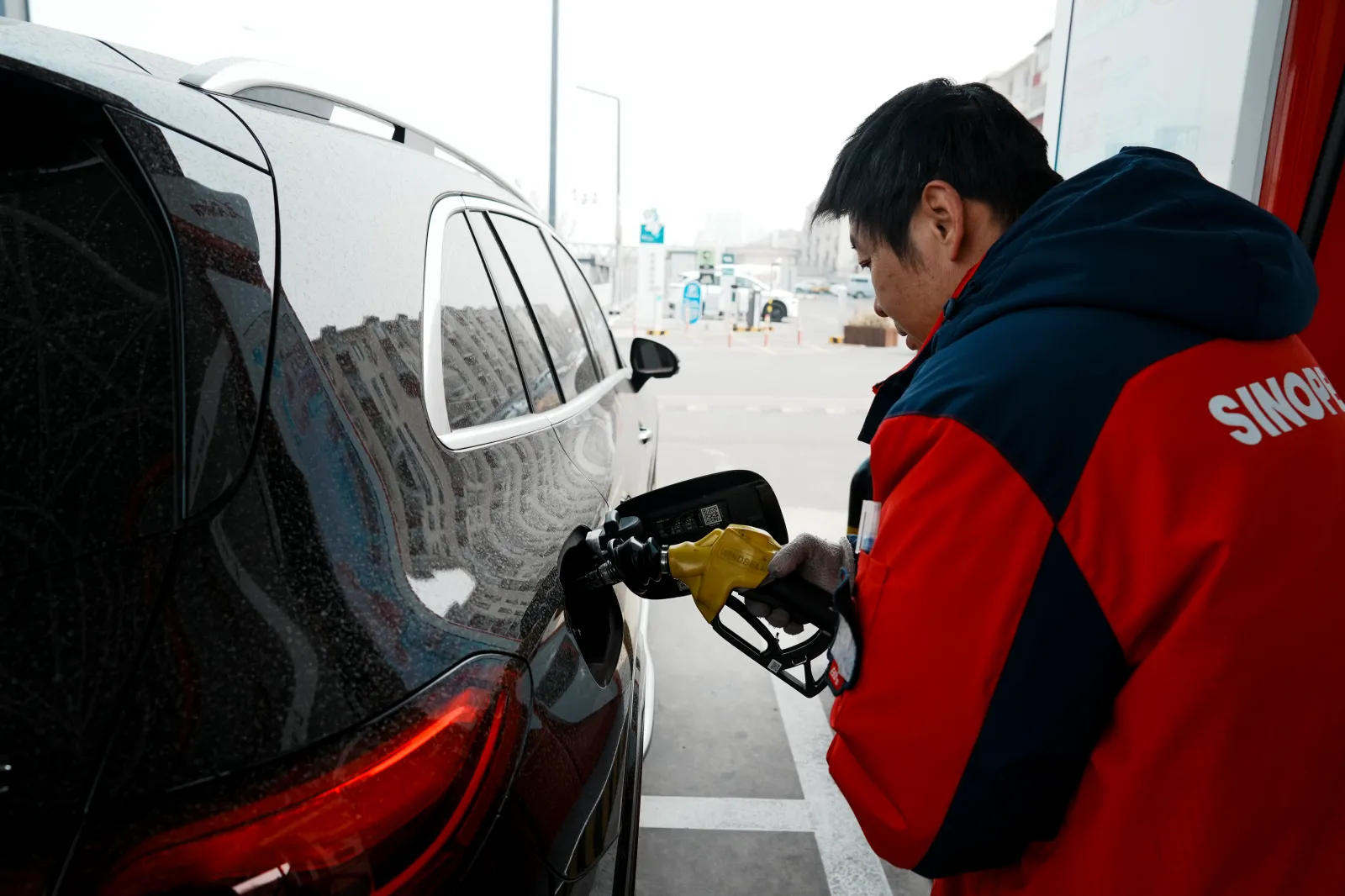
China’s National Development and Reform Commission announced on Monday that it would raise its maximum retail prices for gasoline and diesel.
The increases—prices are normally adjusted every 10 days—were the largest ever recorded, but they were only about half what they would have been under the powerful agency’s established pricing formula. The Chinese central government is trying to lessen the blow from the large spikes in energy prices following the partial closure of the Strait of Hormuz.
Sunday night, owners of gasoline-powered cars in China waited in long lines in anticipation of the large price hikes.
Read More on Opinion
China is the world’s largest crude oil importer and receives about 45 percent of its imported oil through that critical chokepoint.
Earlier this month, the NDRC ordered refiners not to sign new fuel export contracts. The refiners were also told to attempt to cancel committed shipments to foreign parties.
...
At first glance, China should not need to resort to emergency measures. For one thing, the country, due to persistent efforts to diversify sources of energy, receives only 6.6 percent of its total energy through Hormuz.
Moreover, because of its long-time backing of Tehran, tankers carrying oil to China have been allowed to transit the strait since the start of the war, putting the Chinese economy at a big competitive advantage with others in East Asia.
Additionally, China’s strategic petroleum reserve, thought to be the largest in the world, holds between 900 million to 1.2 billion barrels. At the higher figure—China does not announce the size of its reserves—there is enough import cover for about 140 days. At the moment, most believe the conflict will be over within that timeframe.
Despite China’s enviable situation, Citigroup and Goldman Sachs think sharp increases in energy prices this month could turn China’s worrisome years-long deflation—an economy-killer—into inflation overnight.
There have been plenty of reasons to worry about prices in China. Last month, the Producer Price Index, measuring factory-gate prices, was negative for the 41st straight month. Beijing has reported positive Consumer Price Index numbers in recent periods, but some of the reports looked too good to be true.
Government officials around the world seek mild inflation driven by consumer spending, but that is not in the cards for China. The country looks like it will end up in a dreaded cost-push inflationary environment, in other words, “bad inflation.” Observers see eroding profit margins in China—factories will have a hard time passing on increased energy costs—and what Americans once called “stagflation.”
Although many think the Chinese economy is resilient, it is especially fragile, with relatively small shocks disproportionately affecting the country.
China’s fragility, incredibly, is the direct result of Communist Party policies.
Chinese President Xi Jinping has repeatedly rejected advice from the world’s most prominent economists and does not believe personal consumption should form the basis of the Chinese economy. At the just-concluded “Two Sessions” in Beijing, leaders said they were “investing in people” but did not roll out structural reforms to increase consumer spending.
The leadership also announced a growth target for this year’s gross domestic product—4.5 percent-5.0 percent—that, in reality, will not be met, which means the central government will continue flooding the economy with investment cash. This tactic, which on balance keeps money out of the hands of ordinary citizens, depresses consumer spending.
Private consumption in China accounts for perhaps 40 percent of GDP, one of the lowest contribution rates in the world. And with Xi’s relentless emphasis on investment-driven growth, the contribution of consumer spending to economic output, as low as it is, appears to be declining.
As a practical matter, China’s leader has left China only one avenue to grow: Exports.
This means that Xi, who professes self-sufficiency, has put the fate of his economy in the hands of foreigners.
So far, Xi’s bet has paid off. Although Chinese export statistics appear inflated—factories report phony sales to claim government subsidies—the growth has been nonetheless impressive. In 2024, China’s merchandise trade surplus reached $992.2 billion; last year the surplus came in at an astounding $1.19 trillion.
Yet countries, both in the developed world and the so-called Global South, are beginning to resist Chinese products with tariffs and other barriers. For instance, last year Brazil reintroduced tariffs on China’s EVs and plug-in hybrids.
At the moment, China’s factories need both cheap and reliable energy. The Iran war threatens both cost and resilience.
The war also threatens globalization. China’s dependence on foreign markets perhaps did not matter when the world was stable, but now it is in turmoil. China, the biggest beneficiary of the three decades of post-Cold War stability, could end up the biggest victim of, among other conflicts, the Iran war.
Gordon G. Chang is the author of Plan Red: China’s Project to Destroy America and The Coming Collapse of China. Follow him on X @GordonGChang.
The views expressed in this article are the writer’s own.
View 0 Comments
Submit Correction
View Editorial & AI Guidelines