...

By Hugh Cameron
Reporter
0
Share
Newsweek is a Trust Project member
See more of our trusted coverage when you search.Prefer Newsweek on Googleto see more of our trusted coverage when you search.
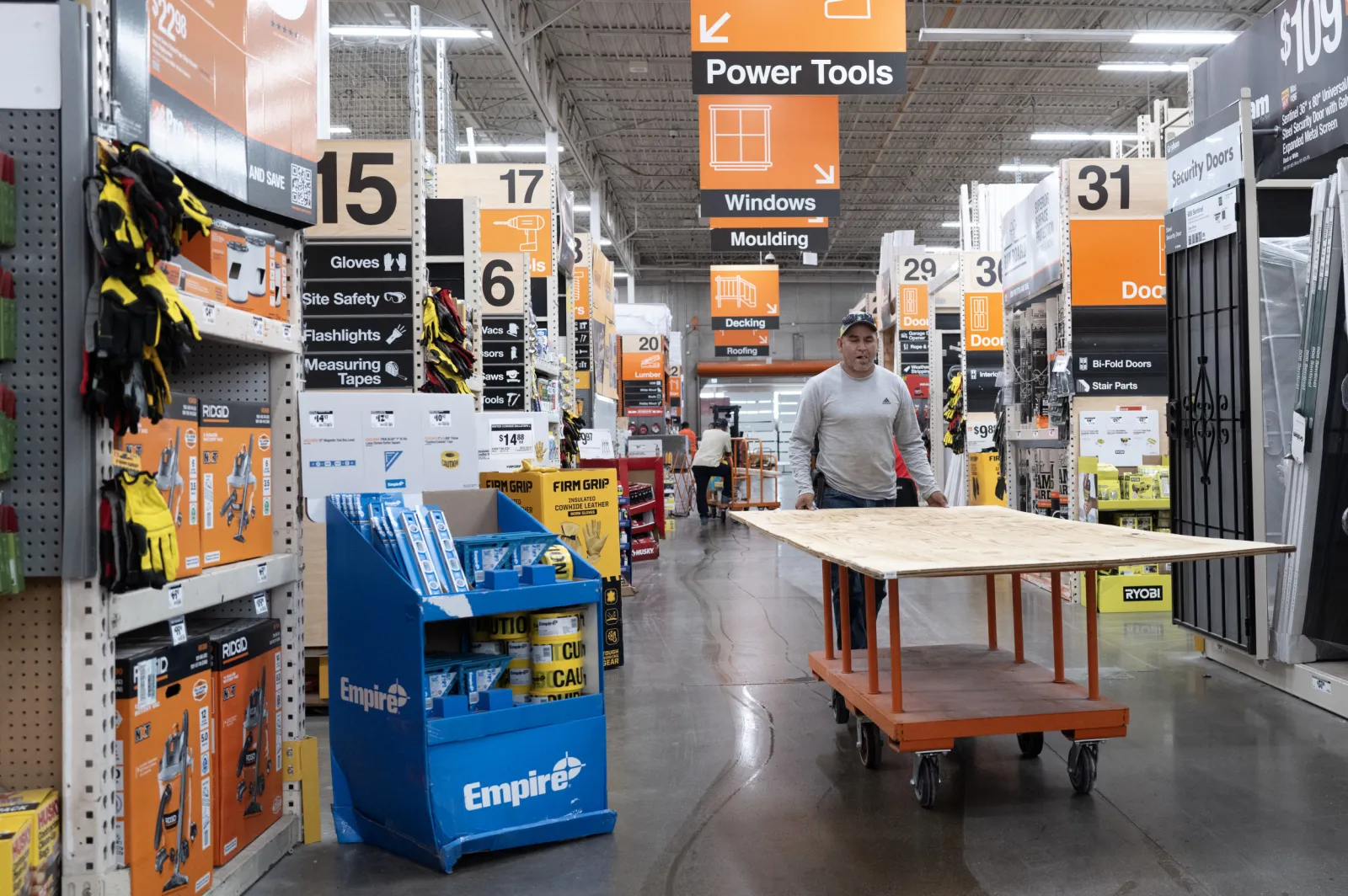
Home Depot intends to raise prices on certain products to mitigate the impact of President Donald Trump's tariffs, the company said on Tuesday.
Following the release of its second-quarter results, executives announced that the company would be implementing "modest" price increases to offset the "significantly higher" duties on imported goods.
A spokesperson for Home Depot told Newsweek: "Our goal is to maintain the best value for our customers. We'll take a portfolio approach as we always do, and we intend to have a price leadership position in home improvement."
Read More on U.S.
...
Why It Matters
The home improvement retailer was previously optimistic that it could deal with the new duties without resorting to price hikes, but has now joined the growing number of companies who say these are forcing them to pass some of their increased costs onto consumers.
The administration has acknowledged that its efforts to rebalance global trade will result in "pain" for consumers in the short-term, but has urged companies to shoulder as many additional costs as possible before raising prices.
What To Know
On Tuesday, Home Depot reported a 4.9 percent year-on-year jump in sales to $45.3 billion for the second quarter alongside broadly flat net earnings of $4.6 billion, both of which came in shy of analysts' forecasts cited by Reuters and Forbes.
In a subsequent earnings call, Billy Bastek, executive vice president of merchandising, noted that over 50 percent of Home Depot's products are domestically sourced and therefore exempt from any tariffs. However, he said that tariffs on imported products are "significantly higher today" than during its last earning conference in May.
"So as you'd expect, there'll be some modest price movement in some categories, but it won't be broad-based," Bastek said.
Chief Financial Officer Richard McPhail echoed the need for "modest" price hikes in an interview with the Wall Street Journal.
During the earnings call, Home Depot's leadership also emphasized that its results were affected by customers engaging in smaller home renovation projects, and pointed to the potential decline in mortgage rates as a positive tail wind going forward.
The company was previously optimistic that it could weather the tariffs without resorting to increased prices. In May, McPhail told CNBC that as a result of Home Depot's size and supplier partnerships the company intended to "generally maintain our current pricing levels across our portfolio."
"We don't see broad based price increases for our customers at all going forward," Bastek said on a call with analysts that month. However, he added that tariffs on certain products could result in Home Depot removing these from its portfolio entirely.
Home Depot is only the latest firm to float raising prices in response to Trump's tariffs. According to the Reuters tariff tracker, over 20 major companies have taken such steps this year. This includes some of Home Depot's competitors, such as Stanley Black & Decker, which implemented pricing actions in April in an effort to "minimize the impact of tariffs."
In May, similarly, Walmart said it would be unable to absorb all the costs associated with tariffs due to the "reality of narrow retail margins," and would have to pass some of these onto consumers. President Trump accused Walmart of price gouging and scapegoating his policies for price hikes, while ordering the retail giant and its Chinese suppliers to "EAT THE TARIFFS."
Beyond these public announcements, however, Jean-Pierre Dubé, professor of marketing at the University of Chicago Booth School of Business, believes many companies have held off on price hikes due to the potential for consumer backlash and "the real threat of lost demand."
*"*The key cause for delay is the lingering concern that some tariffs may be temporary and that subsequent 'deals' may have them repealed or, at least, reduced," he told Newsweek. "So before triggering customers and, worse, driving some of them away to competitors, many companies are rolling out price increases extremely slowly."
What People Are Saying
A spokesperson for Home Depot told Newsweek: "It is important to know that we have been diversifying our sourcing for over a decade. And recall that in 2018, most of our industry was subject to increased tariffs and as a result, most of our vendors established multiple sourcing options, including in the US. This has provided a tremendous amount of flexibility and allowed us to move even more quickly to continue our diversification strategy. As we said last quarter, we're working towards a goal of no more than 10 percent of our product sourcing [coming] from any country outside of the United States."
Jean-Pierre Dubé, professor of marketing at the University of Chicago Booth School of Business, told Newsweek: "Big companies with salient prices (e.g., Home Depot) are warning customers about price increases to soften the blow-back and remind buyers that they are merely passing on some of the tariff costs. While inevitably some buyers will simply stop purchasing or switch to cheaper alternatives, it will be hard to blame companies for passing through some of the tariff cost.
"Having said that, my bigger concern is the proliferation of unethical hidden price increases that tax buyers on their inattention. In this era of growing customer mistrust of companies, transparency may be key."
Billy Bastek, executive vice president of merchandising at Home Depot, during Tuesday's earnings call: "It's super important to remember that over 50 percent of our products are sourced domestically and wouldn't be subject to any tariffs. Now some of the important goods obviously tariff rates are significantly higher today than they were when we spoke in May. So as you'd expect there'll be some modest price movement in some categories but it won't be broad based."
What Happens Next
Despite the mortgage rate- and tariff-related headwinds, Home Depot confirmed its guidance for the remainder of the fiscal year. The company anticipates full-year sales growth of around 2.8 percent, and to open 13 new stores by late January.
Update 8/20/25, 7:58 a.m. ET: This article was updated with a response from a Home Depot spokesperson.
Update 08/21/25, 8:22 a.m. ET: This article was updated with additional comment.
View 0 Comments
Submit Correction
View Editorial & AI Guidelines