...

By Theo Burman
Live News Reporter
0
Share
Newsweek is a Trust Project member
See more of our trusted coverage when you search.Prefer Newsweek on Googleto see more of our trusted coverage when you search.
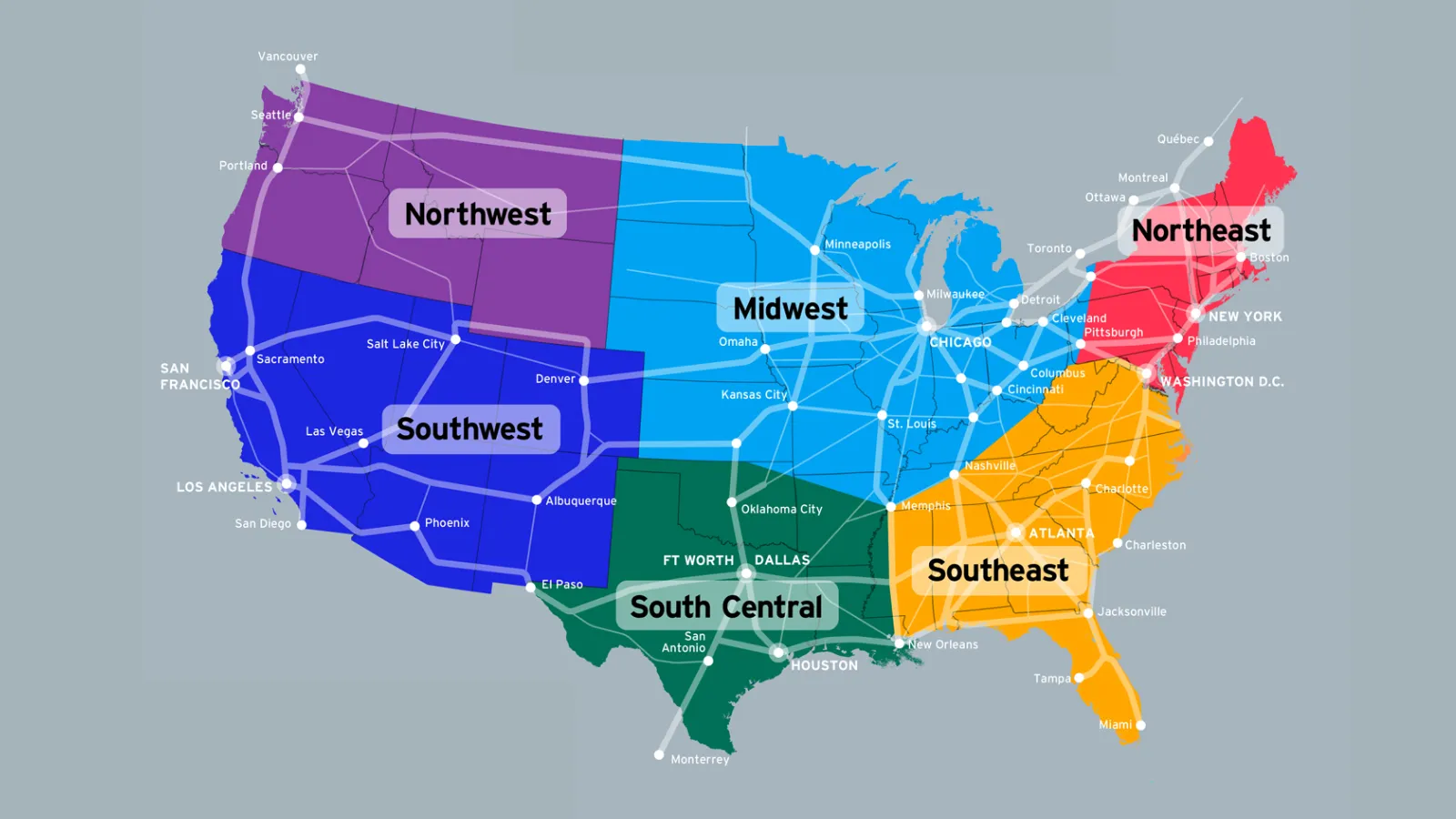
The U.S. High Speed Rail Alliance has published a map outlining a series of potential high-speed rail lines that could reach every mainland state.
The organization advocates for greater local and federal exploration of high-speed rail technology, despite the Trump administration's skepticism toward projects currently active in California.
Why It Matters
The largest high-speed rail project being worked on is in California, where 500 miles of track are planned to connect San Francisco, Sacramento, Los Angeles and San Diego. Originally approved by voters in 2008, the project is only ready to start laying track this year, after costs spiraled from $40 billion to as high as $128 billion.
Read More on U.S.
The smaller-scale Texas high-speed rail project, which would connect Dallas with Houston over 240 miles, was first proposed in the 2000s but has yet to break ground, despite partnerships with investors from Japan who have a proven track record with bullet trains.
Organizations like the U.S. High Speed Rail Alliance believe that further investment in high-speed rail can be a huge boon to the economy and the quality of life across the United States.
What To Know
The U.S. High Speed Rail Alliance's map of potential routes encompasses every state in the union, barring the exceptions of Alaska and Hawaii.
Areas like the Northwest and the more landlocked Midwest, which have traditionally lacked large-scale rail connections, would be connected to hubs like Chicago and San Francisco. The Southeast would be linked with Texas and the Northeast Corridor, the busiest rail network in the U.S. today.
...
The Alliance has been vocal in its backing of high-speed rail projects in California and Florida. When Trump first attacked the California project, the Alliance launched a petition to protect it, saying: "Donald Trump used wild criticisms to justify pulling back funding for California high-speed rail.
"California has the best state rail plan in the United States. By 2050, the state is working for world-class train and transit service. High frequency and high speed will make these options more convenient, more appealing, and more affordable than driving or flying. It's a fantastic plan, and other states should aim this high too."
What People Are Saying
Railway engineer and industry expert Gareth Dennis said: "If you have large, long-distance infrastructure or services, then yes, a pan-state or federal organization needs to oversee those. But much of the railroad infrastructure and many services really need to be managed at the state level.
"Of course, people's movements often cross state boundaries. They travel left, right, and center. But if you centralize too much at the federal level, the whole system becomes slow and sluggish. It simply takes too long to respond to challenges. There's too much decision-making happening at too high a level, where it's harder to make agile, localized choices about how everything fits together.
"What we should see instead is more funding flowing to the states. The federal government's role should focus on things better handled at the national level: Setting standards and enacting legislation that ensures states are spending money on the right things, less on highways, more on railroads.
"That's where federal influence is powerful and useful. But when it comes to actually planning what the rail network should look like, that responsibility should lie at the state level or even below that, at the city level."
What Happens Next
The progress of projects in California, Florida, and Texas will set a precedent for how other states approach investing in high-speed rail, as this kind of infrastructure requires a substantial investment over a long period without immediate results.
View 0 Comments
Submit Correction
View Editorial & AI Guidelines