10
Loading video...

By Tom O'Connor
Deputy Editor, National Security and Foreign Policy
0
Share
Newsweek is a Trust Project member
See more of our trusted coverage when you search.Prefer Newsweek on Googleto see more of our trusted coverage when you search.
A resurgent Hezbollah armed with deadly, new tactics is putting severe pressure on Israel and the United States as they attempt to achieve diplomatic gains on the Lebanese front of the Middle East crisis.
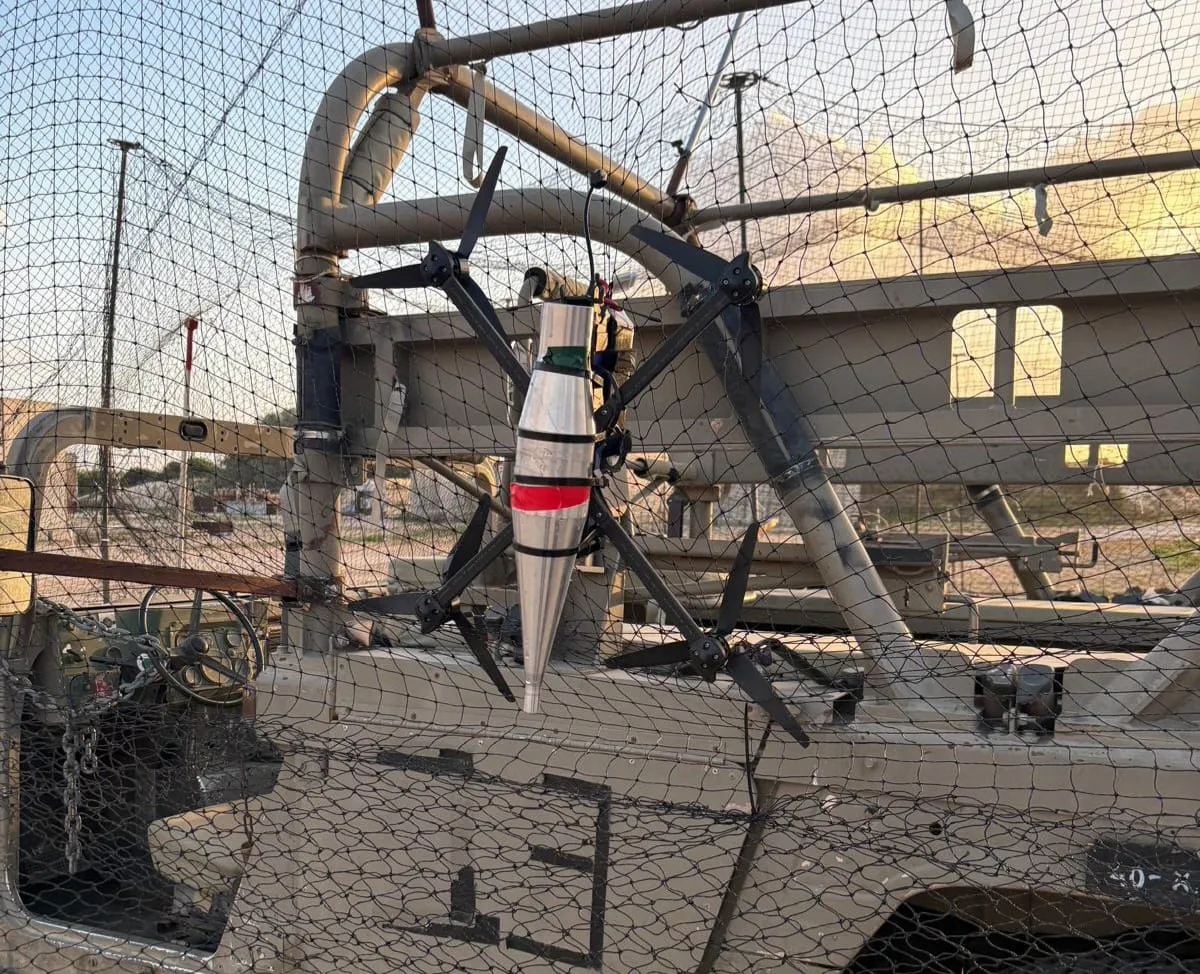
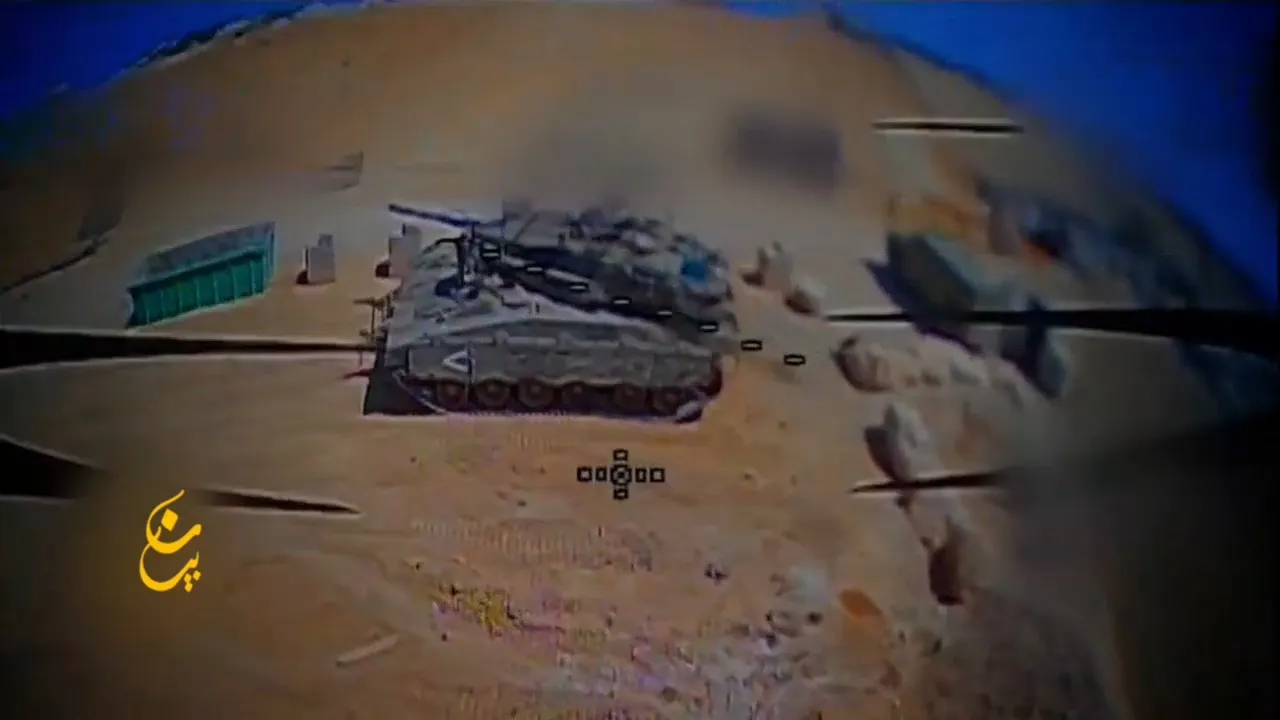
The greatest shift in recent months has emerged in the longtime Iranian Axis of Resistance ally's use of fiber-optic first-person view (FPV) drones, a weapon made infamous in the Russia-Ukraine war and appearing in the hands of Hezbollah for the first time in March, when the Lebanese group resumed hostilities in response to the U.S.-Israeli war launched against Iran on February 28.
A new report published by the Armed Conflict and Location Event Data (ACLED) monitor found that Hezbollah has used fiber-optic FPV drones in 21 percent of the attacks launched by the group over the past five months and in more than half of 33 events confirmed to have resulted in casualties among Israeli forces.
Read More
Israel Is Making Plans for a Post-America Middle East9 min read

This Map Shows Iran, Israel and Saudi Arabia’s Allies in a New Middle East11 min read

How Iran Is Using War With US to Forever Reshape the Middle East8 min read

One-way attack drones, sometimes referred to as suicide drones, accounted for 24 percent of Hezbollah's attacks, a significant jump from just 6 percent from October and November 2024, when fighting intensified after Israel launched a cross-border invasion, followed by a ceasefire just over a year after Hezbollah intervened in support of the Palestinian Hamas movement's October 2023 attack.
Related Story

Putin Has an Unexpected Ally He Can’t Control
...
Hezbollah operations of all kinds, including rocket launches, also rose from around 163 per month during that period to roughly 199 per month in the latest phase of the war.
"FPV drones have helped Hezbollah keep Israeli forces in southern Lebanon under military pressure, cause casualties, and strike from farther away by less visible operators," Nasser Khdour, ACLED's Middle East assistant research manager who authored the report, told Newsweek.
"At the same time, by showing that it can still reach Israeli forces despite its losses, Hezbollah has also tried to maintain psychological pressure on communities in northern Israel, exhaust Israeli air defenses, and distract its air forces."
Newsweek has reached out to representatives of Hezbollah and the Israel Defense Forces (IDF) for comment.
Related Story

The 5 Strangest Places Donald Trump Has Hidden
How Hezbollah Tries to Keep Up
The threat posed by Hezbollah's surge in drone attacks has prompted shifts in Israel's own tactics as well.
In May, an IDF official revealed that the Ground Forces’ Technological Brigade had begun "supplying troops in Lebanon with wire mesh nets designed to counter explosive drones." By that time, the IDF had already acquired around 158,000 square meters of netting, "equivalent to the area of approximately 20 soccer fields," according to the IDF official, with another 188,000 square meters on the way.
The development marks the latest instance of Hezbollah attempting to innovate an advantage against a technologically superior foe since their first clash in the 1980s.
During a month-long war in 2006, Hezbollah made use of Russia-designed Kornet anti-tank guided missiles (ATGMS) to penetrate heavily armored IDF Merkava tanks. By 2015, the group had designed a unique set-up of twin Kornet launchers known as "Tharallah" to counter Trophy active protective systems equipped to Israeli armored vehicles.
Since entering into a third major confrontation with Israel in October 2023, Hezbollah has utilized another ATGM to take on the IDF's formidable armored fleet, the Iranian Almas-1, reportedly reverse-engineered from Israeli Spike-MR systems captured during the 2006 conflict. Unlike the laser-guided Kornet, the Almas-1 uses fiber optic cables allowing the user to "fire and forget" without keeping the target in the line of sight.
But even this system proved insufficient for repelling an Israeli incursion backed by drones.
"Hezbollah felt they can repel the Israelis once the Israelis they start and a ground invasion," defense analyst Hamze Attar told Newsweek. "This proved to be wrong, because the Israelis, with their surprise attack, they destroyed most of Hezbollah's arsenal, and with the increased buffer that they created with the Israeli unmanned air vehicles and the targeting, they forced Hezbollah to move north, way at the edge of the Litani River."
"Then, at this stage, Hezbollah's arsenal became obsolete," Attar said. "It does not work. It does not fit the battlefield. And any time they shoot, they put their operators in danger."
And with the continual elimination of operators threatening to become an "existential" threat to the group, Attar said Hezbollah drew lessons from the conflict in Ukraine to adapt fiber optic technology to new advantages in drone warfare, allowing the unmanned systems to fly without radio signature or vulnerability to electronic jamming.
As the Middle East Eye cited one source close to Hezbollah as saying in a report last week, "Hezbollah grew its military wing to give it a qualitative advantage in battle with Israel, but now it has changed tactics and relies on technology instead. The drones are the best example."
The drones are also exceedingly easy to operate, especially for those accustomed to on-screen combat. The Middle East Eye report also cited unnamed sources linking Hezbollah's drone expertise to Lebanese youth gaming culture.
It wouldn't be the first intersection of Hezbollah and gaming. The group produced several self-made video game titles depicting battles with Israeli forces in Lebanon and Islamic State (ISIS) militants in Syria.
Now those skills appear to be put to use in what may be the group's most decisive war to date.
"The problem when you adapt to new weapons during wartime, during the battlefield, etc. is how long it will take you to train your new operators on a new weapon," Attar said. "But the good thing about the proliferation of video games is that everyone who's under 40 years old knows how to handle a joystick, and this does not require a lot of training."
"It requires some simulation, and then you're off to go. Then you train by doing. You learn while you are while you are practicing, and because of the extended range of the fiber optics, the operators are safe," he added. "It is a cheap tool. It's a one-way tool. It is a loitering tool, and at the same time, it is hard to find countermeasures."
And while Hezbollah drone operators may not necessarily be able to yet reverse Israeli control of territory in southern Lebanon, he argued that the ability to limit freedom of movement and raise attrition indicates "they are one step ahead of the Israelis when it comes to what is more effective on the in the battlefield."
...
Diplomatic Setbacks
The evolution of Hezbollah's tactics may spell trouble for Israeli Prime Minister Benjamin Netanyahu and U.S. President Donald Trump as both seek to secure lasting gains ahead of decisive elections this year.
Since Trump first sought a ceasefire with Iran in April, the Islamic Republic has demanded that any lasting cessation of hostilities include an end to Israel's war on Hezbollah. The White House ultimately pursued a separate truce in Lebanon that month, including deals between Israel and both Hezbollah and the Lebanese government.
However, Israel and Hezbollah have frequently accused one another of violating the terms of agreements, with Israel asserting that any deal ultimately involve Hezbollah's disarmament and Hezbollah maintaining that Israel must withdraw from all Lebanese territory. The Lebanese government has also called for the departure of Israeli forces, while talk of the Lebanese Army playing a role in disarming Hezbollah has prompted fears of sectarian conflict.
"The conflict in Lebanon has also remained closely linked to the wider confrontation with Iran," Khdour said. "The U.S. has pushed Israel toward the trilateral agreement in Lebanon, even though Israel has remained skeptical about the Lebanese government’s ability to disarm Hezbollah.
"Part of the aim has been to separate the Lebanon front from the conflict with Iran and prevent further escalation. But Hezbollah has remained part of the equation despite being weakened, which has allowed Iran to keep some leverage through Lebanon and has also shown differences between the U.S. and Israel over how to manage the wider conflict."
After Israeli and Lebanese officials reached a new agreement in June overseen by the Trump administration and touted as a step toward peace, a Hezbollah spokesperson told Newsweek that the group remained poised to press on with operations.
"Our hands are on our weapons," the Hezbollah spokesperson said at the time. "As long as there is occupation, there is resistance. The party did not participate in any discussions. We are committed if the occupation is committed, but we have the right to liberate our land and homes."
Netanyahu also pushed back against what he called "rumors" of Israel's withdrawal from Lebanon, Gaza and other fronts on Sunday, telling a government meeting that "we are in the midst of a very important operation," and "working prudently and wisely—with both determination and wisdom, alongside the Israel Defense Forces—and eliminating threats."
As U.S.-brokered talks between Israeli and Lebanese officials continue, conflict on the ground has persisted.
Lebanon's official National News Agency reported new IDF bombing and artillery targeting southern Lebanon on Monday. Israel also conducted strikes last week after announcing the deaths of two soldiers said to have been killed by an explosive device in southern Lebanon.
And at a time when conflict has brought in growing intervention from Iran's Axis of Resistance coalition, Hezbollah's resilience may also carry lessons for other groups striving to "absorb heavy losses and shift toward cheaper attrition tactics," Khdour said.
"For Israel, the concern is not only Hezbollah itself, but whether similar tactics could be used across other fronts, including Gaza and the West Bank."
Contact Newsweek editors on this story: Tom O'Connor and Dave Siminoff.
Correction: 8/11/26, 5:22 p.m. ET: This article has been updated to reflect that two Israeli soldiers were reported killed and four wounded in southern Lebanon last week, and that Iran's Almas-1 anti-tank guided missile is believed to be a reverse-engineered variant of Israel's Spike-MR system.
View 0 Comments
Submit Correction
View Editorial & AI Guidelines