...

By Anna Skinner
Associate News Editor
0
Share
Newsweek is a Trust Project member
See more of our trusted coverage when you search.Prefer Newsweek on Googleto see more of our trusted coverage when you search.
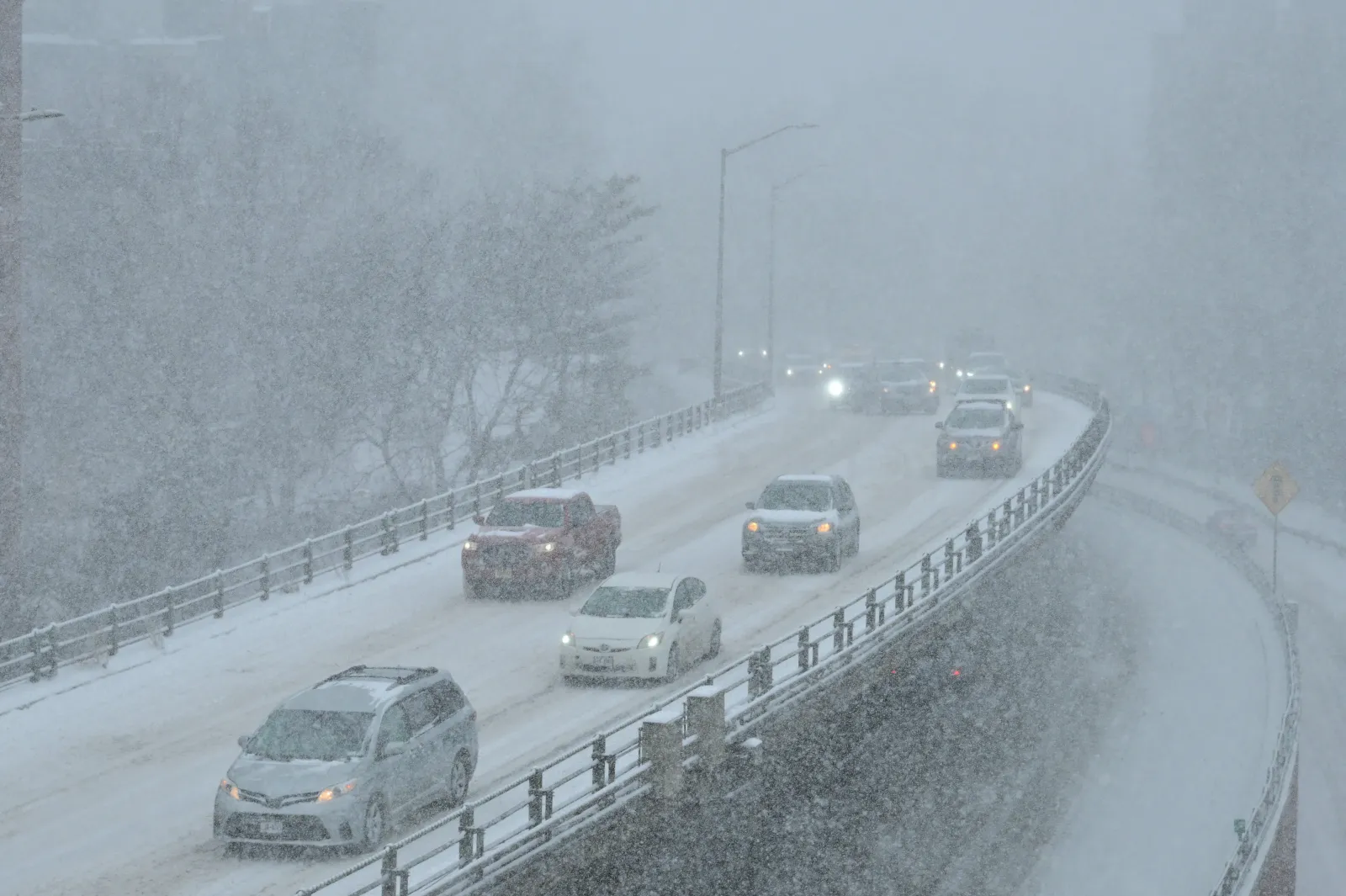
National Weather Service (NWS) meteorologists issued a fresh batch of winter storm watches on Friday as forecasts become more certain that a new winter storm will blanket the Northeast and Mid-Atlantic regions in heavy snow later this weekend.
The new slew of alerts comes as millions across the Northeast are enduring winter storm impacts on Friday, with numerous winter storm warnings and winter weather advisories spanning New York City through Maine. Earlier this week, AccuWeather meteorologists warned of another storm system that had the potential to deliver heavy snow across the Northeast and Mid-Atlantic region, although certainty was low at that time.
“The exact track of this storm, along with how quickly it strengthens, will determine how much snow falls in the mid-Atlantic and Northeast. The supply of cold air is limited, and that could also affect snowfall totals," Dan DePodwin, AccuWeather vice president of forecasting operations, told Newsweek in an email.
Read More on Weather
Now, forecasts are clearer, prompting local NWS offices to issue winter storm watches across West Virginia, Maryland, Delaware, Pennsylvania, New Jersey, and New York to go into effect later this weekend.
Most winter storm watches go into effect by Sunday, although some begin earlier, such as the winter storm watches issued in West Virginia, which go into effect late Saturday night.
"Persons should delay all travel if possible. If travel is absolutely necessary, drive with extreme caution and be prepared for sudden changes in visibility," NWS Charleston, West Virginia, said in the winter storm watch. "Leave plenty of room between you and the motorist ahead of you, and allow extra time to reach your destination. Avoid sudden braking or acceleration, and be especially cautious on hills or when making turns. Make sure your car is winterized and in good working order."
...
Snowfall Forecast
Widespread snowfall amounts between 4 and 6 inches are forecast for the region, with some areas expecting much higher snowfall totals, such as up to 13 inches. New York was expecting the highest snowfall amounts, with up to 13 inches forecast for Suffolk County on Long Island.
"Blizzard conditions possible. Total snow accumulations between 10 and 13 inches possible. Winds could gust as high as 45 mph," the NWS office in New York City said in a winter storm watch. "Travel could be very difficult to impossible. Areas of blowing snow could significantly reduce visibility. The hazardous conditions could impact the Monday morning and evening commutes. The combination of gusty winds and heavy wet snow could bring down tree branches."
Winter Storm Watch vs. Winter Storm Warning
A winter storm watch and a winter storm warning from the NWS signal the potential for dangerous winter weather, but they differ in timing and confidence.
A winter storm watch means forecasters see the potential for significant snow, sleet, or ice—usually within 24 to 48 hours—but details like exact location or amounts are still uncertain. It’s essentially an early heads-up to prepare for the possibility of hazardous conditions.
A winter storm warning, on the other hand, means the storm is either already happening or is highly likely to occur very soon. When a warning is issued, confidence is high that heavy snow, strong winds, or dangerous ice will create life-threatening or travel-disrupting conditions, and people should take immediate precautions.
It's possible that the winter storm watches in place across the Mid-Atlantic and Northeast will be upgraded to winter storm warnings as the forecast certainty improves.
In a polarized era, the center is dismissed as bland. At Newsweek, ours is different: The Courageous Center—it's not "both sides," it's sharp, challenging and alive with ideas. We follow facts, not factions. If that sounds like the kind of journalism you want to see thrive, we need you.
When you become a Newsweek Member, you support a mission to keep the center strong and vibrant. Members enjoy: Ad-free browsing, exclusive content and editor conversations. Help keep the center courageous. Join today.


View 0 Comments
Submit Correction
View Editorial & AI Guidelines