...

By Jack Beresford
Senior Reporter
0
Share
Newsweek is a Trust Project member
See more of our trusted coverage when you search.Prefer Newsweek on Googleto see more of our trusted coverage when you search.
The so-called “Disease of Kings”—gout—is on the rise in the U.S., with experts urging the public to take steps to curb it.
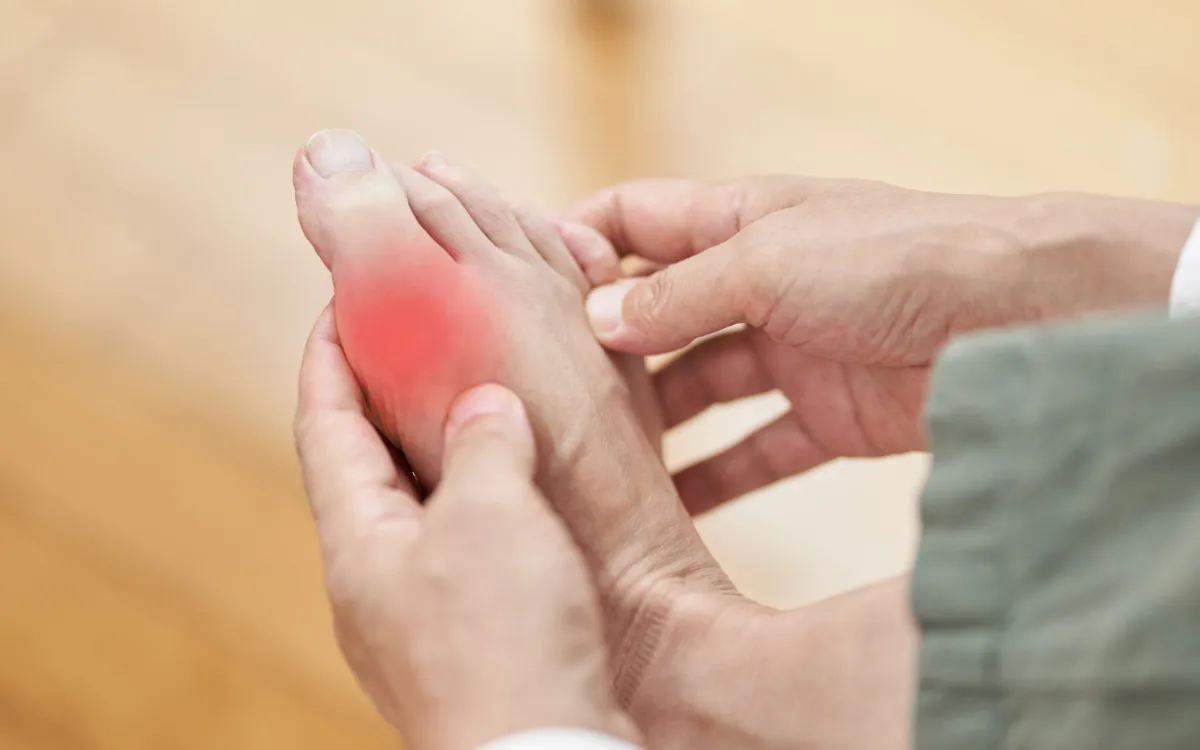
Gout is a type of inflammatory arthritis that leads to severe and often sudden pain in and around the big toe. It is triggered by a build-up of uric acid, a natural byproduct created when the body breaks down purines.
Purines are a colourless crystalline compound found in red and organ meat, beer, sugary foods, seafood, sugary desserts and alcohol like wine and ale. Some vegetables like spinach and asparagus also contain purines.
Read More on Health
Gout "is unique because it’s an immune-mediated response to uric acid and sharp uric crystals that build up in and around the joints,” explained internal medicine specialist Malinda Whitlow of the University of Virginia in a statement.
Historically, gout was seen as a condition that largely impacted the wealthier classes. In the past, those from poorer classes would have had very limited access to the kinds of luxuries needed to cause the disease.
Arguably the most famous sufferer was the English King Henry VIII while legend has it Benjamin Franklin treated a bout of the condition with "warm Bathing, and a Poultis of Mustard,"
...
Today, gout is recognized as a more complex metabolic condition caused by a variety of factors. A 2019 research paper lists some of the risk factors for the development of gout as obesity, insulin resistance, metabolic syndrome, hypertension and chronic kidney disease (CKD).
Gout is a condition on the rise in America. In 2018, a study published in the journal JAMA Network Open estimated the total number of Americans affected by gout to be around 12.1 million. The findings of the 2024 Global Burden of Diseases, Injuries, and Risk Factors Study (GBD), revealed that gout prevalence has increased 20 percent in the United States since 1990.
Though overall health and diet are key factors, you do not have to eat a rich diet or drink to excess to develop gout. Whitlow has encountered patients whose levels of uric acid are within a normal range, but complain of sudden big toe pain with no record of any injury or trauma to the area. In those cases, gout is suspected.
“You also start to see more gout with age. You start to see it more in people over 60 and in people with certain metabolic conditions, like high blood pressure, obesity, diabetes and chronic kidney disease,” Whitlow said.
Men are also more likely than women to be diagnosed with gout. It has been suggested that estrogen helps protect women against the condition. That may explain why women are more susceptible to gout after menopause.
Whitlow predicts the number of cases of gout will continue to rise as the American population gets older and those with chronic diseases live longer. Whitlow says there are steps that can be taken to reduce the risk of developing gout or having the condition flare up.
Though medications are available, the easiest and best way to avoid gout is through maintaining a healthy diet, engaging in exercise and staying well hydrated. Staying hydrated is crucial in aiding the kidneys in eliminating any excess uric acid.
“Particularly as it gets warmer, when we start to complete a patient's history, we’re looking at how much water people are drinking, especially if they have a chronic condition that puts them at risk,” Whitlow said. Talking to a doctor about the impact of any other medication is also important.
Though the risk of developing gout is much lower among younger adults, Whitlow has met with patients presenting the condition.
“I had a patient come in not too long ago, and we knew exactly what the problem was because there was a history of gout flare-ups. But they were in their early 40s, and I’m seeing more of that,” she said. “These conditions that put you at risk for gout, like diabetes, high blood pressure, obesity, chronic kidney disease, other metabolic conditions, they’re starting to be diagnosed younger and younger.”
Gout can lead to joint damage and erosion, resulting in permanent deformity and reduced mobility due to urate crystal deposits that may develop in joints and soft tissues. That’s why regular check-ups with a doctor are crucial.
“The most important thing is making sure people have regular checkups with their provider, to make sure they’re managing chronic conditions to prevent gout,” Whitlow said.
Do you have a tip on a health story that Newsweek should be covering? Do you have a question about gout? Let us know via health@newsweek.com.
References
Eliseev, M. S., Сергеевич, Е. М., Novikova, A. M., & Михайловна, Н. А. (2019). Comorbidity in gout and hyperuricemia: Prevalence, causes, prospects of urate lowering therapy. Terapevticheskii arkhiv, 91(5), 120–128. https://doi.org/10.26442/00403660.2019.05.000232
Punjwani, S., Jani, C., Liu, W., Kakoullis, L., Salciccioli, I., Al Omari, O., Merchant, A., Singh, H., Marshall, D., Shalhoub, J., Salciccioli, J. D., & Sehra, S. T. (2024). Burden of gout among different WHO regions, 1990–2019: Estimates from the global burden of disease study. Scientific Reports, 14(1). https://doi.org/10.1038/s41598-024-61616-z
Yokose, C., McCormick, N., Lu, N., Tanikella, S., Lin, K., Joshi, A. D., Raffield, L. M., Warner, E., Merriman, T., Hsu, J., Saag, K., Zhang, Y., & Choi, H. K. (2023). Trends in Prevalence of Gout Among US Asian Adults, 2011-2018. JAMA Network Open, 6(4). https://doi.org/10.1001/jamanetworkopen.2023.9501
View 0 Comments
Submit Correction
View Editorial & AI Guidelines