- U.S.
- World
- Science
- Health
- Life
- Rankings
- Opinion
- Entertainment
- Fact Check
- My Turn
- Education
- EventsSportsPodcastsBetter PlanetBetter WorkplacesMightierAutosNewslettersUnconventionalVantageExpertsLeadershipDev Pragad
- Subscribe

- Login
×
Subscribe Login
- U.S.
- World
- Science
- Health
- Life
- Rankings
- Opinion
- Entertainment
- Fact Check
- My Turn
- Education
- Events
- Sports
- Podcasts
- Better Planet
- Better Workplaces
- Mightier
- Autos
- Newsletters
- Unconventional
- Vantage
- Experts
- Leadership
- Dev Pragad
H.E Dr. Majid Al Fayyadh
Home > Rankings Portal
Share
Share on Facebook Share on Twitter Share on LinkedInShare on RedditShare on Flipboard Share via Email Comments
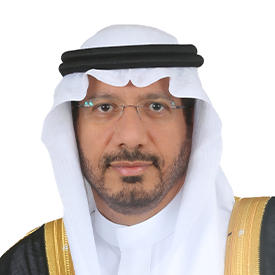
H.E Dr. Majid Al Fayyadh, MD, MMM
King Faisal Specialist Hospital & Research Centre (KFSHRC)
Chief Executive Officer

Company Info
King Faisal Specialist Hospital & Research Centre (KFSHRC)
Al Mathar Ash Shamali Riyadh 12713 Saudi Arabia
About
Dr. Majid Al Fayyadh, who has been the CEO of King Faisal Specialist Hospital & Research Centre (KFSHRC) since 2017, is a pediatric cardiologist who combines clinical expertise with executive leadership. Under his guidance, KFSHRC has undergone significant transformation aligned with Saudi Vision 2030, advancing health care innovation and sustainability. His early career focus on research yielded multiple grants and publications in leading national and international journals which has bolstered KFSHRC's global reputation. Dr. Al Fayyadh continues to champion initiatives that enhance patient care, research, and medical education, establishing KFSHRC as a global leader in medical excellence.
Education
- Bachelor’s Degree in Medicine and Surgery
King Saud University, 1989 - Residency in Pediatrics
Tufts University, Columbia University, 1999 - Sub-Specialty
Fellowship in Pediatric Cardiac Electrophysiology
Baylor College of Medicine, 2001
Awards & Certifications
- Chairperson of the Board
King Faisal Specialist Hospital Foundation
(Wareef Charity)
Links to Rankings during tenure
Past Rankings Appearances
CLOSE X
Were there any early experiences during your childhood that you believe helped set you on the path toward a career in medicine?
One of the earliest moments that shaped my journey happened during my school years, when King Faisal Specialist Hospital & Research Centre first opened. It was a significant event for Riyadh at the time. I was just a child, but I had the chance to attend the inauguration with my father. I remember us driving past the hospital when he looked at me and said, "One day, I hope you'll work there." That moment stayed with me—it planted a seed.
No one in my family had pursued a career in medicine—most were engineers or educators—so it was a leap into the unknown. But that challenge motivated me. Today, I'm proud that many members of my extended family, including my sons, have followed the same path into medicine.
What motivated you to transition from clinical practice to administrative leadership and ultimately to the role of CEO?
Initially, I resisted the idea of administration. Even during my fellowship training, I used to tell colleagues, "I'll never go into management; I'm here to care for patients." But over time, I realized that as a practicing physician, I could help one patient at a time. In an administrative role, I could help thousands of people.
That realization led me to pursue a Master's in Medical Management at the University of Southern California. It gave me the tools to broaden my contribution and to look at healthcare from a systems-level perspective. Upon my return, I gradually assumed more leadership responsibilities. And eventually, to my surprise and deep honor, I was appointed CEO of KFSHRC by Royal Decree. It's a role I never sought out—but one I cherish every day. Because in this position, I'm still serving patients—just through a much wider lens.
In your current role as CEO, how do you measure success at the end of a day?
As a physician, I measure my success far more easily because I'm dealing with emotions. If I see my patients happy, if I do a successful procedure, if the patient prays for me or writes me a letter, that would be, to me, a measure of success. The accurate measure of success is patient satisfaction.
But if you ask me how I measure my success as a CEO, that's much harder to define. Yes, our board reviews KPIs—financial sustainability, operational metrics, and strategic outcomes—but I measure success by two key factors: the satisfaction of our patients and, most importantly, the well-being of our staff. If our employees feel respected, supported, and motivated, they will naturally deliver world-class care. That, to me, is the real engine of success.
How do you manage work-life balance with this line of work?
The hours as a cardiologist were already long, but as a CEO, the challenge is different—you carry the weight of the organization with you. What helped was building a strong, trusted leadership team that shares responsibility and pressure.
We also established a dedicated Wellness Division, led by a senior executive, to promote holistic well-being—physical, mental, social, and financial. I try to model this. I go home at a reasonable hour, spend time with my family, travel, and engage in regular exercise. We've built a culture that values wellness across all levels of staff, because healthy employees create healthier systems.
Why is employee well-being such a central part of your leadership philosophy?
My core responsibility is to our employees. Patients are our mission, but employees are my responsibility. They dedicate their lives to this institution—to earn a living, support their families and serve the public.
If they feel overworked, underappreciated, or unsupported, it affects every corner of the hospital. On the other hand, when they feel empowered and valued, they treat patients with empathy and excellence. That's why our wellness programs are not a luxury; they're a necessity, and integral to our strategy.
How does Saudi Vision 2030 shape the hospital's direction?
KFSHRC is celebrating 50 years since its founding in 1975, and we're proud to be a key player in realizing Saudi Vision 2030. Our transformation journey is about becoming not just a regional leader, but a global one.
We're the first public hospital in the Kingdom to undergo complete corporatization, enabling us to operate with greater agility and impact. Saudi Vision 2030 calls for innovation, excellence, and patient-centered care—and we're aligning every part of our institution to those principles.
How do you harness innovation to stay at the forefront of medical science?
Our innovation strategy is centered on two key pillars: genomics and artificial intelligence. These are converging fields that are redefining the practice of medicine.
We know today that cancer is fundamentally a genetic disease. Similarly, a person's response to medications is also a factor. Increasingly, we are discovering that the underlying causes of numerous chronic and rare diseases are genetic. Even susceptibility to infection or environmental triggers is now understood to have genetic dimensions. This genomic revolution is the foundation upon which we're building a new, precision-driven model of care.
This is further amplified by our investments in AI and computing power, which enable us to process vast datasets, identify patterns, and predict outcomes in ways that were previously unimaginable. Together, these tools are not just enhancing clinical decision-making—they're transforming the way medicine is practiced.
We have a unique genetic pool in the region shaped by high consanguinity rates, which has led to a higher prevalence of inherited diseases. By understanding and treating these conditions locally, we're generating insights that have global relevance through our Center for Healthcare Intelligence and Precision Medicine initiatives, with worldwide applicability. Our advanced AI platforms enable us to analyze data at scale, personalize treatments, and make more accurate predictions—whether in oncology, transplant medicine, or in response to medication.
Our goal is to establish ourselves as a global reference center for AI-enabled genomic medicine, thereby contributing to Saudi Arabia's Vision 2030 and advancing personalized healthcare worldwide.
What is the Capacity Command Centre, and how are you integrating AI into this particular innovation? What does that mean for your organization as a whole and patients as well?
Our AI-powered Capacity Command Center is a game-changer. It has allowed us to move beyond traditional descriptive analytics into the realm of predictive intelligence, anticipating demand, optimizing resource allocation, and ultimately improving patient care.
For example, we now forecast emergency room activity hours in advance and proactively reallocate staff and resources. The factors that contribute to it could be the weather, the number of patients in the oncology clinic, or the number of sick leaves expected that day.
The genesis of this system came during the COVID-19 pandemic, when we developed a predictive algorithm to manage ICU capacity. That success prompted us to institutionalize the concept. Today, a specialized team continuously monitors real-time data across the hospital, receiving AI-generated recommendations that inform decisions on everything from patient flow to resource allocation.
The impact has been significant. Emergency room wait times have dropped from over 24 hours to less than six, ensuring faster access to care and improving patient outcomes. In our operating rooms, the system dynamically schedules procedures based on a complex matrix of variables—surgeon availability, patient readiness, nursing assignments, and procedural complexity—enabling us to schedule subsequent surgeries with just a 30-minute margin. This has resulted in a 30% increase in surgical suite utilization, representing a significant leap in efficiency.
For us, this isn't just a digital tool; it represents a new model of healthcare operations. One that is responsive, intelligent, and patient-centered, aligning with our broader mission to deliver world-class care through innovation and data-driven excellence.
You have mentioned a strategic mandate for KFSHRC to become a health destination for medical tourists across the Gulf and beyond. Could you elaborate a bit on what it means for the hospital to be a destination for patients, and how does this initiative align with your broader vision for the hospital's future?
For a long time, we were unable to treat international patients. We were a public hospital, and our services were limited to patients inside the Kingdom. But I used to get requests from abroad all the time. People wanted to come to KFSHRC for treatment, and we couldn't accommodate them. That changed about three years ago, and it opened the door for something much bigger.
We believed then—and still do—that the level of care we offer, the expertise of our teams, and the quality of our outcomes should be available to more people, not just those living here. Since we opened up, our international patient numbers have grown significantly. Last year alone, we saw a 47% increase. We treated patients from 17 countries, primarily from the GCC, as well as from other regions.
Medical tourism, in our case, is not just about economic opportunity—it's also about confidence and soft power. I remember when my brother had surgery in New Orleans over two decades ago. We lived there for a few months, and I still find myself supporting the Saints football team because of that experience. That's the soft power of healthcare—how it stays with you, shaping your perception of a place. Today, seeing patients from across the region and beyond choose KFSHRC for complex treatments is deeply affirming—for our team, it reinforces their sense of excellence and global impact.
This ties into our larger vision: to not be only a national leader, but also a hospital that contributes globally. This is part of how we grow—responsibly, ambitiously, and with purpose.
Looking ahead, where do you see the most significant opportunities for growth and transformation within the healthcare industry, both regionally and globally?
The whole health care industry is shifting toward precision medicine—care that's tailored to the individual, not just the condition. The new generation of patients expects something different from what we were accustomed to. They want care that's personal, responsive, and tailored to their needs—and as providers, we need to meet that expectation.
At the same time, healthcare is moving beyond the hospital walls. Patients want care where it suits them—at home, virtually, or in outpatient settings. So we've started rethinking how we organize our services. Instead of structuring departments by medical specialty, we group them around patient needs. We bring together different specialists based on what the patient requires—not just within the hospital, but across outpatient care and eventually into the home.
Because, in reality, when a patient walks into the hospital, we're only seeing a tiny fragment of their life. If we genuinely want to take care of their health, we need to consider the rest of their life as well—their habits, their environment, and their support system. That's where wellness and continuous monitoring play a crucial role.
Healthcare is no longer just about treating disease—it's about maintaining health. That's the shift. Already, approximately 15% of our care is delivered virtually, and this number is expected to continue growing. Telemedicine, remote care, and digital follow-up are all set to play a more significant role in how we care for people in the future.
What is an exciting initiative or ambitious vision currently underway at KFSHRC that you believe will further elevate the hospital's reputation on the global stage?
At KFSHRC, we often discuss honoring the legacy of those who founded this institution. And now, it's our responsibility to build its future.
One area where I truly see the future taking shape is robotic surgery. As a cardiologist, I've used robotic tools myself, and I must admit that early on, many people were skeptical. It was seen as just another fancy gadget. But over time, the results have spoken for themselves. Today, we've 10 robotic surgery consoles operating across multiple specialties, including cardiac, transplants, urology, gynecology, and others, and we've reached a level of mastery that delivers actual measurable outcomes.
What excites me is the difference it's making for patients. The procedures are less invasive, recovery is faster, and scarring is minimal, all of which translate to better experiences and outcomes. In just one year, we were able to reduce our overall hospital length of stay by 14%, and in heart transplants alone, we brought it down from two months to just 26 days.
We're proud to have performed the world's first fully robotic heart transplant, and our robotic cardiac surgery program now boasts a 98% survival rate across more than 400 cases, placing KFSHRC among the top global centers for outcomes and innovation. This success is drawing international attention. More patients are traveling to KFSHRC specifically for robotic procedures, with some even walking in saying, "I want the robot to operate on me." Of course, the robot doesn't operate on its own; it's still the surgeon in complete control, but the level of precision and consistency it enables is remarkable.
We've also started a robotic surgery training program, because we don't just want to adopt technology—we want to lead in it. Beyond adoption, we're actively shaping the field, collaborating with industry partners to refine platforms and develop innovations tailored to our patients' needs.
So, when we think about how KFSHRC is contributing to the future of global healthcare, I believe robotic surgery is one of the areas where we're not just keeping pace—we're setting the pace.
Dr. Majid Alfayyadh is a member of the Newsweek CEO Circle, an invite-only executive community of subscribers.
 Visit our rankings portal
Back To Top


U.S.WorldScienceHealthRankingsOpinionEntertainmentFact CheckMy TurnEducationEventsSportsPodcastsBetter PlanetBetter WorkplacesMightierAutosNewslettersUnconventionalVantageExpertsLeadershipDev Pragad
Trending
Israel at War Vladimir Putin Russia-Ukraine War Donald Trump
Subscriptions
Membership Monthly $4.99 Membership Yearly $49.00 Membership+Print Monthly $9.99 Membership+Print Yearly $99
Newsletters in your inbox See all
The Bulletin (Daily)See Sample
The Gist of It (Daily)
Geoscape (Twice a Week)
The 1600 (Daily)
Inside Trump Policy (Weekly)
Newsweek AI (Weekly)
Sports Daily (Daily)
The Josh Hammer Report (Weekly)See Sample
For The Culture (Three Times a Week)See Sample
Discoveries (3 Times a Week)
Like & Subscribe (Daily)
Breaking News (As it Breaks)
The Debate (Twice a Week)
Pawsitively (Daily)
Better Planet (Weekly)
The Good Life (Weekly)
Newsweek Pulse (2x3 Times a Month)
Sign up now
You can unsubscribe at any time. By signing up you are agreeing to our Terms of Service and Privacy Policy
In The Magazine  September 19
2025 Issue
Company
About UsMastheadDiversityAnnouncementsArchivePolicies and StandardsMission StatementLeadershipNewslettersPress Center
Editions:
Contact
AdvertiseCareersContact UsCorrections
Terms of Use
Cookie PolicyCopyrightPrivacy PolicyTerms & ConditionsTerms of Sale Privacy Settings
© 2026 NEWSWEEK DIGITAL LLC