...


By Khaleda Rahman and Amanda Castro
0
Share
Newsweek is a Trust Project member
See more of our trusted coverage when you search.Prefer Newsweek on Googleto see more of our trusted coverage when you search.
President Donald Trump says he has been briefed on the hantavirus and announced that the administration on Friday will likely craft a full report on the health scare.
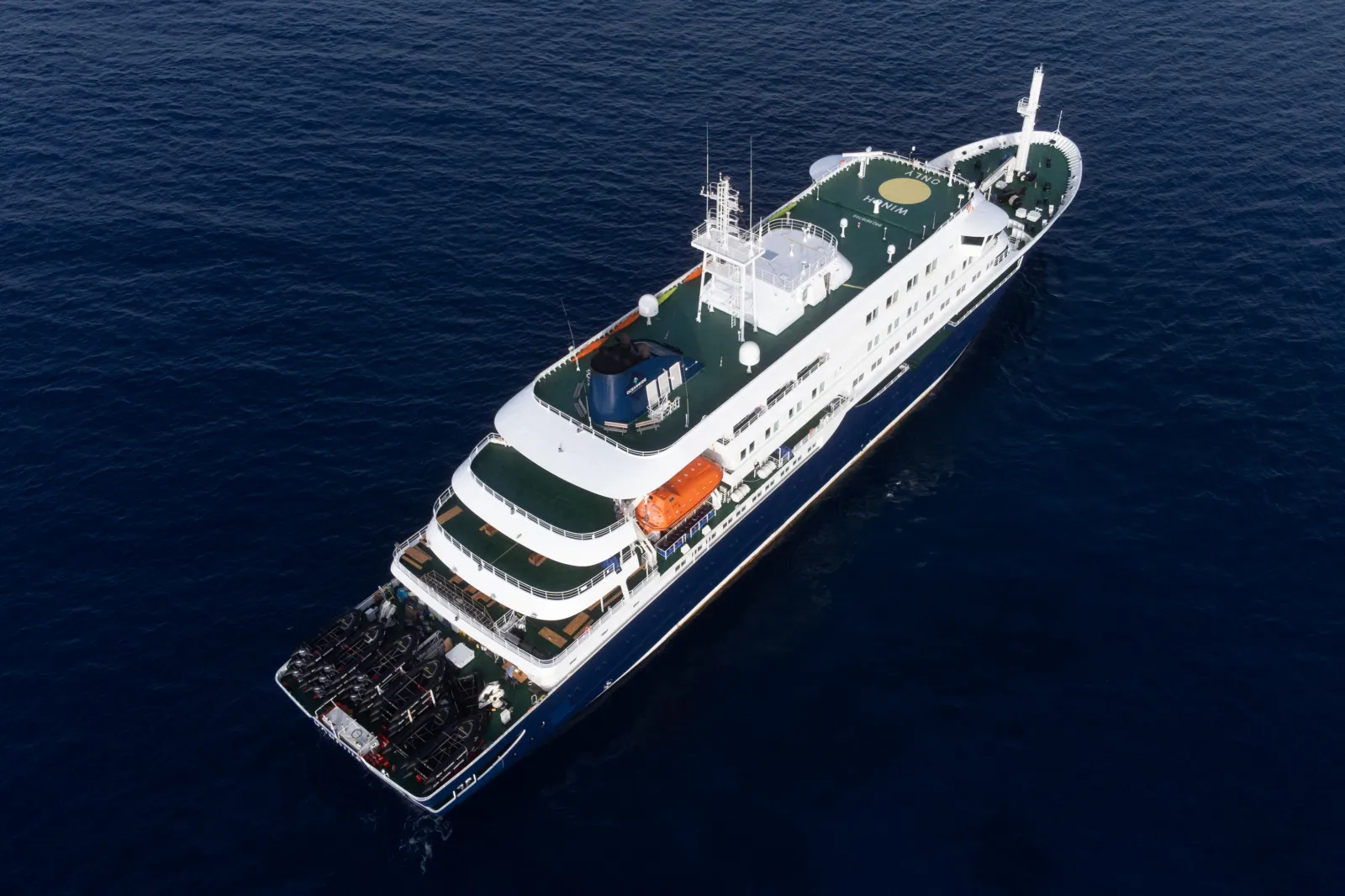
"It's very much, we hope, under control," the president said to reporters on Thursday while adding, "It was the ship and I think we're going to make a full report about it tomorrow. We have ... a lot of great people studying it, it should be fine, we hope."
When asked if Americans should be concerned about it spreading, Trump said, "I hope not. We'll do the best we can."
Trump's remarks come as at least four U.S. states are monitoring people who have returned home from a cruise ship struck by a hantavirus outbreak, health officials have said.
One Virginia traveler who was on the MV Hondius "is currently in good health, not showing any signs of infection, and is under public health monitoring," the Virginia Department of Health told Newsweek. “Generally speaking, we believe the risk to the general public to be low,” a spokesperson added.
Residents in three other states—Georgia, California and Arizona—who were aboard the ship are also being monitored after returning home, The New York Times reported on Wednesday. None have shown signs of illness, officials said.
Three people have died and several others have been sickened in the outbreak on the ship, which set sail from Argentina a month ago.
Hantavirus usually spreads by the inhalation of contaminated rodent droppings and in extremely rare cases can be transmitted from person to person, according to the World Health Organization (WHO). There is no specific treatment or cure, but early medical attention can increase the chance of survival.
In a statement on Wednesday, the Centers for Disease Control and Prevention (CDC) said the "administration is closely monitoring the situation with U.S. travelers onboard the M/V Hondius cruise ship with confirmed hantavirus.”
The U.S. State Department is leading a “coordinated, whole-of-government response including direct contact with passengers, diplomatic coordination, and engagement with domestic and international health authorities,” the CDC’s statement said.
"At this time, the risk to the American public is extremely low. We urge all Americans aboard the ship to follow the guidance of health officials as we work to bring you home safely."
Newsweek contacted the CDC for further comment via email on Thursday.

...
The WHO's Director-General Tedros Adhanom Ghebreyesus said on Thursday that five of the eight suspected hantavirus cases, including the three deaths, have now been confirmed by laboratory testing.
He said more cases may emerge due to the virus’ long incubation period, but said WHO "assesses the public health risk as low.”
More than two dozen passengers from at least 12 counties left the cruise ship on St. Helena, a remote South Atlantic island, on April 24, nearly two weeks after the first passenger died on board, the ship operator and Dutch officials said on Thursday.
That news raised concerns that the virus could spread as travelers returned home, though the WHO and other experts say the risk to the wider public is considered low as hantavirus isn’t easily transmitted between people.
Countries Scramble to Prevent Spread
Countries around the world are working to prevent the spread of hantavirus, tracking those who had already left the ship before the virus was detected or anyone who has been in close contact with them since.
The Dutch health ministry said a female flight attendant who was not on the ship was being tested for hantavirus and being kept in an isolated ward in an Amsterdam hospital after showing symptoms. She had contact with an infected passenger on a KLM plane, the ministry said.
On Wednesday, it emerged that a man tested positive for hantavirus in Switzerland after he disembarked at St. Helena and flew home. And on Thursday, Singaporean health authorities said they were monitoring two men who got off the ship at St. Helena and flew to South Africa and then home.
Hantavirus Monitoring in the United States
Four states have now confirmed people are being monitored for possible infections. They are:
Arizona
Arizona Department of Health Services was informed that one resident had been on the ship, a spokesperson told Newsweek on Thursday. “This individual is not symptomatic and is being monitored by public health,” the spokesperson said.
California
California Department of Public Health was informed by the CDC that California residents had been on the ship, a spokesperson for the department told Newsweek on Thursday. The spokesperson did not say how many residents were on the ship, but said the agency is coordinating with local health officials to monitor them.
“There is no information that the California residents are ill or infected,” the spokesperson said. “At this time, the risk to public health in California is low.”
Georgia
The Georgia Department of Public Health is monitoring two Georgia residents who returned home after disembarking from the MV Hondius, a spokesperson told Newsweek on Thursday.
“The individuals are currently in good health and show no signs of infection,” the spokesperson said. “They are following current recommendations from CDC.”
Virginia
A spokesperson for the Virginia Department of Health told Newsweek that it was informed by the CDC that one person who was on the MV Hondius has returned home.
“We will maintain communication with federal partners, and will continue to implement recommended public health actions,” the spokesperson said. "Generally speaking, we believe the risk to the general public to be low.”
WHO Stresses Cooperation and Care as Hantavirus Outbreak Raises Global Concerns
The World Health Organization urged unity and calm on Thursday as officials addressed the unfolding hantavirus situation, including growing anxiety among passengers confined aboard a quarantined ship.
WHO epidemiologist Dr. Maria Van Kerkhove acknowledged the emotional strain facing those on board, saying the organization is aware of videos showing passengers in distress. She noted that the Director‑General has been in direct contact with the ship’s captain to ensure both medical care and psychological support are being provided. While the experience has been “frightening,” she said, morale has lifted since the vessel resumed movement.
The briefing also underscored the limits of current medical tools. WHO panelist Anaïs Legand confirmed that no approved treatment exists for hantavirus, emphasizing that early, intensive supportive care remains the most effective intervention.
Tensions surrounding the U.S. withdrawal from the WHO surfaced during the session, prompting Tedros Adhanom Ghebreyesus to stress that infectious diseases transcend politics. “Viruses don’t care about our politics,” he said, adding that both the U.S. and Argentina are now directly affected and may come to reassess the value of global cooperation. “Health security needs universality,” he said.
Officials pushed back against comparisons to the early days of COVID‑19, noting that the current outbreak has occurred among individuals in close contact within a confined setting. “This is not COVID, this is not influenza,” Van Kerkhove said, highlighting the virus’s very different transmission dynamics.
Dr. Abdi Mahamud, who oversees incident response for WHO’s Western Pacific region, said the organization expects the outbreak to remain contained if public‑health measures are followed. “We don’t anticipate a pandemic,” he said, describing the situation as manageable with swift action.
View 0 Comments
Submit Correction
View Editorial & AI Guidelines