...

By Dan Gooding
Associate News Editor
0
Share
Newsweek is a Trust Project member
See more of our trusted coverage when you search.Prefer Newsweek on Googleto see more of our trusted coverage when you search.
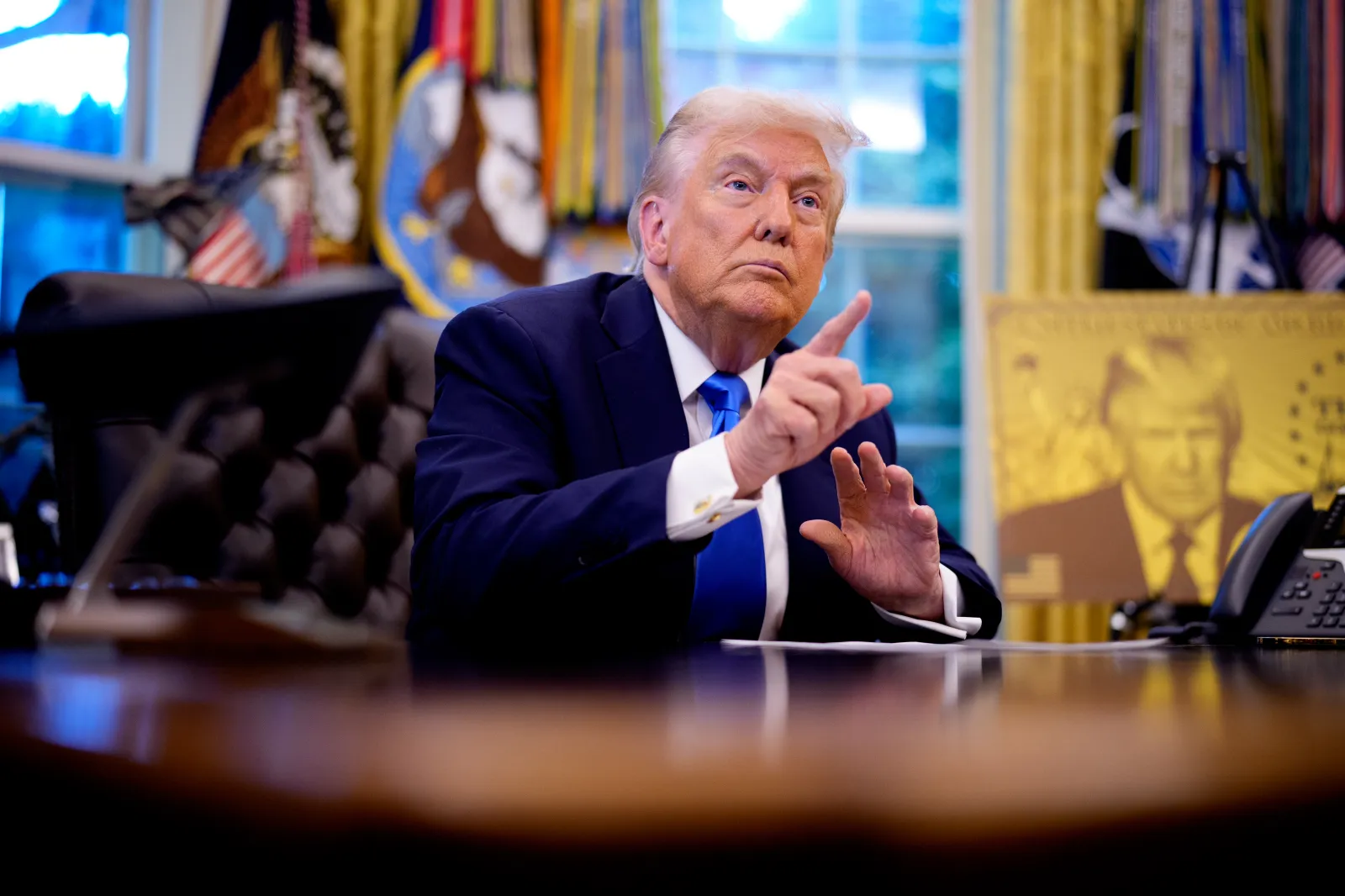
President Donald Trump’s new $100,000 H-1B visa fee has cost the federal government nearly $20 million, following a drop-off in new applicants.
A new court filing from a Department of Homeland Security (DHS) official explained that while the government had received $8.5 million in new fee payments in recent months, that figure was outweighed by the loss of new applications.
U.S. Citizenship and Immigration Services (USCIS) spokesman Matthew J. Tragesser told Newsweek in a statement: “American workers must come first. The $100,000 H-1B fee sends a clear message: we must prioritize hiring American talent before hiring foreign labor.”
Read More on News
Why It Matters
When he announced the new fee in September, Trump promised it would boost the U.S. economy by bringing in more high-earning, high-skilled workers, and that employers were keen to pay the fee if it meant securing those employees. Critics argued the fee, which applies to new immigrants living outside the U.S., would stifle that growth because small and medium-sized companies would be unable to pay.
What To Know
The new details on USCIS’ income from the H-1B came from Cara M. Selby, the acting associate director of the agency’s Service Center Operations, in a court filing March 5 as part of an ongoing lawsuit against the $100k fee.
As of February 15, the Trump administration had received 85 payments after the new fee was implemented at the start of 2026.
Selby wrote that between September 21, 2024, and February 15, 2025, USCIS received 123,924 applications outside the regular H-1B visa cap, bringing in roughly $524.9 million through fee payments.
In comparison, between the same dates in September 2025 and February 2026, a period straddling the old and new fees, 105,611 cap-exempt applications were received, bringing in $443.4 million, including the $8.5 million in new fees, a visible drop off.
Selby confirmed that new, external applications dropped 87 percent, leading to the loss in revenue which USCIS relies on to function.
The lawsuit in questions includes plaintiffs from Global Nurse Force, the American Association of University Professors, and the Aerospace and Agricultural Implement Workers of America.
In their initial filing in October, 2025, they argued that the H-1B was critical to the U.S. economy, providing around half a million high-skilled immigrant workers, including software engineers, doctors, and teachers, adding that the new fee would be a barrier to many employers.
Critics have long argued that the H-1B is abused by companies looking to bring in cheaper labor at the expense of American-born workers. While some within the Trump administration share that view and would like to see the program ended, the president himself has long advocated for foreign investment, and framed the new fee as a way to improve the program.
The new fee only applies to new applicants outside the U.S., so those on student visas in the country already are not affected, neither are existing H-1B holders seeking extensions, meaning companies will likely be looking to those candidates instead.
...
What People Are Saying
**Aaron Reichlin-Melnick, senior fellow at the American Immigration Council, on X: “**An absolutely incredible statistic; Trump's $100,000 H-1B fee has actually lost the U.S. government $19.5 million in application fees.”
Nathan Halberstadt, partner at New Founding, a venture capital firm focused on “critical civilizational problems”, on X: “In other words, the H-1B fee is working. Volumes are down. It turns out the H-1B “top talent” isn’t actually talented enough to be worth a modest fee.”
What Happens Next
The lawsuit in question remains ongoing, with the new $100k fee still in effect. The impact of the higher cost will likely become even clearer in the coming months.
Update 3/13/26, 4:39 p.m. ET: This article was updated with comment from Tragesser.
View 0 Comments
Submit Correction
View Editorial & AI Guidelines