10
Loading video...


By Billal Rahman and Dan Gooding
Share
Newsweek is a Trust Project member
See more of our trusted coverage when you search.Prefer Newsweek on Googleto see more of our trusted coverage when you search.
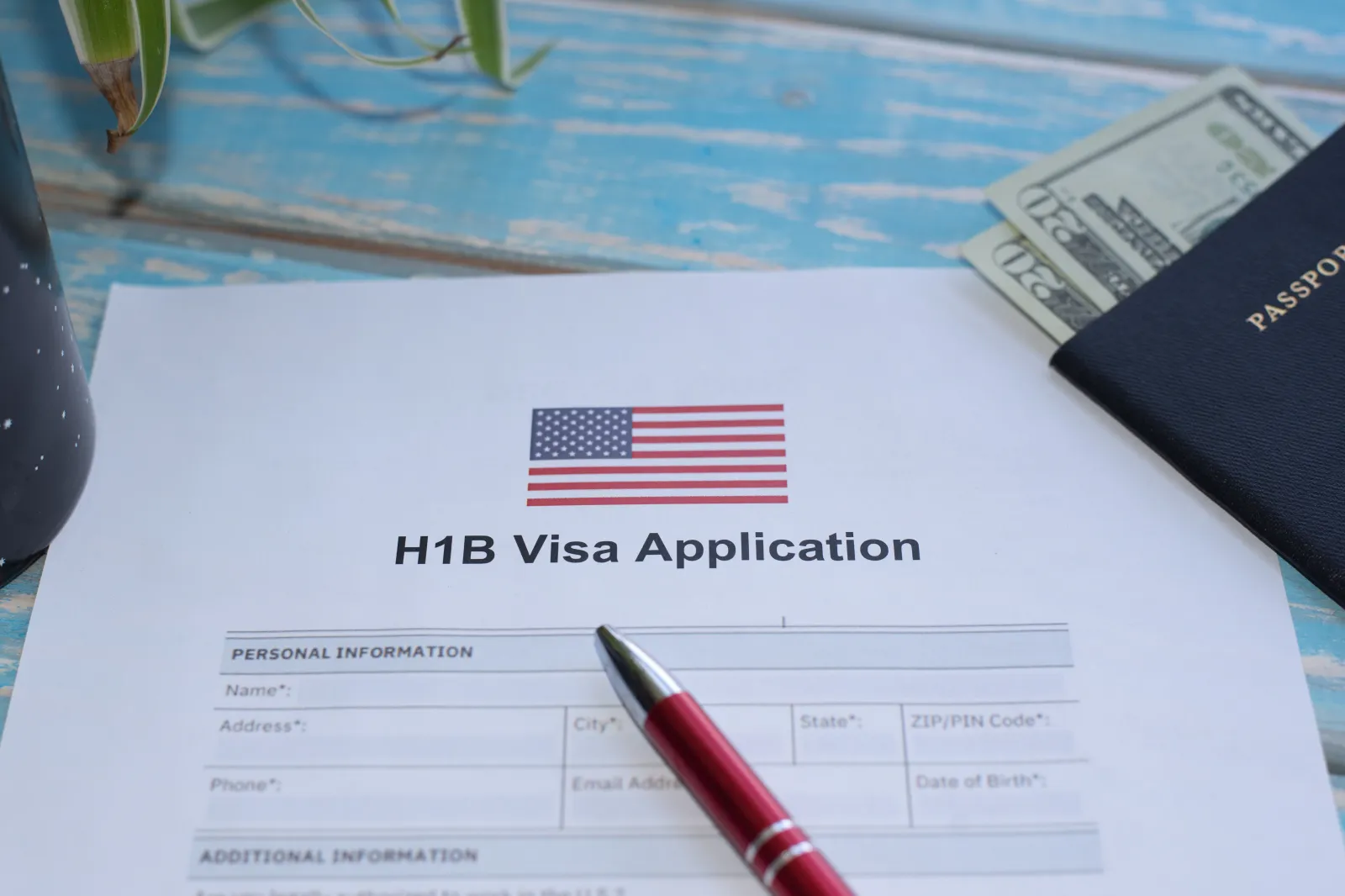
The Trump administration is proposing a new $103,265 fee on employers seeking H-1B workers through the annual visa lottery, dramatically increasing the cost of a program widely used by technology companies and other employers to recruit skilled foreign workers.
The proposal is likely to intensify a long-running divide among Republicans over high-skilled immigration. Many MAGA-aligned critics of the H-1B program argue it allows companies to hire foreign workers at the expense of U.S. workers, suppressing wages and reducing job opportunities for American graduates.
Supporters of the program, including many technology companies and business groups, counter that H-1B visas help employers fill specialized positions in fields such as engineering and software development when they say qualified U.S. workers are in short supply.
Read More
Here’s Who’s Getting US Green Cards: Latest Annual DHS Data4 min read

ICE Arrest Mom, Daughter at Hospital After Vehicle Smashes Into Their Car7 min read

Green Card Update: Changes Happening to Applications in September4 min read

Adam Klein, a former Department of Homeland Security (DHS) official and co-founder of Globali.ai, told Newsweek that DHS had not arrived at the new fee by calculating how much it costs to process an H-1B visa.
"It took roughly $8.8 billion in costs across the broader immigration system, including USCIS, ICE, CBP, State, Labor and DOJ, and divided that amount by the 85,000 annual H-1B cap numbers," Klein said.
"That concerns me. We are talking about making employers seeking congressionally authorized H-1B workers responsible for financing a much broader portion of the federal immigration system, including functions that have little to do with adjudicating their petitions."
...
New H-1B Fee: What To Know
DHS said in a proposed rule published Monday in the Federal Register that the new fee would apply to H-1B petitions subject to the annual 85,000-visa cap, including the 20,000 visas reserved for foreign workers holding qualifying U.S. master's degrees or higher. The proposed $103,265 charge would be paid in addition to existing H-1B filing fees.
The proposal would not apply to cap-exempt H-1B petitions, including many positions at universities and nonprofit or government research institutions.
The proposed fee is distinct from a 2025 Trump executive order that imposed a $100,000 charge on certain overseas H-1B hires but was later struck down in federal court. DHS said the new $103,265 fee relies on different legal authority and that the executive order is due to expire in September unless extended.
"DHS specifically says that if both requirements are legally in effect, an employer subject to both could have to pay both," Klein said. "At that point, an employer could be looking at more than $200,000 in these two charges alone before the ordinary costs of sponsoring an H-1B worker."
Other H-1B & Visa Changes Under Trump
The proposed fee builds on a broader Trump administration overhaul of the H-1B visa program. Recent changes have included replacing the traditional lottery with a weighted selection system favoring higher-salary applicants, and proposing to eliminate the grace period for laid-off H-1B workers.
The proposal comes as the administration pursues other increases in immigration-related fees. DHS recently finalized a separate rule expanding a $4,000 biometric and security fee to certain H-1B extension petitions filed by qualifying large employers.
“The rule will have significant detrimental effects on the economy, communities, and the nation’s global competitiveness," Zuzana C. Wootson, Deputy Director of Federal Policy at the Presidents' Alliance, said in a statement shared with Newsweek.
“By making it prohibitively expensive for many employers to hire international graduates, this proposal would undermine one of America’s greatest competitive advantages: our ability to educate talented students from around the world and retain their skills, ideas, and entrepreneurial spirit."
DHS is also weighing a plan to charge foreign graduates on F-1 student visas $100,000 to participate in Optional Practical Training, a post-graduation work program widely used by international students.
“International students do not choose where to study based on the classroom experience alone. They also consider whether they will have a meaningful opportunity to apply their education after graduation," Wootson said. “The proposed rule would severely weaken the education-to-workforce pipeline and make the United States a far less attractive destination for the world’s most talented students.”
How the Fee Will Be Used
The proposal outlines how the revenue generated by the new $103,265 fee would be distributed among federal agencies. U.S. Citizenship and Immigration Services would receive approximately $3 billion, while the Executive Office for Immigration Review, which oversees immigration courts, would receive about $2.96 billion.
U.S. Immigration and Customs Enforcement would receive approximately $1.05 billion, the Labor Department about $1.21 billion, the State Department about $484 million and U.S. Customs and Border Protection roughly $76 million.
DHS said the funding would support activities including immigration adjudications, fraud detection, national security vetting, labor compliance enforcement, visa screening, immigration court operations and border-related biometric systems.
The $103,265 charge is not yet in effect. It is a proposed rule and must go through the federal regulatory process before it could become final. The notice is scheduled for publication in the Federal Register on August 25.
Contact Newsweek editors on this story: Dan Orton and Tony Phillips.
Submit Correction
View Editorial & AI Guidelines