10
Loading video...

By Billal Rahman
Immigration Reporter
0
Share
Newsweek is a Trust Project member
See more of our trusted coverage when you search.Prefer Newsweek on Googleto see more of our trusted coverage when you search.
The Trump administration has reshaped the nation’s immigration policy, introducing two major changes that directly affect Green Card holders and applicants.
These include a review of Green Cards issued to citizens from certain countries and the rollout of a new biometric entry-exit system for all non-U.S. citizens.
Why It Matters
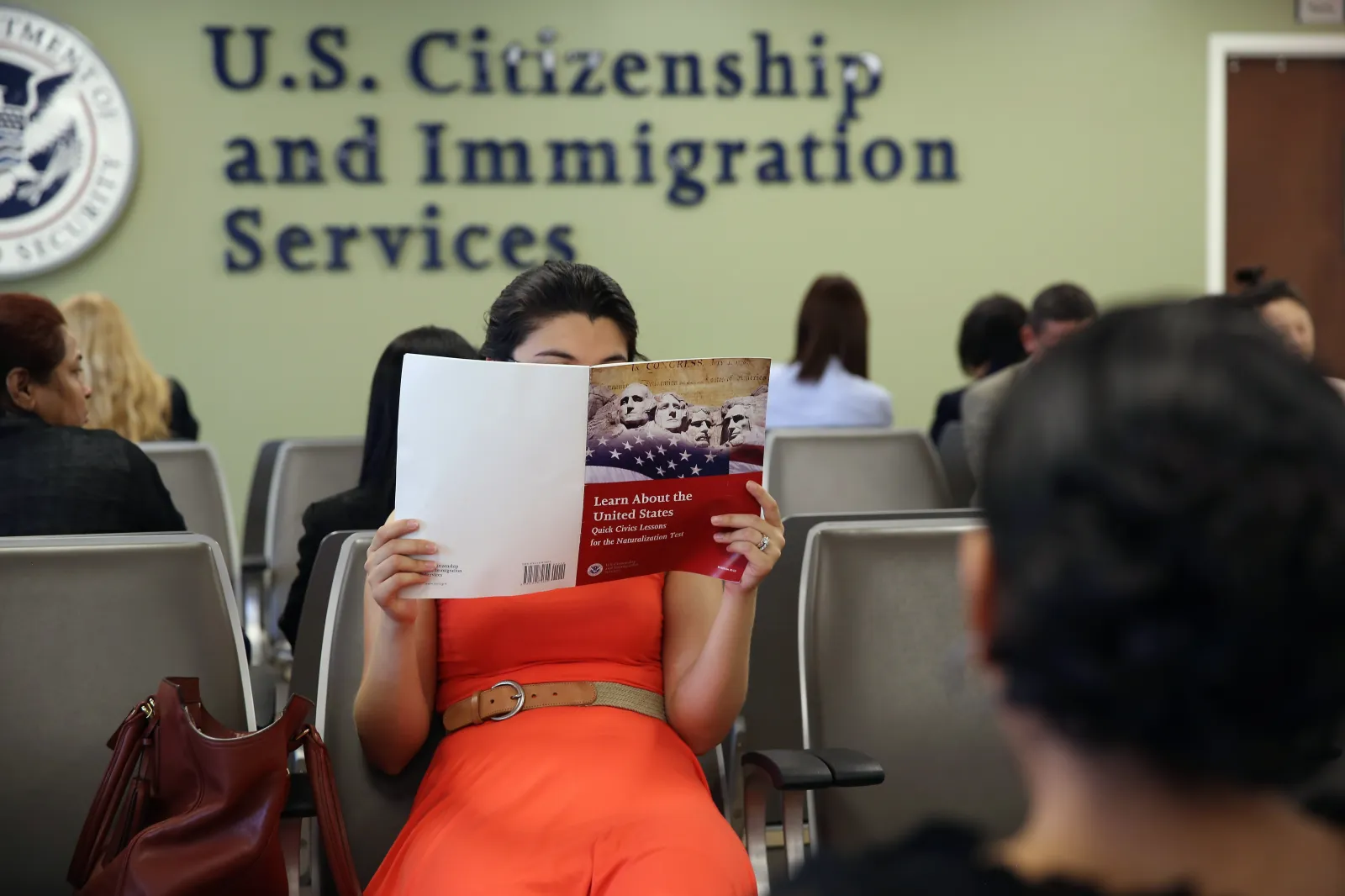
The government has ordered a sweeping re-examination of Green Cards issued to citizens from 19 countries, following the shooting of two members of the National Guard by an Afghan national near the White House. U.S. Citizenship and Immigration Services has temporarily suspended asylum adjudications while reviewing its vetting procedures in the aftermath of the attack.
Read More on News
The directive will see officials review past vetting and approval processes, with the administration citing national security concerns connected to how certain individuals may have been screened under previous procedures. Although details of the re-examination have not yet been released, further information is expected this month. The review could lead to delays, additional document requests, or changes in the status of some green card holders, depending on the findings.
Essential reading: What Europe Can Teach Trump about Immigration
Perspective: Trump Removes the 'Permanent' From 'Permanent Resident'
...
What To Know
The U.S. government has identified the following countries whose citizens face heightened scrutiny over green card and visa applications due to deficiencies in their screening processes and concerns about overstaying in the United States. Nationals from Afghanistan, Myanmar (Burma), Chad, the Republic of the Congo, Equatorial Guinea, Eritrea, Haiti, Iran, Libya, Somalia, Sudan, and Yemen are now subject to a full suspension of entry. Citizens of Burundi, Cuba, Laos, Sierra Leone, Togo, Turkmenistan, and Venezuela face partial restrictions, including stricter visa requirements and limited durations. Officials have provided limited details on how case-by-case waivers or categorical exceptions may be applied.
Experts said DHS will likely focus on conducting domestic and international criminal history checks, including arrests and other security-related vetting. They will also verify that applicants met the original SIV program eligibility requirements, including documentation of qualifying employment, and review records for any discrepancies or potential misrepresentations through cross-document consistency checks.
"We can expect the criteria to be broad to give adjudicators significant discretion to consider nationality from these countries as a possible risk factor when analyzing the totality of any relevant evidence," Morgan Bailey, a partner at Mayer Brown and former senior official at DHS, told Newsweek.
"Individuals from the countries may be required to provide their biometrics (fingerprints, photo, signature), provide additional information for background and security screening vetting, possibly attend supplemental interviews, and be subject to enhanced evidentiary requirements," she said.
"In the near term, uncertainty may be the most noticeable effect. Individuals with pending applications from the affected countries may experience delays or additional requests for evidence as immigration officers implement any new screening and vetting protocols," she added.
A second major change arrives later this month, when the Department of Homeland Security begins enforcing its new biometric entry-exit rule on December 26. Under the regulation, the U.S. Customs and Border Protection will collect biometric data from all non-U. S. citizens, including lawful permanent residents, whenever they enter or leave the country.
Travelers will be photographed at airports, land crossings, and seaports, and may also be required to provide other identifiers such as fingerprints or iris scans. The rule removes earlier exemptions and expands biometric screening across all age groups and travel categories.
The wide-ranging re-examination effort and the introduction of a universal biometric tracking signal represent a significant tightening of immigration oversight.
"The system will create a more comprehensive travel record, which may affect future processes tied to physical presence including naturalization eligibility, possible abandonment of permanent residency," Bailey said.
Green Card holders should prepare for increased scrutiny at U.S. borders and, for those from the 19 countries under review, potential additional hurdles as the government outlines next steps.
The Office of Homeland Security Statistics estimated there were 12.8 million green card holders living in the U.S. on January 1, 2024.
What People Are Saying
Bailey told Newsweek: "No immediate action is required, but individuals from these countries should ensure their documentation is thorough, consistent, and well organized so that it can be quickly provided if requested."
**Lisa Sherman Luna, Executive Director at Tennessee Immigrant and Refugee Rights Coalition, said in a statement shared with Newsweek: "**This administration's decision to halt green card processing for over 200,000 refugees who have done everything required of them is another discriminatory move that betrays our neighbors and strips away lawful status from people the US Government has already vetted and welcomed. We strongly condemn this decision and ask you to do the same."
Trump said in a statement on Truth Social: "I will permanently pause migration from all Third World Countries to allow the U.S. system to fully recover, terminate all of the millions of Biden illegal admissions, including those signed by Sleepy Joe Biden's Autopen, and remove anyone who is not a net asset to the United States."
DHS Assistant Secretary Tricia McLaughlin previously told Newsweek: "For four straight years, the Biden administration accelerated refugee admissions from terror and gang-prone countries, prioritizing sheer numbers over rigorous vetting and strict adherence to legal requirements. This reckless approach undermined the integrity of our immigration system and jeopardized the safety and security of the American people. Corrective action is now being taken to ensure those who are present in the United States deserve to be here."
Immigration attorney Kate Lincoln-Goldfinch said in a statement: "Using one horrific tragedy as an excuse to grind the entire asylum system to a halt is not leadership; it is collective punishment. Our country is better than that, and the law demands better than that."
What Happens Next
"At this stage, the final criteria and procedures have not been announced, but we expect that additional details may be forthcoming in the coming weeks," Bailey said.
Further guidance from DHS and USCIS is expected in the coming weeks.
View 0 Comments
Submit Correction
View Editorial & AI Guidelines