...

By Alex J. Rouhandeh
National Political Correspondent
0
Share
Newsweek is a Trust Project member
See more of our trusted coverage when you search.Prefer Newsweek on Googleto see more of our trusted coverage when you search.
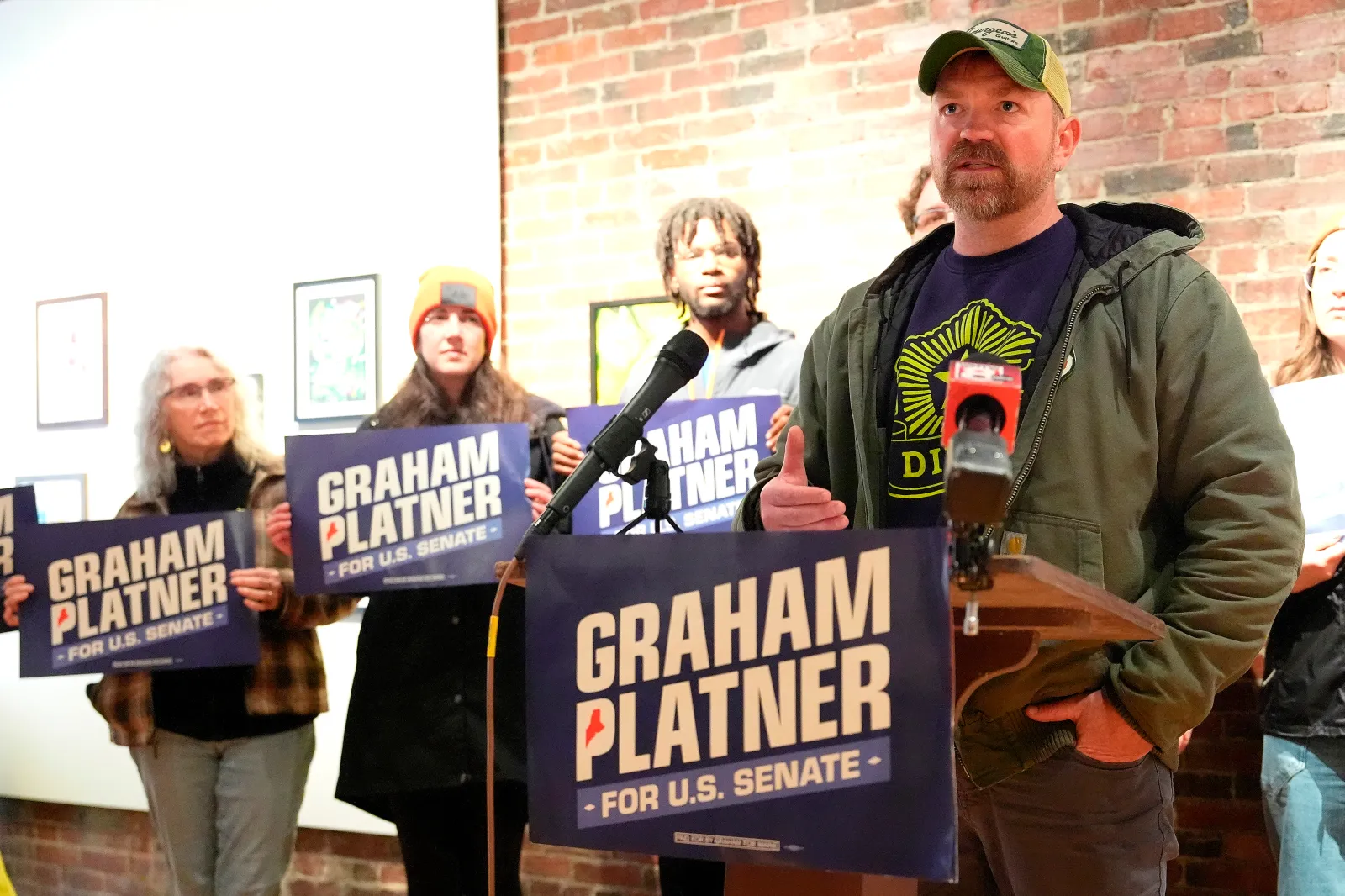
Graham Platner, the presumptive Democratic U.S. Senate nominee for Maine, told Newsweek he’d spoken to Senate Democratic Leader Chuck Schumer and plans to work with the party establishment—with conditions.
Schumer and the DSCC, which is headed by New York Senator Kirsten Gillibrand, all endorsed his primary opponent, Governor Janet Mills, who they viewed as a marquee recruit, creating a major rift within the Democratic Party as it aims to take back majorities in the House and Senate in the midterms this November.
The ill will at times grew personal. As Platner began pulling ahead of Mils in the race, her campaign released an ad where several women spoke against Platner due to controversial remarks he’d made online.
Read More on Politics
Speaking with Newsweek on Friday at an AFL-CIO endorsement event in Portland, Platner said he’d made peace with Schumer and the Democratic Senatorial Campaign Committee, who’d backed his primary opponent Mills.
“Last night, I spoke with Senator Schumer. He called me and congratulated me on a well-run race, and I said, ‘thank you very much,’” he said. “It is rather amazing how wanting to defeat Susan Collins can really bring a lot of people together. We can find a lot of common ground, and I'm a big fan of finding common ground these days, and I think that that we're gonna be able to do that.”

...
To win control of the Senate in 2026, Democrats must defeat five-term Republican incumbent senator, Susan Collins. Collins has long been a proverbial white whale for Democrats, beating their chosen nominees even when Maine has voted overwhelmingly against President Donald Trump.
“Chuck Schumer lost the proxy war with Bernie Sanders and now has to rally behind Graham Platner — the racist, woman-hating, phony who called for him to step down. Must have been an awkward conversation,” NRSC Regional Press Secretary Samantha Cantrell told Newsweek.
Platner did not go into details about the extent he discussed campaign tactics with Schumer and said that as of that morning, he still had not spoken with Mills. However, he did go into detail about where he thinks he can collaborate with national Democratic leadership while firmly refusing to shift his own tactics.
First and foremost, Platner said he expects the DSCC—the Democratic Party’s top fundraising apparatus for the U.S. Senate—will tap into its financial resources to ensure Collins and the National Republican Senatorial Committee do not overwhelm is campaign.
“They know that they're gonna have to invest heavily in this race,” he said. “We're gonna need money to fight back against the possibly hundreds of millions of dollars that billionaires and the Republicans pour into this thing. The thing is, what we have built, all of this, this is ours. We built this. That's our leverage. That's what we've got. And it's really important, I think, for them to understand, and I think they very much do, that for the Senate to change hands, for the Democrats to be in control, they need to have Susan Collins be defeated, and they're going to invest in that.”
He added, however, “I am in no way, shape or form, going to change my tune on my criticisms of the party. I am not going to change my tune on the fact that I think the old way of doing business has come to an end,” he said. As moderate incumbents seek to claw back power in the Senate and combat Trump, Platner believes they’ll warm up to his ideas and his ambitious agenda.
Schumer, Mills and the DSCC did not immediately respond to requests for comment.
Mills dropped out of the Senate primary race after Platner took a lead in the polls with a campaign that has centered around community organizing and building a coalition that includes organizer labor, activist groups and everyday citizens. As of Friday, he’s conducted 63 town halls across the state, a point he’s drawn on to contrast himself with both Collins and Mills.
During these townhalls, Platner emphasized that more than just winning to enact a policy agenda, his candidacy aims to prove that a campaign centered on organizing and economic populism can win races in key swing states. He was adamant that he will succumb to any possible pressure from Washington Democrats to shift this strategy.
“The campaign we're running, the organizing focus of this, the people power building movement that we are doing, we're just going to keep doing that, and we're not going to take direction,” he said. “Nobody can come down here and tell us that what we've done isn't working because it's working spectacularly. So, we'll take the support.”

...
Just because Platner welcomes the support from the Democratic establishment does not mean he’ll stop speaking out against it. While on the campaign trial, Platner has said he feels alienated by both the Democratic and Republican parties, stating that each favors the wealthy.
He said he ran as a Democratic in part because he wants to restore the party in the image of the coalition led by President Franklin Delano Roosevelt. Platner believes that during that era the party displayed a greater commitment to the working class and focused on enacting ambitious new policies instead of seeking incremental change, which he believes it does now.
“I honestly think that as we move forward, there are a lot of people in power who they want to protect their power,” he said. “They're going to latch on to the strategies and the tactics that win. And we have shown that this is the strategy and the tactics that win here in the state of Maine.”
View 0 Comments
Submit Correction
View Editorial & AI Guidelines