10
Loading video...

By Billal Rahman
Immigration Reporter
0
Share
Newsweek is a Trust Project member
See more of our trusted coverage when you search.Prefer Newsweek on Googleto see more of our trusted coverage when you search.
The Trump administration has taken another step toward rolling out its Gold Card visa program as part of a plan to grant U.S. residency to wealthy foreign nationals.
U.S. Citizenship and Immigration Services (USCIS) submitted a draft Form I-140G to the Office of Management and Budget.
Newsweek has contacted USCIS for comment via email.
Read More on News
Why It Matters
The visa program has been a key focus of the Trump administration, aiming to attract highly skilled workers and substantial foreign investment to the United States. By setting higher financial thresholds, the initiative seeks to encourage significant economic contributions while offering a faster pathway to residency for those who meet the requirements.
This preliminary submission is a key step before the form can be officially released and used by applicants seeking permanent residency under the new program.
...
What To Know
Under the proposal, individual applicants would be required to donate $1 million to the U.S. Treasury, while corporate-sponsored applicants would need to contribute $2 million, in addition to a non-refundable $15,000 processing fee.
The administration has also outlined a third tier: a $5 million Platinum Card option that would allow an individual to spend up to 270 days a year in the United States without becoming subject to U.S. tax on foreign income. Details on the Platinum tier remain limited.
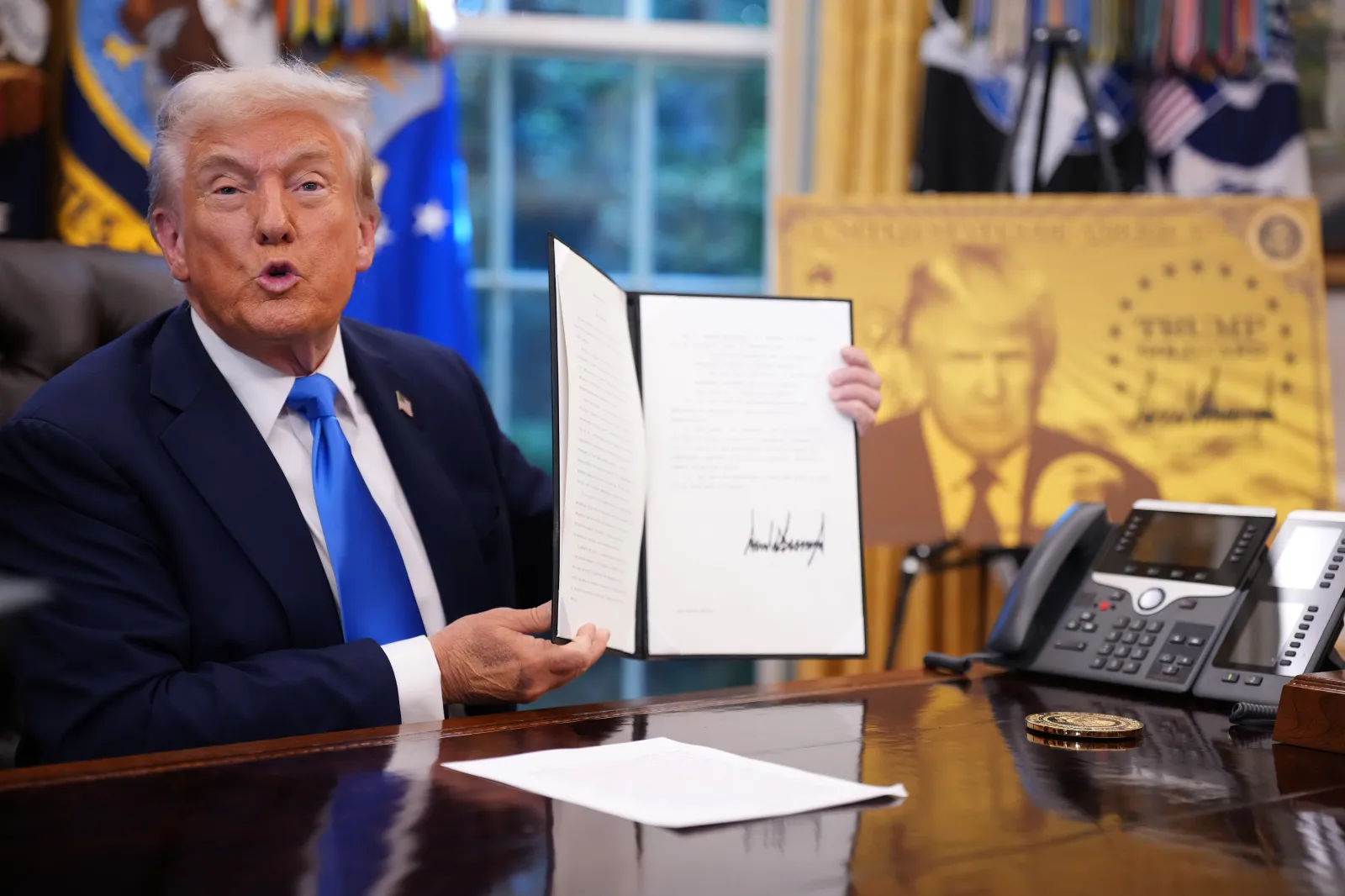
In February, President Donald Trump proposed a gold card program that would offer U.S. residency to individuals who invest $5 million in the country. However, the administration backtracked and lowered the costs. In September, he signed an executive order formally establishing the program and setting the framework for its implementation.
"Although the overarching concept of the Gold Card was announced, the operational structure is still emerging and has not yet been fully defined to the public," Morgan Bailey, a partner at Mayer Brown and former senior DHS official, told Newsweek.
"It has the potential to accelerate permanent residency for qualified applicants, but the framework is new, and the operational and legal landscape is still taking shape. Individuals who are considering this route should begin preparing now, with the understanding that there may be practical adjustments and clarifications during the initial rollout and implementation."
The process would include extensive vetting of the applicant’s finances, including proof of the lawful source and path of funds, tax records, bank statements and, if applicable, cryptocurrency holdings. While the draft materials require applicants to demonstrate that they have sufficient funds to make the required multimillion-dollar gift, they do not clearly state whether the donation must be transferred to the Commerce Department before USCIS completes its adjudication.
Once approved, applicants will complete consular processing abroad to receive permanent residency. Those already in the U.S. may be eligible for adjustment of status, though details remain under review. USCIS officials have emphasized that while the program is intended to attract economic contributions, all applications will be subject to rigorous national security and anti-money laundering checks. Applicants are required to disclose any criminal history, involvement in sanctioned activities, or other issues that could affect eligibility.
Applicants must also undergo background checks covering criminal history, money laundering and national security concerns. Once approved, residency would be granted through consular processing, with the option for those already in the U.S. to adjust their status. The form contains numerous attestation questions about criminal history, money laundering, terrorism, sanctions, human trafficking and espionage.
The Gold Card program faces considerable legal uncertainty, with some experts warning that the executive branch may be exceeding its authority. Experts have suggested that these factors make the program vulnerable to judicial challenges, and future court rulings could significantly alter or even halt its implementation.
Senator Dick Durbin, an Illinois Democrat, has accused Trump of "rolling out the welcome mat for Russian oligarchs and cartel bosses."
What People Are Saying
USCIS, in a proposed form to the OBM: "The Form I-140 also requires a corporation or similar entity petitioner to provide 3 years of company federal tax returns, annual reports, and/or audited financial statements."
Morgan Bailey, a partner at Mayer Brown and former senior DHS official, told Newsweek: "The Gold Card originates from the executive branch through executive action rather than from the legislative branch through statute. It may be subject to change by future presidential administrations. It has the potential to accelerate permanent residency for qualified applicants, but the framework is new, and the operational and legal landscape is still taking shape."
**Latitude CEO Eric Major, who founded HSBC's Global Investor Immigration Services, previously told Newsweek: "**In essence, the Trump Card is a branding exercise, not a credible immigration solution. Without structural reform, legal legitimacy and tangible benefits for investors [such as being exempt from worldwide tax], early interest is likely to be short-lived and the program is unlikely to gain serious traction."
What Happens Next
The Gold Card program is not yet open, and USCIS and the Commerce Department are expected to issue additional guidance in the coming weeks as they work toward a planned December 18 launch. The draft Form I-140G remains under OMB review and could be revised before the program officially begins, but the proposed fee structure indicates the administration is moving forward. Applicants are advised to follow USCIS updates closely. Approval from OMB is necessary for the administration to hit the December 18 implementation deadline outlined in the president’s September executive order.
View 0 Comments
Submit Correction
View Editorial & AI Guidelines