...

By Jordan King
Reporter
0
Share
Newsweek is a Trust Project member
See more of our trusted coverage when you search.Prefer Newsweek on Googleto see more of our trusted coverage when you search.
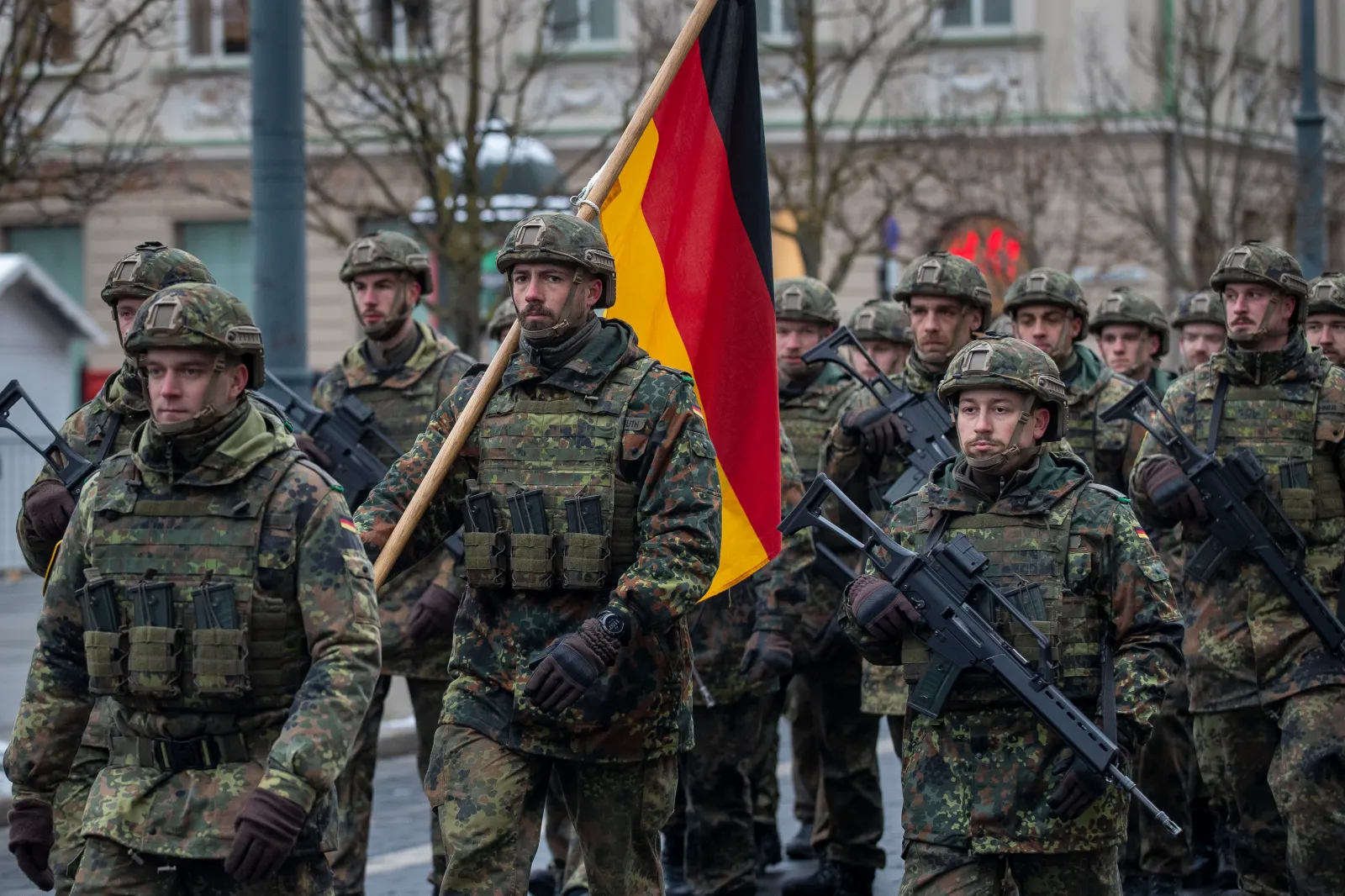
A classified German plan outlining the logistical movement of up to 800,000 NATO troops across Europe in the event of a Russian attack has been revealed.
The Wall Street Journal reported the details of a 1,200-page document, known as Operation Plan Germany (OPLAN DEU), completed by a team of senior military officers in Berlin.
Newsweek has contacted the German and Russian Ministries of Defense via email for comment.
Read More on World
Why It Matters
The blueprint signals a departure from peacetime mindset and a renewed "all-of-society" approach to defense, as the document’s authors described it, incorporating civilian sectors, private companies and government agencies.
This crossover between civilian and military realms resembles a return to a Cold War approach to conflict.
What To Know
According to The Wall Street Journal, a group of senior German military officers began formulating OPLAN DEU approximately two and a half years ago, shortly after Russia launched its full-scale invasion of Ukraine in 2022.
The 1,200-page document, classified and stored on Germany's isolated "red network," provides a comprehensive guide for deploying up to 800,000 NATO troops, including from the United States, east through Germany in the event of a Russian offensive.
The plan includes extensive logistical maps showing designated ports, roads, rivers, and railways essential for troop and material movement. It integrates both military and civilian resources, requiring cooperation with private-sector firms, civilian agencies, local governments, and key infrastructure providers.
Security measures to counter sabotage, cyber threats, and misinformation campaigns are central components of the plan.
Severe underinvestment in Germany's transport infrastructure is a key vulnerability. Government figures show that 20 percent of highways and over a quarter of highway bridges need urgent repairs. Many existing structures cannot support heavy military vehicles, which planners acknowledge must be rectified as a priority for the plan's effectiveness.
...
What People Are Saying
A “senior military officer and one of the earliest authors of the plan,” quoted by The Wall Street Journal, said: “The goal is to prevent war by making it clear to our enemies that if they attack us, they won’t be successful.”
German Deputy Defense Minister Nils Schmid said: “We must relearn what we unlearnt. “We have to drag people back from retirement to tell us how we did it back then.”
German Chancellor Friedrich Merz said in September: “The threats are real. We’re not at war, but we no longer live in peacetime.”
What Happens Next
OPLAN DEU is undergoing continual revision as stress tests reveal new obstacles and areas for improvement. German authorities plan to invest billions in infrastructure upgrades.
View 0 Comments
Submit Correction
View Editorial & AI Guidelines