...

By Maria Azzurra Volpe
Reporter
0
Share
Newsweek is a Trust Project member
See more of our trusted coverage when you search.Prefer Newsweek on Googleto see more of our trusted coverage when you search.
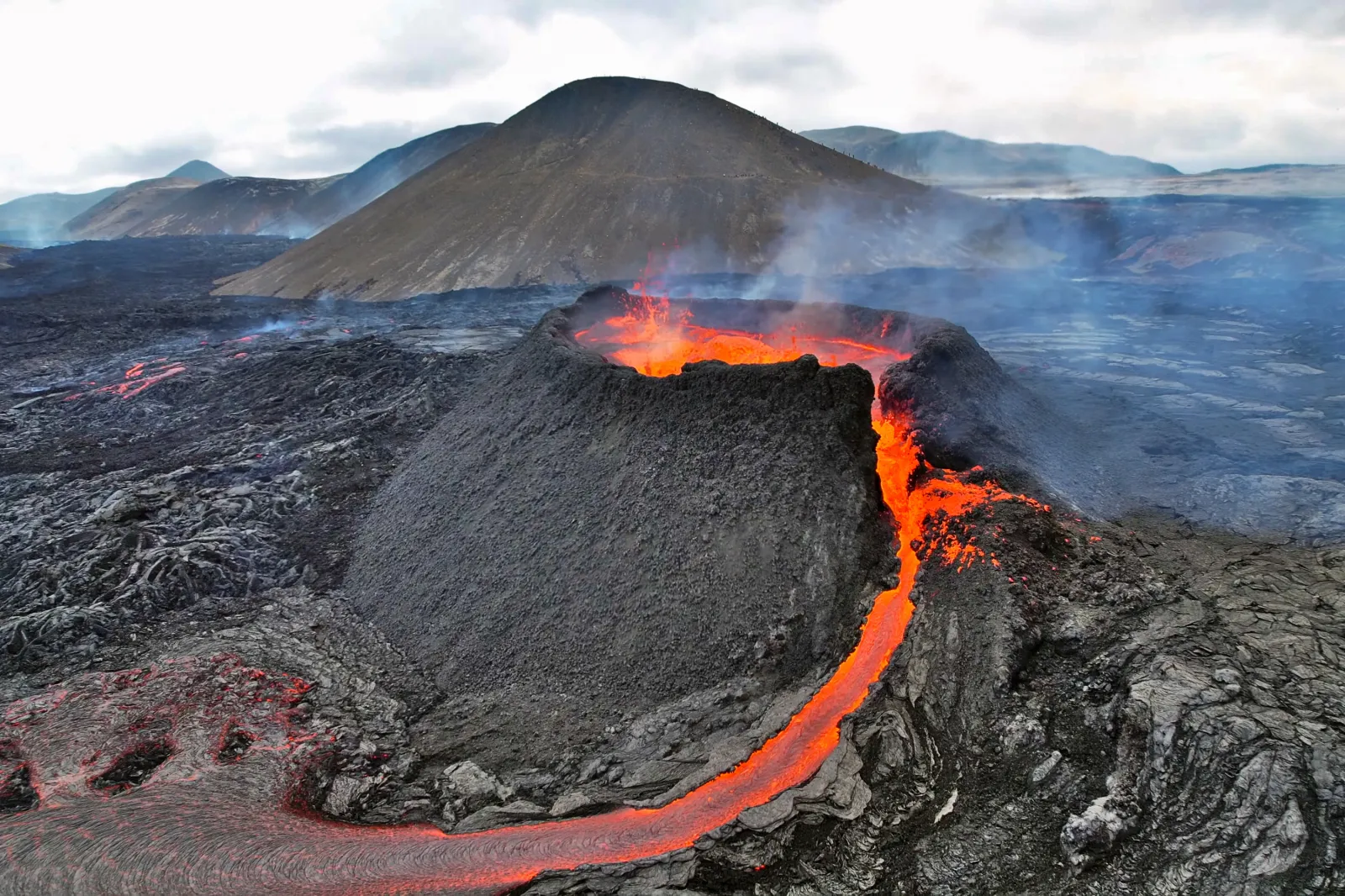
Scientists have just uncovered how magma behaves beneath an active volcano, paving the way for targeted drilling for monitoring and green energy extraction purposes.
While volcanoes are known for their dramatic eruptions, which occur every day around the world, they actually spend most of their time in a state of quiet. But what happens to magma when volcanoes are dormant?
A team lead by Ludwig-Maximilians-Universität München volcanologist Janine Birnbaum directly reconstructed the prevailing conditions inside a magma chamber for the first time, and revealed how such reacts to drilling.
Read More on Science
The findings, published in the journal Nature, could reshape how scientists monitor volcanic systems.
...
During periods of quiet, magma slowly raises from deep within the Earth, often remaining trapped in the crust for years, decades, or even millennia.
While it sits there, it cools, crystallizes, absorbs bits of surrounding rocks, and gains or loses dissolved gases like water and carbon dioxide–the same gases that ultimately drive eruptions.
A small change—whether from heat, new magma upwelling from depth, or the formation of bubbles—can precipitate an eruption, much like an “overheated can of soda that expands and eventually bursts.”
Understanding how magma behaves during quiet periods is crucial—but inherently difficult. That changed during a drilling operation in 2009 at the Krafla volcanic field in northeast Iceland.
As part of the Iceland Deep Drilling Project, researchers unexpectedly struck a magma body at a depth of just over two kilometres. During the drilling process, cold drilling fluids dumped water on the magma, quenching it into tiny chips of glass.
When researchers looked at these chips, they encountered a puzzle: although the quenched magma had many small bubbles, it held less dissolved gas than the magma was capable of holding at the expected temperature and pressure.
To solve this puzzle, Birnbaum and colleagues developed a numerical model which showed that the magma reacted to the drilling and lost gas before it fully solidified into glass.
Previous measurements had shown that the magma requires several minutes to cool from an initial temperature of about 900°C to become a glass at around 520°C. According to the researchers’ hypothesis, this gives the gas enough time to escape from the melt and to cause the observed bubbles to form.
As a result, the glass fragments collected during drilling do not accurately represent the original magma conditions. Istead they capture a rapidly changing system influenced by drilling activity.
“It’s like a blurry photo,” explains Birnbaum. “But if we know our exposure time and how fast our system moves, we can unravel where it started.”
By simulating how fast the gas escapes, the researchers were able to reconstruct the original gas content. This revealed that the ‘missing’ gas was lost in under five minutes during drilling.
According to the researchers, these findings can help make future endeavors in geothermal fields on active volcanoes safer, while also paving the way for targeted drilling into magma for purposes such as monitoring and green energy extraction.
Do you have a tip on a science story that Newsweek should be covering? Do you have a question about volcanoes? Let us know via science@newsweek.com.
Reference
Birnbaum, J., Wadsworth, F. B., Kendrick, J. E., Kennedy, B., Wallace, P. A., da Silva, M. M., Hess, K.-U., & Lavallée, Y. (2026). Disequilibrium response to tapping crustal magma reveals storage conditions. Nature. https://doi.org/10.1038/s41586-026-10317-w
View 0 Comments
Submit Correction
View Editorial & AI Guidelines