...

By Amanda Greenwood
Associate News Editor
0
Share
Newsweek is a Trust Project member
See more of our trusted coverage when you search.Prefer Newsweek on Googleto see more of our trusted coverage when you search.
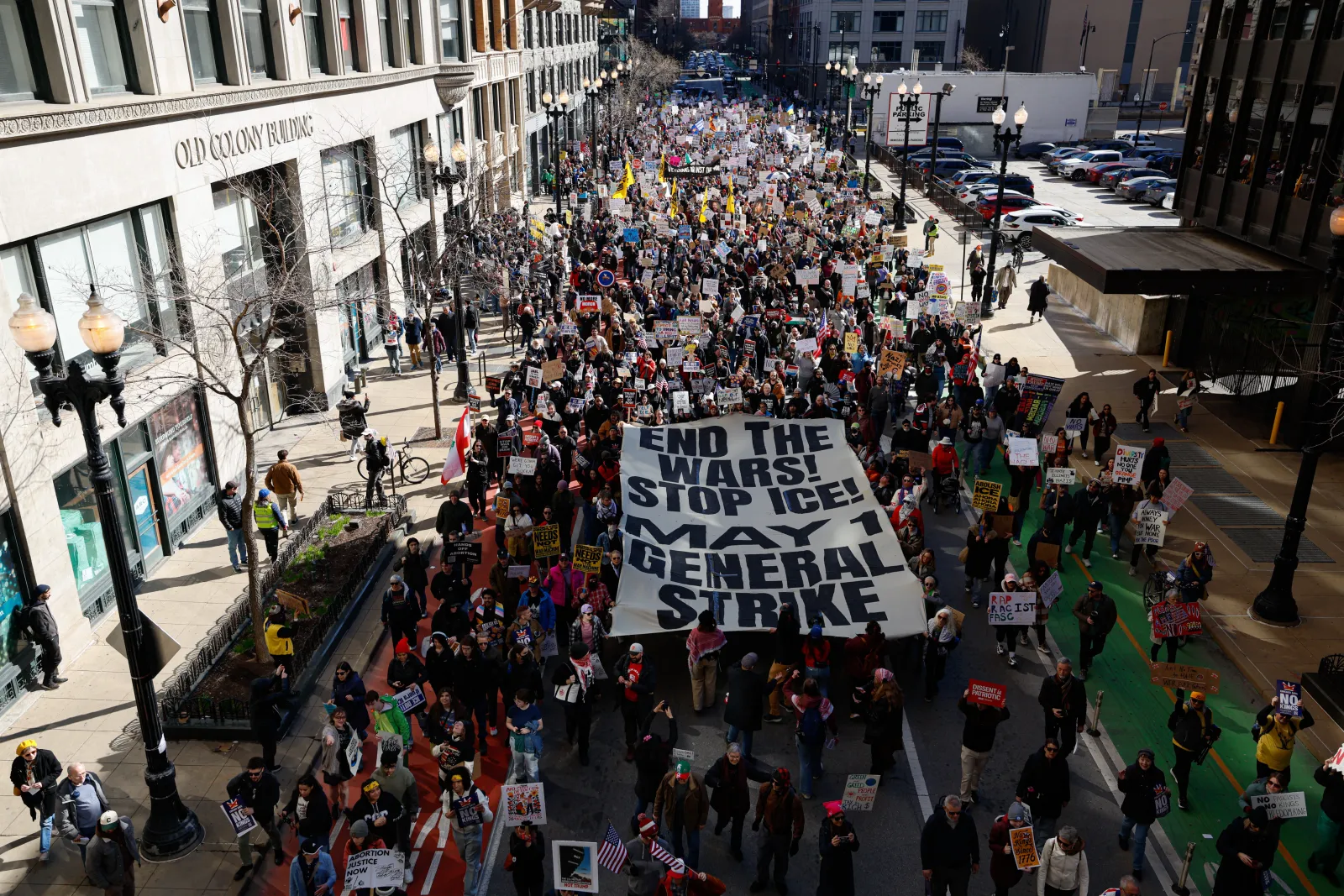
A nationwide general strike is set to take place on April 5, with organizers calling on all Americans to come together and take part in a coordinated effort to “force big change” by applying large‑scale economic pressure.
The action is being organized under the banner of “General Strike 2026,” also known as Strike26.
Organizers are positioning the April 5 action as an extension of the previous nationwide general strike—which happened on January 30—framing it as part of a broader, ongoing campaign rather than just a single‑day protest.
Read More on News
Why the Strike Is Happening on April 5
According to their website, the campaign organizers are calling for a nationwide strike to stop ICE from “murdering and kidnapping innocent people,” to remove the “entire Trump regime,” and to get the Department of Justice to release all of the Epstein files.
They say that ICE is “white nationalism with guns,” warn that recent catastrophic events are just a “dry run for what the regime has planned for the midterms,” and believe that “a general strike is the only way out without more bloodshed.”
...
What Strike Action Is Planned for April 5?
The organizers are calling for “mass disruption” and are urging participants to avoid going to work or school where possible, boycott major companies, and limit their spending.
Supporters should avoid shopping at large corporations while continuing to support locally owned and small businesses. Organizers say this approach is intended to redirect economic activity away from major companies while strengthening local communities.
Those participating are also encouraged to attend local protests, distribute awareness materials, and take part in mutual aid efforts to help people manage financial challenges associated with participating in the strike action.
Who Is Organizing the Strike?
The General Strike 2026 movement describes itself as a decentralized, grassroots campaign made up of unions, organizations, and individual participants rather than a single centralized leadership structure.
Organizers emphasize that the campaign doesn’t require registration and doesn’t collect personal data or information from participants. The website also states that the group will not publish a list of collaborating organizations—positioning the strike as participant‑driven and flexible in how people choose to engage.
Updates and organizing materials are shared primarily through social media channels, blog posts, and downloadable flyers that supporters are encouraged to distribute at protests, marches, or community events.
What Could Be Impacted?
If participation is widespread, the April 5 strike could affect workplaces, schools, retail activity, and transportation, particularly in areas where large numbers of workers choose to stay at home.
Organizers argue that even partial participation—such as reduced consumer spending or missing a single workday—can contribute to measurable economic disruption when done on a national scale.
The campaign acknowledges that the strike will be inconvenient, but argues that disruption is a central feature rather than a downside of general strikes.
How the April Strike Builds on January 30
The April 5 action follows an earlier nationwide general strike on January 30, 2026, which Strike26 described as the opening phase of its campaign.
According to the group’s blog, the January action focused on encouraging daily protest participation, widespread corporate boycotts, and increased support for local businesses.
Organizers framed it as a foundation‑building effort meant to raise awareness and momentum ahead of larger actions later in the year.
What Organizers Say Comes Next
While April 5 is being promoted as a major escalation, organizers suggest the general strike effort is ongoing. The website frames the campaign as a long‑term effort, arguing that sustained pressure—rather than isolated protest days—is necessary to achieve meaningful change.
View 0 Comments
Submit Correction
View Editorial & AI Guidelines