Photography by Pascal Le Segretain/Getty

By Katherine Fung
Senior Writer
0
Share
Newsweek is a Trust Project member
See more of our trusted coverage when you search.Prefer Newsweek on Googleto see more of our trusted coverage when you search.
Serena feels like the world is falling apart.
At 26, most of her friends have tried enough antidepressants to tell you if Lexapro or Zoloft or Prozac works better. Half are unemployed, and the other half are waiting for pink slips they believe are all but certain. The dating scene is a “dumpster fire” that has normalized treating romantic prospects like they’re “expendable.” On TikTok and Instagram, Serena, who lives in Baton Rouge, Louisiana, is not only bombarded with tragic news, but also with this guilt that she should care. The American dream that her parents achieved when they emigrated from Taiwan to Arkansas no longer feels possible. And when the social media manager thinks about her future children, she worries they’ll have it even worse.
“That makes me sad,” Serena told Newsweek. “Because I didn’t always feel this way.”
Read More on Life

Courtesy of Mia, Tamaya, Kyra, Madeline, Asmara, Serena, Tess, Annmarie
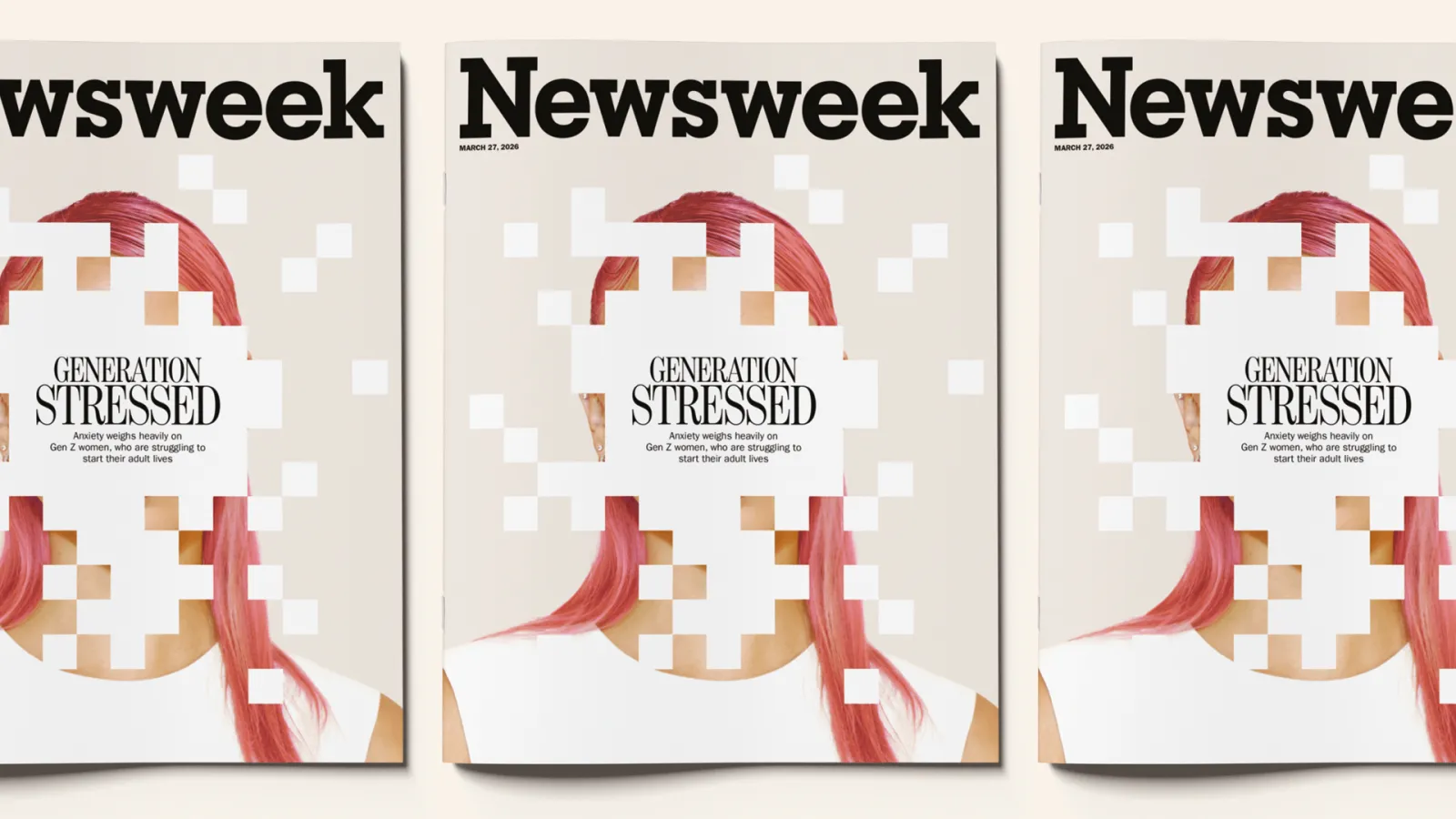
For many Gen Z women, coming of age in 2020s America is defined by a pervasive sense of anxiety and uncertainty. In conversations with nearly 70 young women across 23 states and Washington, D.C., a portrait of a deeply uneasy generation emerged. The specifics of their lives differed—politically, personally and professionally—but the overwhelming undercurrent was the same: Instability is everywhere, from the precarious job market to romantic prospects, and from personalized algorithms to a deeply polarized political landscape.
A 2025 Gallup survey showed just how burdensome life in America has become for this group. While only 19 percent of men aged 15 to 44 want to permanently leave the country, a whopping 40 percent of women of the same age expressed a desire to migrate, marking the widest gap recorded since analysts began measuring this trend in 2007.
Gen Z women, who are defined as being born between 1997 and 2012, are also disproportionately affected by the unpredictability of today’s world. An August 2025 poll from NBC News and SurveyMonkey found that a third of young American women feel anxious or worried about the future “almost all the time,” compared with only 19 percent of their male counterparts. While the share of young men who feel anxious or worried “most of the time” ticked up to 27 percent, the share of young women who agreed with that sentiment remained at 33 percent. Only four percent of women said they “rarely” feel anxious or worried about their futures, while 12 percent of men said the same.

Courtesy of Serena
“You can order [your friends] a DoorDash and you can sit on the phone. But you can’t force them to go to therapy. You can’t force them to make better decisions.”
“I hear this in my listening sessions all the time,” Rachel Janfaza, the founder of The Up and Up, a Gen Z-focused research and consulting firm, told Newsweek. “This sense of anxiety around wanting to achieve and succeed and become financially independent before they feel comfortable starting a family. And yet, at the same time, being told that they’re supposed to want to get married and start a family, even if that’s not what they want.”
Asked by Newsweek what the biggest issue facing their generation was, Gen Z women were largely split between finances and politics. But factoring in their selection for the second most important concern, mental health emerged as a defining issue for their generation.
Always on Edge
Since Serena graduated from Yale in 2023, several of her friends have been hospitalized because of mental health issues. Being in her 20s feels like “being low-key worried about people around you making decisions that are probably not great, but not knowing if you should or can intervene,” she said.
“You talk to somebody and they seem off, and a couple months later you find out that they were hospitalized,” Serena said. “I don’t think I’m alone in that experience, but no one’s preparing us to do that. I’m just a girl. I have to make [a psych] evaluation. People go to school for this. But this is what it is to be a friend these days.”
“Zoomers” have long reported higher rates of anxiety and depression than previous generations at the same age. In 2019, 37 percent of high schoolers reported experiencing a persistent feeling of sadness or hopelessness, according to the Centers for Disease Control and Prevention. During the COVID-19 pandemic, that figure ticked up to 42 percent in 2021—nearly 50 percent higher than millennials when they were at the same age in the early 2000s.
“People make a lot of assumptions about Gen Z, that we’re lazy or this or that. We’re just trying to survive,” Annmarie, a 28-year-old content creator in New York City, said. “There’s a constant crisis, world event after world event. It’s like, ‘Oh my gosh, can we just live?’”
Older generations have rolled their eyes at these complaints, questioning if life today really is more worrisome than at other times. After all, the latchkey kids of Generation X grew up at the height of the Cold War, all while witnessing over 100,000 deaths from the HIV/AIDS epidemic, a spike in crime rates, a stock market crash and the Challenger space shuttle explosion.

Courtesy of Mia
“Attention is the currency of our generation. It really determines whose opportunities multiply and whose ideas scale. We’re constantly in self-negotiation, and I think with other people as well, negotiating how much of ourselves we trade for that attention.”
But Dr. Corey Seemiller, a Gen Z expert and award-winning professor at Wright State University, argued that Gen Z’s grumbles are warranted.
“There’s higher stakes going on right now than there probably were in the ’80s,” Seemiller told Newsweek.
Nicknamed “recession babies,” Gen Z has only ever known a volatile economic reality. As children, their parents may have been changing jobs, or they might have lost their homes. As teenagers, they experienced high school and college through the lens of pandemic masks and remote classes. And they experienced all of it online.
The Algorithm Is Watching
The internet was never a place Gen Z logged on. They were born there. With a world as online as it is off, there is no space between them and the rest of the world.
“I’m a Gen Xer and we watched Channel 1 in our classroom, and that was the only way we got information,” Seemiller said. “Now, it’s all over the place. It’s the talk of the town, and these kids know things from a very young age that we wouldn’t have known as kids.”
Mia started creating content during the pandemic—she was in the eighth grade. Today, the Stanford freshman has built a following of more than 735,000 on TikTok.
“We’re one of the first-ever generations to build our identities in public,” the 19-year-old college student living in Palo Alto, California, told Newsweek.
Kyra was 11 when she first joined Instagram.
“My parents didn’t know what it was,” the 26-year-old public relations associate from New York City said. “They didn’t know to monitor or restrict because it was new to them too. Having access to that much information, comparing ourselves to others does affect our mental health. It affects the way we communicate with our friends.”
Social media’s comparison culture not only pits young women against one another but also reinforces a “right” way to be a woman, Janfaza said. Gen Z women frequently tell her that deleting their apps, even temporarily, is the only way to reduce stress.
Social media is not the only issue compounding the mental health toll. Many of the women who spoke to Newsweek expressed doubts over the attainability of home ownership, over starting a family and over managing workplace burnout. And yet even more of them lamented that the futures once promised to them remain out of reach.

Courtesy of Kyra
“My mom gets on the phone with her girlfriends every other day and has hour-long phone calls. I wonder if my life will be like that one day, if my friends from high school will catch up over the phone. I don’t know. I think the way we communicate, because
of technology, is not as emotionally connected as my mom and her friends.”
When Alexis, a 29-year-old living in Charlotte, North Carolina, first had her son, she originally dreamed of two kids. Now that her son is 3, and with the current state of the world, she’s “proudly a one-and-done mom.”
“I have a lot of mom friends who are also one-and-done with kids. It’s almost like, ‘You know what? I don’t think so’ on that second or third kid,” she said.
Diplomas and Debt
According to data from the Pew Research Center, 47 percent of women now hold a bachelor’s degree, compared with 37 percent of men. Higher education, however, has added more to their financial woes than it’s done to alleviate them. Women hold about two-thirds of the nation’s student loan debt while continuing to earn roughly 17 to 18 percent less than men. And their degrees are not closing that gap.
Gen Z women are outpacing previous generations when it comes to education and employment, but they’re concluding that “the systems around us have not evolved to meet us halfway,” Annmarie said.
Young women in America now have the tools to pursue the lives they dream of, but many of them feel pressure to pick and choose a path in the name of stability. In the ’80s, Seemiller worked at a summer camp to pay her way through college.
“You can’t do that anymore,” Seemiller said. “There’s so much pressure on them to make the right decision. ‘I can’t pick the wrong major. I can’t be at the wrong job. I can’t make one wrong step because I’m going to end up homeless or jobless.’”

Courtesy of Annmarie
“I tried [ChaptGPT for therapy] and asked, ‘Hey, can you explain why I’m feeling this way?’ It can be really helpful to know, ‘OK, I’m not crazy, I just need to process this moment a little bit differently.’ It can’t be a crutch, but every so often, if you don’t have someone to talk to, it can be a helpful resource.”
Inflation has fallen since hitting a record high in 2022, but those figures remain higher than they were pre-COVID. Data from the Bureau of Labor Statistics shows that grocery prices remain up nearly 30 percent from pre-pandemic levels, adding a considerable burden.
“Finances are really in the forefront for me,” Hannah, a 22-year-old living in Cary, North Carolina, said. “We’re in a terrible housing market right now, and groceries are the most expensive they’ve ever been. Everything is the most expensive it’s ever been, and yet it feels like everybody’s looking for a job. It doesn’t really seem to matter anymore, if you have a bachelor’s or a master’s, you can’t make enough to live on.”
Last year, the homeownership rate in the U.S. hit its lowest level in six years, with only 27 percent of Gen Z adults owning their homes, compared with 73 percent of Gen Xers and 80 percent of baby boomers.
“I have a friend that works in private equity, and she probably makes half a million dollars a year. Even she’s like, ‘I have no idea how I’m going to afford a house,’” Susanna, a 27-year-old tech sales account executive living in New York City, told Newsweek.
“If she’s feeling like she can’t buy a house, what about the rest of us?”
Tess, a 28-year-old associate producer, grew up in San Francisco. She loved it. But she knows it’s “pretty unlikely” she’ll be able to live there again. Today, she resides in Kansas City, Kansas, where she and her partner live in a house with a couple bedrooms, a couple bathrooms and a yard—a Midwestern home that cost the same as it did for her to rent a room in someone else’s house when she was still living on the West Coast.

Courtesy of Tess
“I don’t necessarily think that I’m going to die in a climate-related disaster, but I think it could absolutely affect where I live, especially as people flee places that become more uninhabitable.”
Lauryn, a 27-year-old journalist, recently moved back home to Greenville, South Carolina, to save money after being laid off. While working a remote freelance job, she’s looking for a full-time position. She’s applied to 65 roles thus far.
By historical standards, the U.S. unemployment rate remains low. But job hiring has slowed—and on top of this, an AI revolution is narrowing access to entry-level jobs.
The unemployment rate among Gen Z is nearly double the national average. And nearly one in five Gen Z adults report that either they or their partner experienced a layoff since the pandemic, according to the nonprofit research organization Urban Institute.
Aimen, a 23-year-old software engineer living in San Francisco, applied to seven times as many positions as Lauryn before she landed her first internship—“453 positions, to be exact,” Aimen told Newsweek.
Today, Aimen works in Big Tech, but she still comes across the occasional rejection email in her inbox and thinks, “Wow, when did I apply to this position?”
In some ways, Gen Z women have been cushioned from the AI takeover. Men continue to dominate STEM fields, which are more readily replaced by new technologies, while women continue to make up a significantly higher share of health care workers and teachers—jobs that are more AI-proof.
Other Gen Z women have decided the safest job is the one you create yourself. For the first time in history, there are more women starting their own businesses than men—a flip being driven by Gen Z. A 2025 report from Gusto Insights found that women started 52 percent of new Gen Z and millennial-owned businesses, but only 36 percent of baby boomer-founded businesses and 47 percent of Gen X-founded businesses.
Leaning Left
Madeline always knew that she wanted to go into medicine but chose to major in political science for her undergraduate degree. Living in Philadelphia, the 28-year-old resident physician frequently sees those two disciplines converge.
Since the federal government began its immigration crackdown, Madeline has seen an uptick in missed clinic appointments, with patients opting to stay home out of fear their information could be released to U.S. Immigration and Customs Enforcement. It’s been a “full circle moment” for the New Jersey native.
“When I was little, ICE actually came to our doorstep and tried to take my dad,” Madeline, whose parents immigrated from Costa Rica, said. “Everything that’s happening in the world feels very personal and connected to me.”

Courtesy of Madeline
“I don’t feel like my current salary is livable at times for the amount of hours that we’re working. People used
to be able to afford houses and have big families. [My friends and I] are always worried about debt, how
we’re going to reach that next step of adulthood.”
“There’s a lot of challenges that you can face,” she said. “That’s something I always keep in mind [with my patients].”
Politics has also crept into the workplace for June, a 27-year-old construction project manager who works with “some incredibly conservative men.” At work in Los Angeles, she comes across many “people in their 20s and 30s that are super, super conservative.”
Her male Gen Z coworkers have joked that she should take on all the household responsibilities now that she’s married, and she’s not shy in letting them know what she thinks.
“What’s a bit harder is the 80-year-old who sits next to me,” June said. “He’s not going to change his ways. As politics escalates, I’ve kind of just had to get used to packing up my lunch and going back to my desk.”
Gen Z women are one of the most liberal demographics in the country. In the 2020 and 2024 elections, 67 and 61 percent of Gen Z women cast their ballots for Democrats Joe Biden and Kamala Harris, respectively. At the same time, their male counterparts are shifting right. Between 2020 and 2024, President Donald Trump grew his support among young men from 41 percent to 49 percent.
But Gen Z women aren’t a monolith. A fifth still identify as Republican, and the rise of the tradwife trend and its figures, like Nara Smith and Hannah Neeleman, could shape the future generation’s political views.
The Make America Healthy Again agenda has also appealed to a new subset of health-conscious Americans who see it as a beacon for delivering a more holistic future. June said even her liberal friends are choosing to go off birth control in favor of following their “natural cycles” and going all in on protein—ideas propagated by wellness influencers drawn to the MAHA ideas promoted by the federal agencies led by U.S. Health Secretary Robert F. Kennedy Jr.
The Courtship Collapse
Dating, marrying and having children is increasingly elusive for young women in this cohort, too. In 1993, 50 percent of adults aged 25 to 29 were married. In 2023, that percent fell below 30 percent. A more recent report from IFS found that while only 26 percent of women were actively dating, either casually or exclusively, 83 percent of women said they support a dating culture focused on forming serious relationships.
Recently, Susanna has made an observation: Her only friends getting married are the ones who met their partners in high school or in college. For Gen Z, dating is the apps. In a world of swipes and situationships, “meet-cutes”—charming or amusing romantic encounters—have become coveted.
“A lot of people have not found somebody post-college because people don’t talk the same way,” Susanna said. “Back in the day, men would approach you at a bar, or it wasn’t weird if a woman went up to you and said something.
“Now, boys think that if they talk to a woman, they’re going to come off creepy. I’m always like, ‘Just talk to them, not like a creep, and it won’t come off creepy.’ It doesn’t feel that complicated.”
“Women are afraid of being murdered or raped on dating apps, and men are afraid of being rejected,” Serena said. “Both of these things are valid, but one feels a lot more serious than the other. People don’t understand what the other side has to go through on the apps, and that leads to miscommunication, like ghosting and other things.”
Dating today seems clouded by confusion, whether it’s about what it means to want something serious or what modern gender roles look like. Susanna’s male friends tell her they want a relationship, but she watches them pursue women in a way that contradicts those intentions. And when they finally do decide to settle down, it takes them all of “two minutes” before they find a long-term partner. Susanna, on the other hand, has been open to finding a serious boyfriend for the past year and a half. She’s tried to expand her pool of prospects, but everywhere she looks, she feels as though courtship has died. It’s as if her career and salary have erased any hope that her dates will bring her flowers or pick up the tab.

Courtesy of Asmara
“Every single day, what we see in the news completely contradicts what we learn. You feel a sense of hopelessness. You’re trying to learn about things to make the world better, but every tool that you’ve been given to affect change is kind of shown to be dull.”
“It’s kind of like, ‘Oh, if a woman can do some of these things for herself, why would I?’ Maybe that’s not what men think, but that’s kind of how it feels,” Susanna said. “On the flip side, I see all these girls online who say, ‘If you’re not making a reservation four days in advance, I’m not going.’ And it’s like, well, you’re also perpetuating the problem.”
Susanna’s not imagining things. According to a new global survey by Ipsos and the Global Institute for Women’s Leadership at King’s College London, Gen Z men are twice as likely as boomer men to believe women should obey their husbands—and twice as likely to think women shouldn’t appear too independent.
Social media and the paradox of choice has also made even solid relationships feel unstable.
“Let’s say someone’s in a perfect relationship and everything is great...then they go onto social media and see this other girl or this other guy,” Tamaya D., a 23-year-old social media manager from Scottsdale, Arizona, told Newsweek. “People start thinking that their situation isn’t as great as it could be if they were with this person on their screen.”
Recently, Tamaya learned that one of her friend’s boyfriends has been messaging an influencer thinking she would never actually respond to him.
“What if she did? Then what?” Tamaya asked. “Social media has become a candy factory. It’s really distracting. At the same time, what can you do?”
Holding Out Hope
Despite their anxieties and feelings of helplessness, Gen Z women in America shared an underlying hope for the future. Those who spoke with Newsweek expressed pride for their generation’s willingness to challenge societal norms, to redefine success and to speak openly about topics that once felt taboo.
“[People] have been conditioned to believe that you can’t be successful unless you are miserable, or that misery is a condition to success,” Asmara, a 26-year-old lawyer living in Washington, D.C., said. “Gen Z kind of turns that ideology on its head because we realize that there are a lot of better ways to do things, and we’re OK with going the path of least resistance.”

Courtesy of Tamaya
“This friend group I have now are going to be my bridesmaids. They’re people that I love, that I can go to for anything. We all cheer each other on. I know it’s not easy to find, so I’m very grateful.”
Experts agree that Gen Z isn’t going to just live life like prior generations just because that’s the way it’s always been done.
“There’s a sense of jealousy,” Seemiller said of older generations. “They think that young people should have to pay their dues, even though they realize those dues were so unhealthy.”
Older generations continue to dismiss them as silly or unserious, but the thing that Gen Z women love most about being Gen Z is the way they have found humor, even in the face of adversity.
Seemiller said that the reason a lot of Gen Z women have flocked to TikTok and Pinterest—where 70 percent of its users are female—is because they can watch funny videos or look at happy images as a form of escapism.
“We have to find little things to laugh about, otherwise everything just feels heavy,” Susanna said. “You kind of have to be silly or else the world is just too daunting.”

Photography by Pascal Le Segretain/Getty
View 0 Comments
Submit Correction
View Editorial & AI Guidelines