

By Hannah Parry and Simon Crerar
0
Share
Newsweek is a Trust Project member
See more of our trusted coverage when you search.Prefer Newsweek on Googleto see more of our trusted coverage when you search.
One of the last, but most spectacular meteor showers of the year, the Geminids, is set to dazzle stargazers overnight on Saturday, producing as many as 120 meteors an hour at their 2 a.m. ET peak on December 14.
First observed in 1862, the Geminid shooting stars are known to be dazzlingly bright, fast, and even multi-colored due to their unusual chemical composition, being made up of sodium, calcium oxygen, magnesium and nickel. Unlike most meteor showers, which are caused by icy comets, the Geminids stem from the debris trail of the asteroid 3200 Phaethon, a rocky body.
What To Know
- The annual Geminid shower occurs every December as the Earth crosses the debris trial left by Phaethon, and the rocks and dust burn up as they hit our atmosphere, creating the bright shooting stars.
- At mid-northern latitudes, the radiant point - the point in the sky from which the meteors appear to spread out from - will rise in the east by about 9 p.m. local time on December 13 and will reach its highest point around 2 a.m.
- Viewers can expect to see up to 120 meteors per hour at their peak. They will appear to originate near the bright star Castor in the Gemini constellation, which gives them their name.
- Meteor showers are visible to the naked eye so there is no need for binoculars or a telescope to observe them, though you will need to allow your eyes to adjust to the dark.
- The Geminid meteor shower is active annually from about December 1 to December 21, with its peak occurring on the night of December 13.
- The best place to view tonight's shower is in a dark location, away from city light pollution, and preferably without any cloud cover.
Stay with Newsweek for the latest updates.
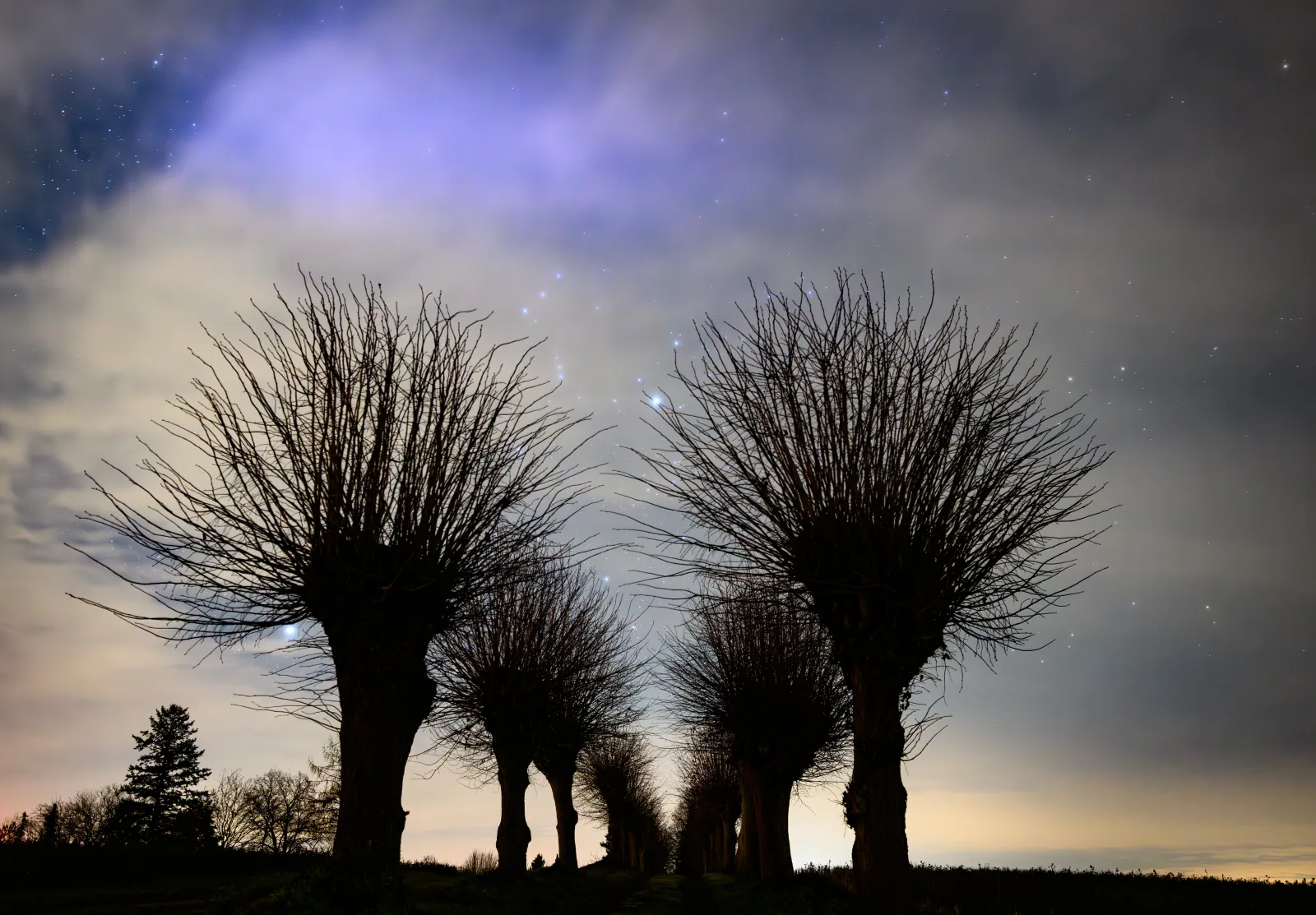
...
Dec 14, 2025 at 03:00 AM EST
Will there be another meteor shower this year?
The Geminids may be one of the most spectacular meteor showers of the year but they are not the last.
Once the Geminid activity winds down in mid-December, Earth will pass through the stream of another shower called the Ursids, which peak around December 21–22.
The Ursids shower is weaker than the Geminids, usually producing only about 5–10 meteors per hour at peak, so they’re less dramatic but still visible to dedicated observers under dark skies.
After the Ursids, the next significant annual meteor shower is the Quadrantids, which won’t peak until early January.
Dec 14, 2025 at 02:00 AM EST
Is the Geminid meteor shower the biggest of the year?
The Geminid is often regarded as one of the biggest and most reliable meteor showers of the year.
Under ideal dark-sky conditions, it routinely produces 100–150 meteors per hour, often outpacing other major annual showers such as the Perseids and Leonids. Its meteors are also known for being bright, slow-moving, and frequently colorful, which adds to their visibility and appeal.
While some showers—like the Leonids—can occasionally produce spectacular “storms” with thousands of meteors per hour, those events are rare and follow long cycles. The Geminids deliver high, consistent activity every year, making them the strongest annual shower in typical conditions.
Dec 14, 2025 at 01:01 AM EST
What are the best conditions to see a meteor shower?
To see a meteor shower at its best, you need the right conditions in terms of time, location, and environment. Here are the key factors:
Clear, Dark Skies
- Avoid city lights: Light pollution from streetlights, buildings, or cars can wash out faint meteors. Try to find a dark-sky location, like a rural area or a designated dark-sky park.
- Check the weather: Clouds, fog, or haze will block your view. Make sure the sky is clear in your area on the night of the meteor shower.
Little or No Moonlight
- A bright moon can outshine many meteors, especially the dimmer ones.
- The best conditions are during a new moon or when the moon is below the horizon during peak viewing hours.
Peak Time and Date
- Each meteor shower has a peak night when the most meteors can be seen.
- The best time to watch is usually after midnight and before dawn, when your region is facing into the stream of debris.
Give Your Eyes Time to Adjust
- It takes about 20–30 minutes for your eyes to fully adapt to the dark.
- Avoid looking at phones or any bright lights during this time.
Know Where to Look
- Meteors typically appear from a specific point in the sky called the radiant, often located in a constellation, such as Perseus for the Perseids or Orion for the Orionids.
- However, meteors can appear anywhere in the sky, so it's best to lie back and take in as much of the sky as possible.
Dec 14, 2025 at 12:30 AM EST
Gorgeous Geminids Photos from a Tweeting Tamil Physicist in Massachusetts
In an excited series of X posts late Saturday, a PhD research scholar at MIT's Department of Physics shared a series of fantastic meteor photographs, captured with a wireless camera attached to a telescope.
"Okey jezz [sic]" posted Dr Sea @kadaluniverse. "We are hunting geminids here."
"Take this...and make a wish."
Dec 14, 2025 at 12:01 AM EST
When is the best time to see the Geminid meteor shower?
The best time to see the Geminid meteor shower is late at night into the early-morning hours, with the highest activity typically occurring around 2 a.m. local time. That’s when the shower’s radiant point in the constellation Gemini is highest in the sky, allowing more meteors to be visible.
However, the Geminids are unusual in that they begin producing strong activity earlier in the evening compared with many other showers. This means that skywatchers can start seeing meteors as early as 9–10 p.m., especially bright fireballs, long before the radiant reaches its peak height.
Dec 13, 2025 at 11:00 PM EST
What causes meteor showers?
Meteor showers occur when Earth passes through streams of debris left behind by comets. As a comet orbits the Sun, it heats up and begins to shed particles of dust and rock. These particles remain in the comet’s orbital path, forming a trail of debris in space. Over time, this trail can spread out along the orbit, creating a dense cloud of material.
When Earth’s orbit intersects with one of these debris trails, the particles enter our atmosphere at extremely high speeds—often tens of thousands of miles per hour. As they streak through the atmosphere, they burn up due to friction with the air. This process produces bright flashes of light in the sky, which we see as meteors. When many of these meteors appear in a short time and from the same general area of the sky, it is known as a meteor shower.
Each meteor shower is associated with a particular comet and occurs at roughly the same time every year, as Earth returns to the same point in its orbit. Meteor showers are typically named after the constellation from which the meteors seem to radiate. For example, the Geminid meteor shower is named after the constellation Gemini, and is caused by debris from asteroid 3200 Phaethon.
Dec 13, 2025 at 10:15 PM EST
Clear Skies in Central Plains and West for Geminds Show: ‘The Real Deal’
The Geminids meteor shower is peaking tonight, with excellent viewing weather conditions expected for much of the U.S., especially Central and West. Expect clear skies and a moonless period before 2:00 AM for prime viewing, though the east coast faces cloud cover and potential rain/snow due to a cold front.
Look up after 10 PM for the best show, aiming for dark, light-pollution-free spots for up to 120 meteors/hour.
Good Viewing Conditions (Central/West US)
Central Plains and Rockies: a large area of high pressure means clear skies and great potential for seeing bright fireballs and numerous meteors.
Western Washington: east of the Cascades offers better chances with breaks in clouds; stay safe if near flooding.
Poor Viewing Conditions (East Coast)
Eastern seaboard: a cold front brings widespread clouds, rain, and snow, making viewing difficult to impossible.
Posting on X, Tennessee meteorologist Mike Witcher had some good tips, calling the Geminids the only meteor shower each year that’s “truly worth going out of your way for.”
Dec 13, 2025 at 10:00 PM EST
Why do we call meteors ‘shooting stars’?
Meteors are often called "shooting stars" because the bright, glowing meteor can look like a star is falling from the sky.
However, while real stars are massive, glowing balls of gas located light-years away from Earth, meteors are usually just tiny bits of rock or dust—often no bigger than a grain of sand—that come from comets or asteroids. When they burn up in our atmosphere, they briefly glow like stars.
Dec 13, 2025 at 09:00 PM EST
Five essentials for watching the Geminid meteor shower
The Geminid meteor shower is set to give viewers a spectacular display this evening. But to ensure the best viewing experience, bring these five essentials to keep warm and comfortable as temperatures across the U.S. plunge to below freezing.
Blanket or Sleeping Bag
To stay warm and comfortable while lying on the ground or in a chair. October nights (like during the Orionids) can get cold, especially in open areas.
Reclining Chair or Mat
A reclining lawn chair, camping chair, or even a yoga mat lets you lie back and look up at the sky without straining your neck.
Warm Clothes or Layers
Even in warmer seasons, nights can be chilly. Bring layers, gloves, and a hat to stay warm during long periods of sitting still.
Red Flashlight or Headlamp
A red light helps you see in the dark without ruining your night vision—essential for spotting faint meteors. Avoid using bright phone screens.
Snacks and Drinks
Bring water, a thermos of hot chocolate, or your favorite snacks to stay hydrated and keep your energy up—especially if you're out for several hours.
Dec 13, 2025 at 08:00 PM EST
How does the Geminid meteor shower compare to the Perseids and Leonids?
The Geminids are widely considered the strongest annual meteor shower, often outshining both the Perseids and Leonids in terms of reliability and meteor count. Under ideal dark-sky conditions, the Geminids can produce 100–150 meteors per hour, sometimes even more, and they tend to feature bright, slow-moving fireballs that make them especially eye-catching.
The Perseids, which peak in August, are traditionally the most popular because they occur during warm summer nights and are known for their fast, bright meteors. Their typical rate is around 80–100 meteors per hour, though moonlight or poor conditions can reduce visibility. The Perseids originate from Comet Swift–Tuttle and often include long-lasting streaks.
The Leonids, peaking in November, are famous for dramatic storms that occur roughly every 33 years, when rates can surge into the thousands per hour. In most years, however, the Leonids are much more modest, producing only 10–20 meteors per hour. Their meteors are among the fastest of any annual shower, originating from debris left by Comet Tempel–Tuttle. Overall, the Geminids stand out for their consistency, intensity, and brightness, making them a favorite among observers despite colder winter conditions.
Dec 13, 2025 at 07:00 PM EST
When does the Geminid meteor shower peak?
The Geminid meteor shower typically peaks each year on the night of December 13 into the early morning of December 14.
This year, around 2 a.m. ET on December 14 is expected to be the best time to catch the dazzling shower, which will produce as many as 120 meteors an hour.
Dec 13, 2025 at 06:00 PM EST
What to know about the Geminids meteor shower
The Geminids meteor shower, one of the year’s most reliable celestial displays, peaks each December when Earth passes through a dense trail of debris left behind by the asteroid 3200 Phaethon. Unlike most major meteor showers, which originate from icy comets, the Geminids come from this rocky, comet-like body, often described as a “rock comet” because of the way it sheds dust as it hurtles around the Sun. As those particles strike Earth’s atmosphere at high speeds, they burn up in bright flashes that can be seen from the ground.
Known for producing a high number of slow, colorful meteors, the Geminids regularly deliver more than 100 meteors per hour under ideal dark-sky conditions, making them a favorite among skywatchers. Their radiant point—the place in the sky from which the meteors appear to originate—lies in the constellation Gemini, which rises earlier in the evening than many radiants associated with other major showers. That early rise time gives observers a longer window to catch the show, even before midnight.
This year, visibility can vary depending on local weather, moonlight, and light pollution, but observers generally need only a clear sky and a vantage point away from bright city lights. No special equipment is required; in fact, meteor showers are typically best viewed with the naked eye, as wide-field visibility makes it easier to catch fleeting streaks across the sky. Patience is key—watchers should allow their eyes time to adjust to the darkness and prepare for periods of activity punctuated by sudden bursts of meteors.
Dec 13, 2025 at 05:01 PM EST
How to watch the Geminids meteor shower
For those planning to view the event, experts advise heading to a dark location away from city lights and allowing at least 20 to 30 minutes for eyes to adjust to the darkness. No special equipment is needed, though a reclining chair and warm clothing are recommended considering the late and wintery conditions!
“The great thing about a meteor shower, including the Geminids, is that the naked eye is the best way to see them,” Dr. Robert Massey, Deputy Executive Director at the Royal Astronomical Society, said in a video guide for hopeful viewers.
“If you get a telescope or a pair of binoculars, you're automatically restricting your view of the sky, and with a meteor shower what you want is the widest possible view.
"You want to be lying down, looking up at the broad panoply of stars, and watching for meteors."
This year’s Geminid display is expected to extend beyond the peak night. While the highest rates will occur overnight from Wednesday to Thursday and skywatchers are advised to keep an eye out then, meteors will remain visible until December 20, with the evenings immediately before and after the peak still offering a glittering show.
The evening of December 14 in particular may prove favorable for those unable to observe the peak night.
With favorable conditions expected, this week’s Geminid meteor shower offers one of the best opportunities in 2025 to witness a natural light show from space. The Moon is expected to not be visible to the naked eye the time and will not obstruct plans for new and seasoned skywatchers.
View 0 Comments
Submit Correction
View Editorial & AI Guidelines