...

By Micah McCartney
Reporter
0
Share
Newsweek is a Trust Project member
See more of our trusted coverage when you search.Prefer Newsweek on Googleto see more of our trusted coverage when you search.
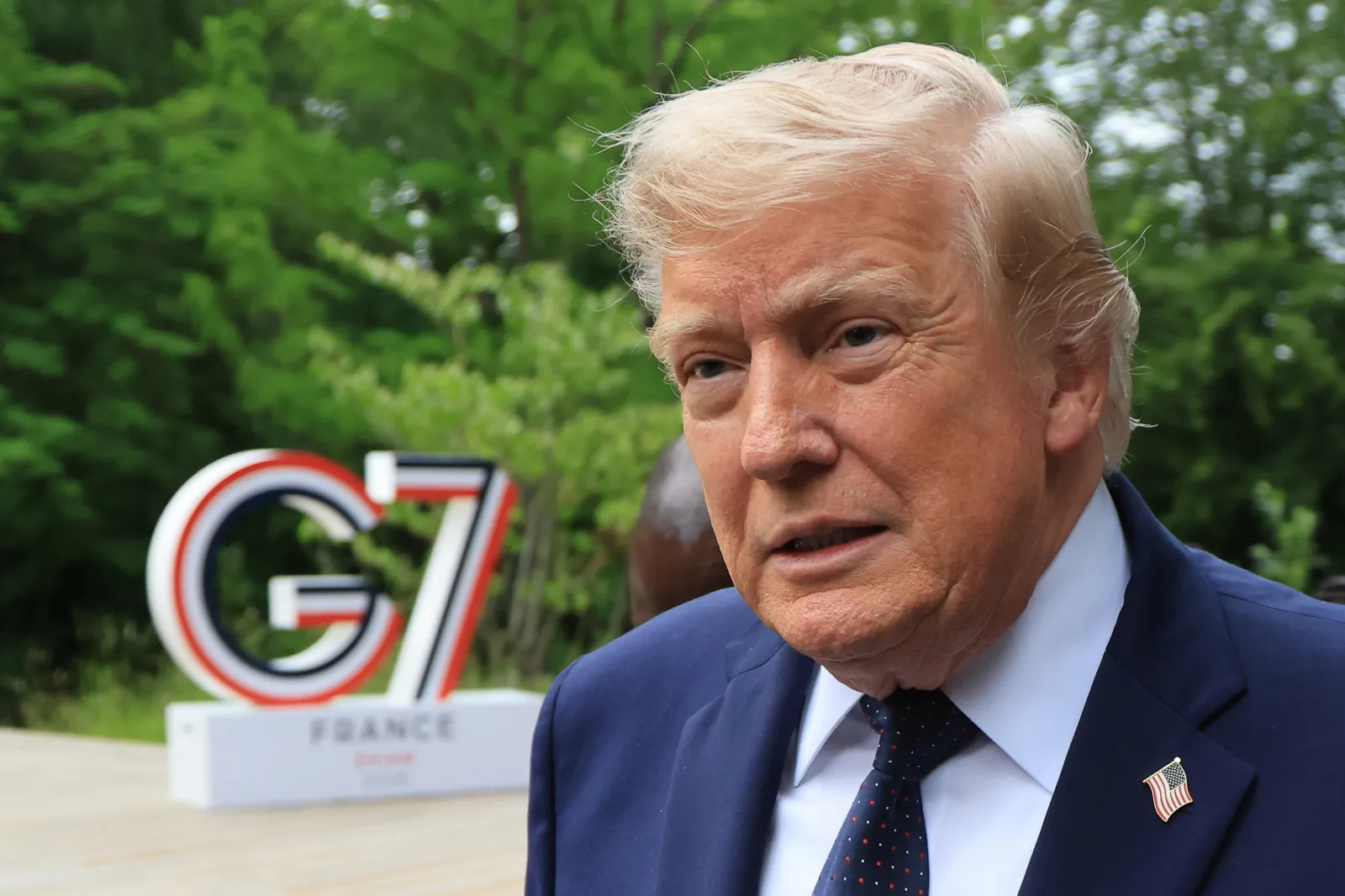
President Donald Trump and other Group of Seven (G7) leaders have launched an action plan to secure critical mineral supply chains after China moved to further tighten its control over many of these resources.
As the G7 summit in France drew to a close Wednesday, members the United States, United Kingdom, Japan, France, Italy, Germany and Canada pledged to develop a road map to advance "standards-based markets for critical minerals," including rare earth elements vital to industries ranging from clean energy and advanced manufacturing to defense technologies.
The move comes as the United States and its partners seek to reduce their reliance on Chinese rare earths. China accounts for roughly 70 percent of global rare earth mining and about 90 percent of processing capacity.
Read More
China Arrests Christian Leaders in Underground Church Raid4 min read

China Denies EU Claim It Has Trained Russian Troops To Fight Ukraine3 min read

China Responds to US-Iran War Deal7 min read

G7 governments increasingly view that dominance as a national security risk, citing Beijing’s history of weaponizing this leverage. China tightened rare earth export restrictions during last year's tit-for-tat trade dispute with the United States and again this year as part of a pressure campaign against Japan following comments on Taiwan by Prime Minister Sanae Takaichi.
China has not changed its stance on keeping global critical mineral supply chains stable and safe, the Chinese Embassy in Washington, D.C., told Newsweek.
Beijing's adjustments to its export controls are consistent with international norms and intended to safeguard "world peace and regional stability" and fulfill China's international obligations, the embassy added. The G7 should "observe the principles of market economy and international trade rules and stop disrupting the international trade order with the self-made rules of a small group."
...
Battling Beijing's Dominance
U.S. and European officials have raised concerns that extensive state support for Chinese industry distorts global markets, allowing Chinese producers to undercut foreign competitors and discouraging investment elsewhere.
"G7 nations share economic and national security interests that depend on access to resilient critical mineral supply chains governed by market principles," a statement said.
"We recognize that non-market policies and practices in the critical minerals sector threaten our ability to acquire many critical minerals, including the rare earth elements needed for magnets, that are vital for industrial production."
The G7 said it would work toward a road map by the end of 2026.
That effort will include measures to increase investment in future supply chains and support mining, processing and refining projects facing permitting delays, market distortions, price volatility and other barriers that can slow development.
Members also pledged to work with industry, international organizations, mineral-producing countries, Indigenous peoples, local communities and civil society groups to establish criteria for what the bloc called "standards-based markets" and the responsible production of critical minerals.
However, Trump failed to secure European backing for a Pentagon-drafted plan to establish floor prices for critical minerals. The scheme, developed with the assistance of artificial intelligence, would seek to account for what Washington says are cost distortions caused by Chinese market practices. European governments instead called for medium- and long-term studies to assess the impact of such arrangements before committing to them.
China Strengthens Grip
The statement came two days after a new set of Chinese regulations took effect that aim to bring mineral resources further under state control.
The new rules, which entered force Monday, establish a more comprehensive reserve system for mineral resources and grant the State Council—the Communist Party-led Cabinet—more authority over their exploration, mining, processing, storage, and import and export.
The regulations focus on upstream activities such as exploration and primary mining. They also introduce a national catalog of mineral types and classifications that resemble critical minerals lists drawn up by the U.S. and G7 members seeking more secure supply chains, observers say.
"The new regulatory framework seeks to identify minerals where supply chains are at risk, and put in place exploration, mining and stockpiling regimes that are more organized and better regulated," Ian Satchwell, senior fellow with the Australian Strategic Policy Institute, told Newsweek.
"It also recognizes that the regulatory and sustainability requirements of countries hosting Chinese minerals investment must be met in order to maintain supply chains."
Updated: 6/18/26, 5:19 a.m. This article has been updated with additional information and a comment from Ian Satchwell.
Updated: 6/18/26, 11:15 p.m. ET. This article has been updated with a comment from the Chinese embassy.
View 0 Comments
Submit Correction
View Editorial & AI Guidelines