...

By Amir Daftari
News Reporter
0
Share
Newsweek is a Trust Project member
See more of our trusted coverage when you search.Prefer Newsweek on Googleto see more of our trusted coverage when you search.
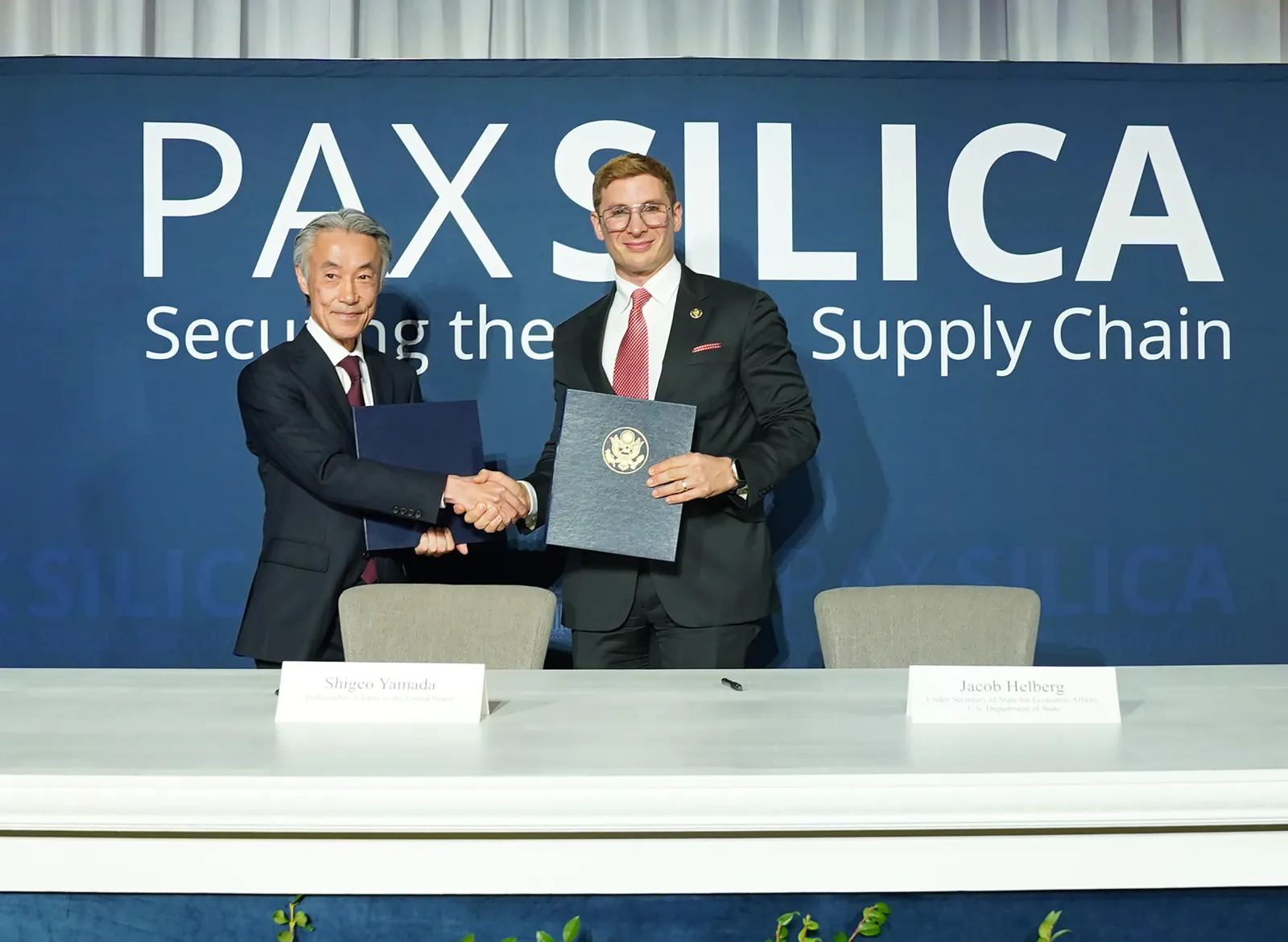
The United States has brought together a group of allied nations to launch Pax Silica, a strategic initiative aimed at securing global supply chains for artificial intelligence, critical minerals and advanced technologies amid growing competition with China.
The program is designed to strengthen technological resilience, coordinate research and development and cultivate a workforce capable of sustaining critical innovations.
Under Secretary of State for Economic Affairs Jacob Helberg described the initiative as the start of “a new golden era” of cooperation on AI and supply-chain security, emphasizing the importance of collective action among trusted partners to counter rising technological threats.
Read More on News
Newsweek has contacted the State Department and China's Foreign Ministry for comment via email.
Why It Matters
Pax Silica reflects a coordinated response to China’s rapid advances in AI, semiconductors and other critical technologies. Beijing’s state-driven investments and manufacturing dominance have raised concerns about overreliance on Chinese innovation, creating vulnerabilities in global supply chains.
By organizing a strategic alliance, the U.S. aims to secure access to critical technologies, diversify supply sources and maintain Western leadership in AI and semiconductor development. The initiative also strengthens economic and national security, ensuring that industries central to modern economies remain resilient amid intensifying geopolitical competition.
...
What to Know
Pax Silica’s structure includes core member nations and guest contributors, each bringing targeted expertise to the alliance:
-
Core Member Nations:
- Japan – Leading research initiatives in AI algorithms and semiconductor design.
- South Korea – Expanding semiconductor manufacturing capacity.
- Singapore – Coordinating AI infrastructure and cross-border data exchange.
- Netherlands – Strengthening chip production and logistics resilience.
- United Kingdom – Driving innovation in advanced materials and AI hardware.
- Israel – Specializing in AI cybersecurity applications and secure technologies.
- United Arab Emirates – Investing in AI-driven industrial applications and critical minerals.
- Australia – Providing access to critical minerals and AI research partnerships.
-
Guest Contributors:
- Taiwan – Sharing expertise in semiconductor fabrication and AI chip design.
- European Union – Coordinating regulatory frameworks and cross-border technology standards.
- Canada – Providing critical mineral resources and supporting AI research initiatives.
- Organisation for Economic Co-operation and Development (OECD) – Offering policy guidance, best practices, and international benchmarking for supply-chain security.
Guest participants provide advisory input, technical expertise, and policy guidance to strengthen coordination beyond the core alliance. Their involvement enables cross-border knowledge sharing and fosters alignment across the global technology landscape.
AI Supply Chains
Semiconductors form the backbone of modern electronics and AI systems. Pax Silica emphasizes strengthening production, diversifying sources, and safeguarding supply chains to reduce dependence on any single nation, particularly China. Lessons from the COVID-19 pandemic, which caused widespread shortages, underscore the urgency of building resilient, cooperative infrastructure for critical technologies.

...
Collaborative Research
Joint research and development is central to the initiative. By pooling expertise and resources, breakthroughs in AI and related technologies can be efficiently shared among member nations. Cross-border educational programs are designed to cultivate a skilled workforce capable of sustaining advanced technologies and maintaining a competitive edge relative to China’s expanding tech sector.
Strategic and Diplomatic Challenges
Pax Silica faces hurdles in coordinating policies across nations with diverse regulatory systems and economic priorities. China may perceive it as an effort to contain its influence, raising the risk of heightened geopolitical tension. Strong governance and diplomatic engagement will be essential to maintain cohesion and prevent fragmentation of the global technology market.
What Happens Next
The alliance will advance through joint research projects, semiconductor and critical mineral investments, and workforce development initiatives.
By coordinating among core members and leveraging expertise from guest contributors, Pax Silica aims to secure AI supply chains, foster innovation, and strengthen allied technological leadership amid China’s growing global ambitions. The December summit represents the first step in a long-term strategy to create a resilient, collaborative ecosystem for critical technologies.
View 0 Comments
Submit Correction
View Editorial & AI Guidelines