...

By Alice Gibbs
Senior Reporter
0
Share
Newsweek is a Trust Project member
See more of our trusted coverage when you search.Prefer Newsweek on Googleto see more of our trusted coverage when you search.
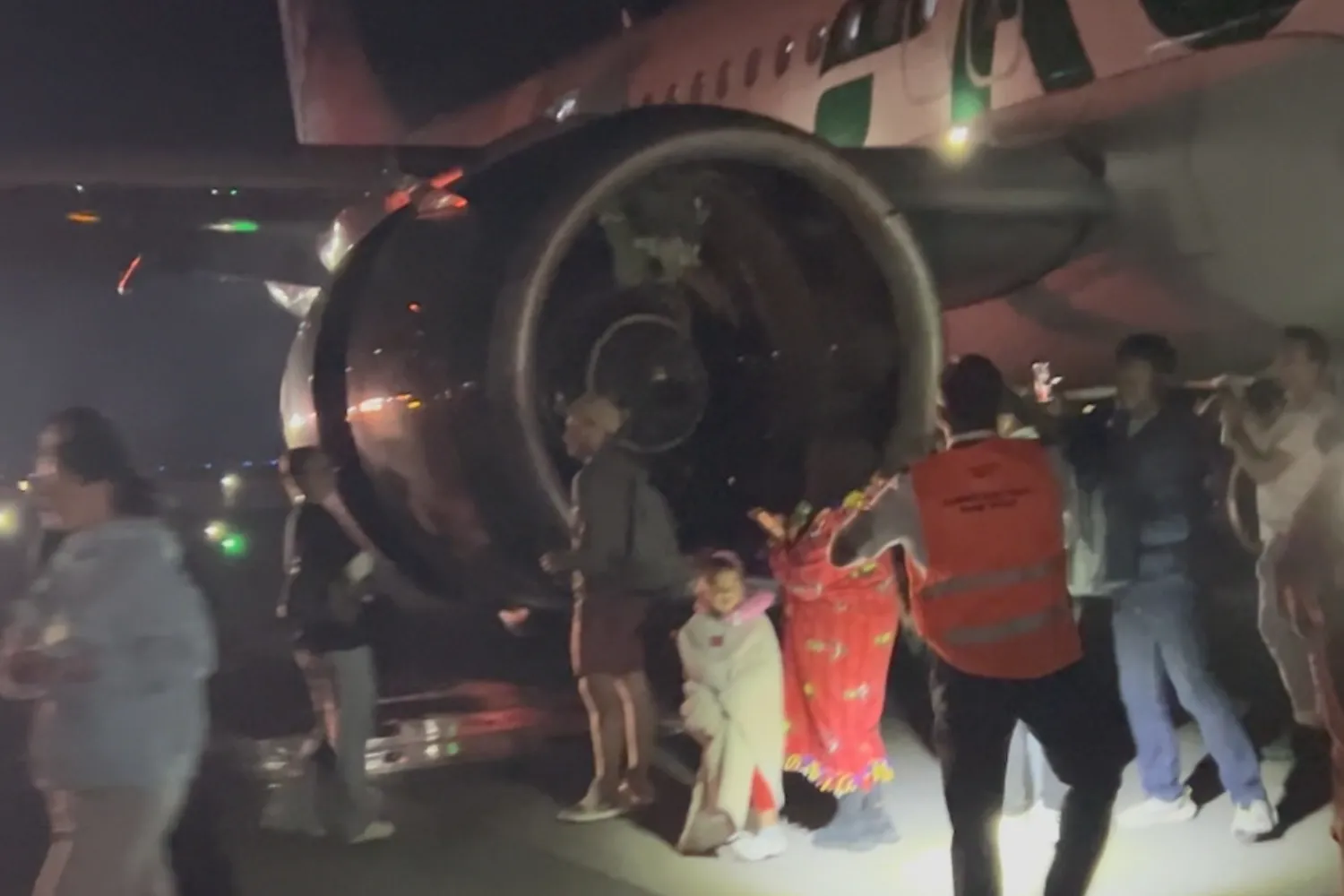
Every second counts in an aircraft evacuation. Yet after the evacuation of Frontier Airlines Flight 4345 in Denver last week, reports and images showed passengers stopping to retrieve their belongings.
The Airbus A321 had aborted takeoff after striking and killing a person on the runway at Denver International Airport, with smoke reported in the cabin and an evacuation ordered “as a matter of precaution,” according to airline and airport officials. Twelve passengers reported minor injuries, and the incident remains under investigation.
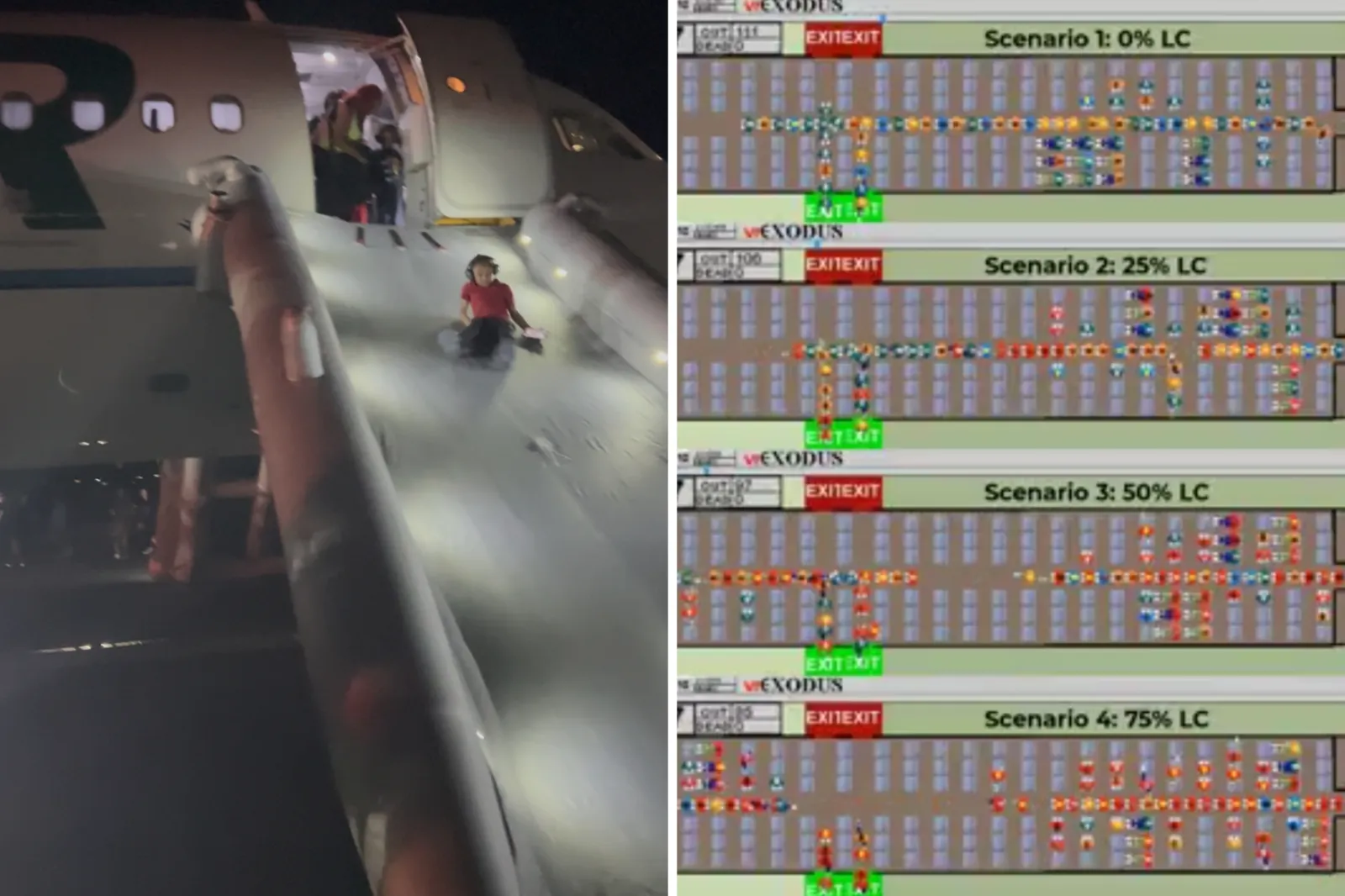
For aviation safety experts, what followed the evacuation was depressingly familiar as videos emerged of flight attendants pleading with passengers "Please leave all belongings. Your lives are more important." While another video appeared to show people coming down the emergency slide with their luggage.
Read More on News
“This has been a big problem for a long time,” Ed Galea, director of the Fire Safety Engineering Group at the University of Greenwich and a leading authority on aircraft evacuation behavior, told Newsweek. “This Frontier accident is no exception. It happens virtually all the time.”
...
‘People Think It Will Only Take a Second’
Galea, whose team has studied passenger evacuations for decades, said most people who grab luggage during emergencies do not see themselves as taking a serious risk.
“People think, ‘It’s just going to be a second. I can just retrieve this bag,’” he said. “They don’t understand the impact that has.”
In an emergency involving smoke or fire, Galea said, those seconds are critical—not just for the person retrieving the bag, but for everyone behind them.
“You’re not delaying one person,” he said. “You’re potentially delaying over 100 people. And if more people do it, it has a compounding effect.”
People just don’t realize that delaying an evacuation by a few seconds can cost lives
Ed Galea
That compounding effect is not theoretical. In a 2024 FAA‑funded study led by Galea’s team, researchers used evacuation simulation software to model what happens when passengers stop to retrieve carry‑on luggage in narrow‑body aircraft similar to Boeing 737 and Airbus A320 jets.
The study found evacuation times rose sharply as more passengers paused for bags. When 25 percent of passengers retrieved luggage, delays left an average of three additional people still onboard after 90 seconds.
“That’s potentially three fatalities,” Galea said.
Real‑world investigations have echoed those findings. After the 2019 Aeroflot Superjet fire at Moscow’s Sheremetyevo Airport, investigators concluded that passengers retrieving hand luggage likely slowed evacuation and worsened the outcome. Forty passengers and one flight attendant died in the post‑crash fire.
Why Experts Believe the Problem Is Getting Worse
On Sunday, the National Transportation Safety Board said it was gathering information to determine whether the evacuation of Frontier Flight 4345 warranted a formal safety investigation.
Galea believes the behavior has become more common over time, driven in part by changes in how people travel.
“People are carrying more and more luggage into the cabin,” he said, citing airline fees, time pressures and fear of lost bags. “At the end of the day, your carry‑on—even if it has a laptop in it—is not worth your life, or the life of another passenger. But people don’t understand that.”

...
Passengers often justify grabbing bags by citing essential items such as passports or medication. Galea said those items should never be stored in overhead bins in the first place.
“If it’s truly essential, keep it on your person, in a small bag under the seat,” he said. “If you retrieve something from under your seat, you’re not blocking the aisle. You may be risking your own life—but you’re not jeopardizing other people.”
Education—and Stronger Measures
Galea believes that airlines may ultimately need to consider stronger measures, ranging from tighter baggage rules to technical solutions that prevent access to overhead bins during emergencies.
“One option is to lock overhead bins during takeoff and landing,” he said. “Passengers shouldn’t be in them at those times anyway.”
While such measures would involve cost and logistical challenges, Galea warned that the alternative could be legal consequences for passengers whose actions delay evacuations.
“I don’t think we’re far away from a situation where, if people die and it’s shown others delayed evacuation by retrieving luggage, people could be sued,” he said. “It’s getting that serious.”
As the investigation into Frontier Flight 4345 continues, Galea hopes the attention it has drawn will reinforce a simple message passengers hear on every flight—and too often ignore.
“In an emergency,” he said, “nothing you own is worth a life.”
View 0 Comments
Submit Correction
View Editorial & AI Guidelines