10
Loading video...

By Gabe Whisnant
News Editor
0
Share
Newsweek is a Trust Project member
See more of our trusted coverage when you search.Prefer Newsweek on Googleto see more of our trusted coverage when you search.
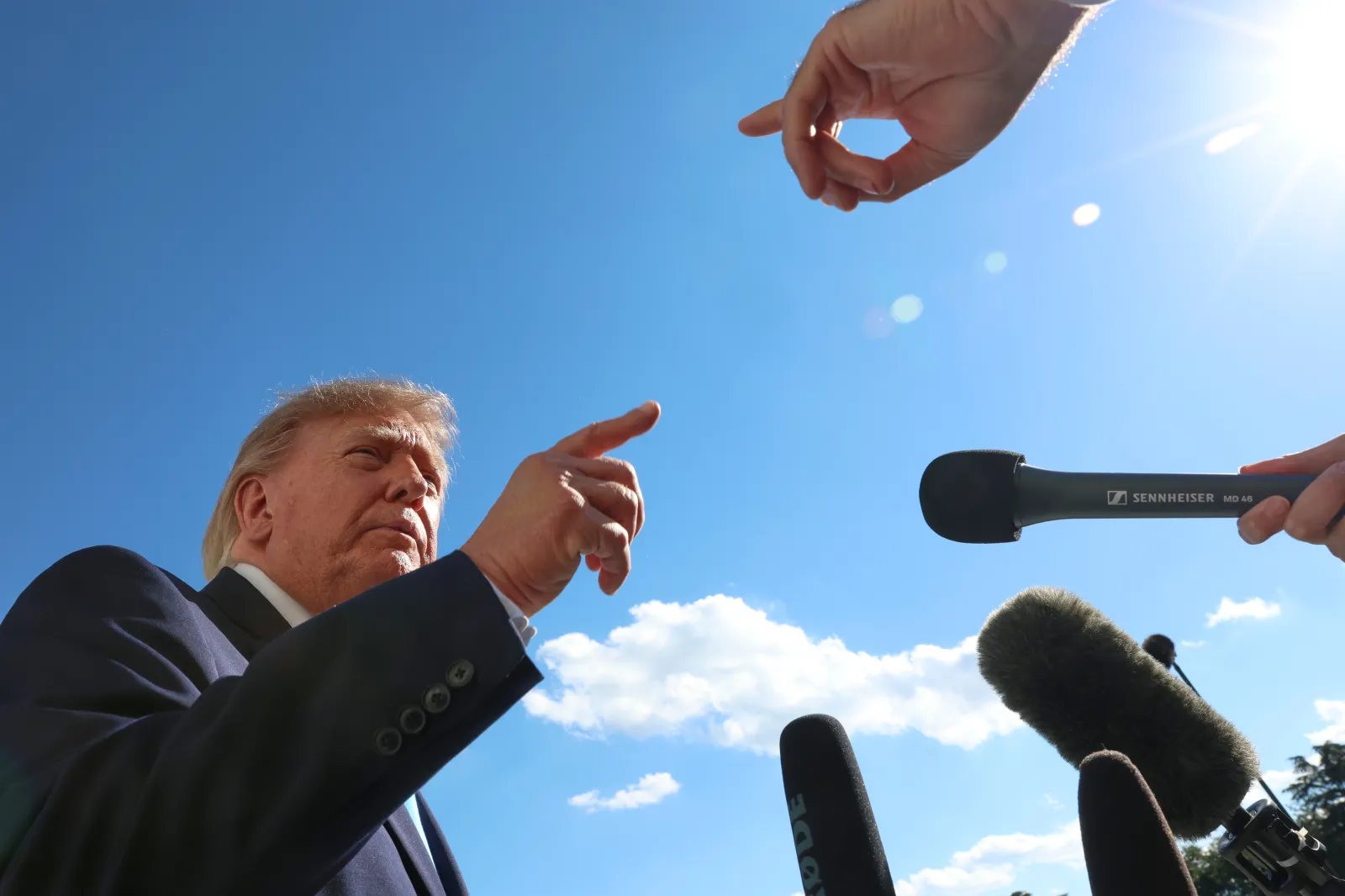
President Donald Trump weighed in on France's ongoing school protest crisis on Tuesday, arguing that the unrest reflected broader concerns about immigration and integration.
In a Truth Social post, Trump wrote: "What's happening in France is nothing less than out of control mass migration. This isn't about schools, this is about Islam wanting to take over a once great Country!"
Trump's comments came as more than 250,000 people joined demonstrations Tuesday across France in support of high school students demanding increased education funding, according to government figures. Police fired tear gas in Paris and other cities as the protests added to pressure on outgoing President Emmanuel Macron's administration.
Read More on World
The remarks also touched on a wider political debate in France over immigration, integration and national identity. Trump has frequently criticized European migration policies, arguing that large-scale immigration poses cultural and security challenges. His latest intervention adds to an already contentious discussion in France as officials and political parties remain divided over how to address the issue.
Newsweek has reached out to the State Department and the French Embassy in Washington for comment on Trump's remarks and the ongoing protests.

...
Why are There Protests in France?
The protests began in mid-September at a high school outside Paris, where students complained about a lack of resources and deteriorating conditions. What started as a local dispute quickly spread nationwide, with students blockading schools and organizing demonstrations in cities including Paris, Marseille and Strasbourg.
The French Interior Ministry estimated that 266,000 people took part in demonstrations across the country on Tuesday, including about 56,000 in Paris. While most marches remained peaceful, small groups of protesters clashed with riot police in the capital at the end of the day. CNN reported that one student lost a hand after attempting to pick up a grenade during the unrest.
Authorities said nearly 500 people were detained nationwide. The use of arrests, tear gas and other crowd-control measures against student demonstrators has drawn criticism from some parents and teachers and fueled calls for additional protests. Several student organizations have urged supporters to return to the streets on Thursday.
Related Story

France Student Protests Spread as Nearly 5,000 Arrested
Interior Minister Laurent Nuñez defended the police response, saying it had been proportionate in "almost all cases" and arguing that some demonstrations had escalated into riots requiring intervention. Prime Minister Sébastien Lecornu likewise defended law enforcement while acknowledging students' concerns, saying the government and education officials must work toward solutions. Speaking in parliament, he condemned what he described as "ultra violence" targeting schools and public institutions, pledged investigations into any incidents involving police officers and rejected allegations of systemic racism within the force.
Students say chronic underinvestment has left some schools struggling with staff shortages, overcrowded classrooms and deteriorating facilities. Protesters have pointed to rundown buildings, classrooms lacking basic equipment and rising workloads, arguing that education funding has failed to keep pace with students' needs.
Related Story
Trump Blames Ukraine for Gas Prices: Where Diesel Costs Are Highest
The demonstrations have also tapped into broader frustrations over rising fuel prices linked to the Iran war, concerns about poverty and inequality, and dissatisfaction with government spending priorities. As a result, the movement has drawn support from parents, teachers and other adults who see the students' demands as part of a wider debate about France's future.
The unrest has become a major political challenge for President Emmanuel Macron's government. More than 6,000 people, most of them minors, have been arrested since the protests began, while allegations of excessive force have intensified scrutiny of police tactics.
Macron has acknowledged students' frustrations over issues including class sizes, teacher shortages and school conditions, saying he understands their "anxiety" and "anger." At the same time, he has condemned violence linked to the protests, arguing that no grievance justifies attacks on schools, police officers or public property.
Student groups have vowed to continue demonstrating until authorities agree to increase education funding and improve learning conditions.
The movement has also spread beyond France's borders. In neighboring Belgium, authorities said more than 30 people were arrested Tuesday and several police officers were injured during demonstrations in the eastern city of Liège. Smaller student-led protests were also reported in Brussels and other cities.
The Associated Press contributed to this article.
Newsweek’s reporters and editors used Martyn, our AI assistant, to produce this story. Learn more about Martyn here. Contact Newsweek editors on this story: Samantha Beech and Gray R. Thomas
View 0 Comments
Submit Correction
View Editorial & AI Guidelines