10
Loading video...

By Mandy Taheri
Reporter
0
Share
Newsweek is a Trust Project member
See more of our trusted coverage when you search.Prefer Newsweek on Googleto see more of our trusted coverage when you search.
Democrats are increasingly competitive in their bid to reclaim control of the Senate in the November midterm elections, according to a series of recent Fox News polls showing the party's nominees narrowly ahead in several key battlegrounds that would be critical to securing a majority.
While Republicans are ahead in Michigan, a Democratic-held seat, Fox News polls show Democratic candidates leading in six other battleground seats: Georgia, North Carolina, Ohio, Iowa, Texas and Maine. Those gains would be enough to overcome a loss in Michigan and still deliver a Democratic majority if the party has a net gain of four seats on November 3.
Strategists caution, however, that several of those states have leaned Republican in recent federal and state elections and that polls are not indicators of election results.
Read More on Politics
Still, the overall Senate landscape remains challenging for Democrats, and more recent polling in several key races has painted a more favorable picture for Republicans, who enter the cycle with a 53-47 majority.
Many of the states where Democrats currently hold leads have voted Republican in recent presidential elections, but Democrats believe that President Donald Trump's slipping approval rating and ongoing war with Iran, among other policy priorities, could help their campaigns.
Although Fox News is often seen as favoring Republican viewpoints, its polling arm is generally well regarded by political observers across the spectrum and has ranked among the nation's more accurate pollsters.
Georgia
Senator Jon Ossoff, a Georgia Democrat, is taking on Republican Mike Collins in one of the most closely watched races this cycle.
Ossoff was elected in January 2021, defeating Republican incumbent David Perdue in a closely watched runoff election. His victory, along with that of fellow Democrat Raphael Warnock, marked a historic shift in Georgia’s political landscape, long considered a Republican stronghold.
Collins has represented Georgia's 10th Congressional District in the House since 2023. Trump endorsed him in the primary run-off on June 16, writing in part, in a Truth Social post: “Mike is strongly supported by the most Highly Respected MAGA Patriots in Georgia and beyond, and many Republicans in the U.S. House and Senate — He is a WARRIOR and WINNER!”

...
Georgia has become a battleground in recent election cycles. Trump carried the state by about 2 percentage points in 2024 after Joe Biden narrowly won it in 2020, marking the first Democratic presidential victory there since 1992. Republicans continue to hold the governor's office, while Democrats hold both U.S. Senate seats, highlighting the state's competitive political landscape.
Related Story
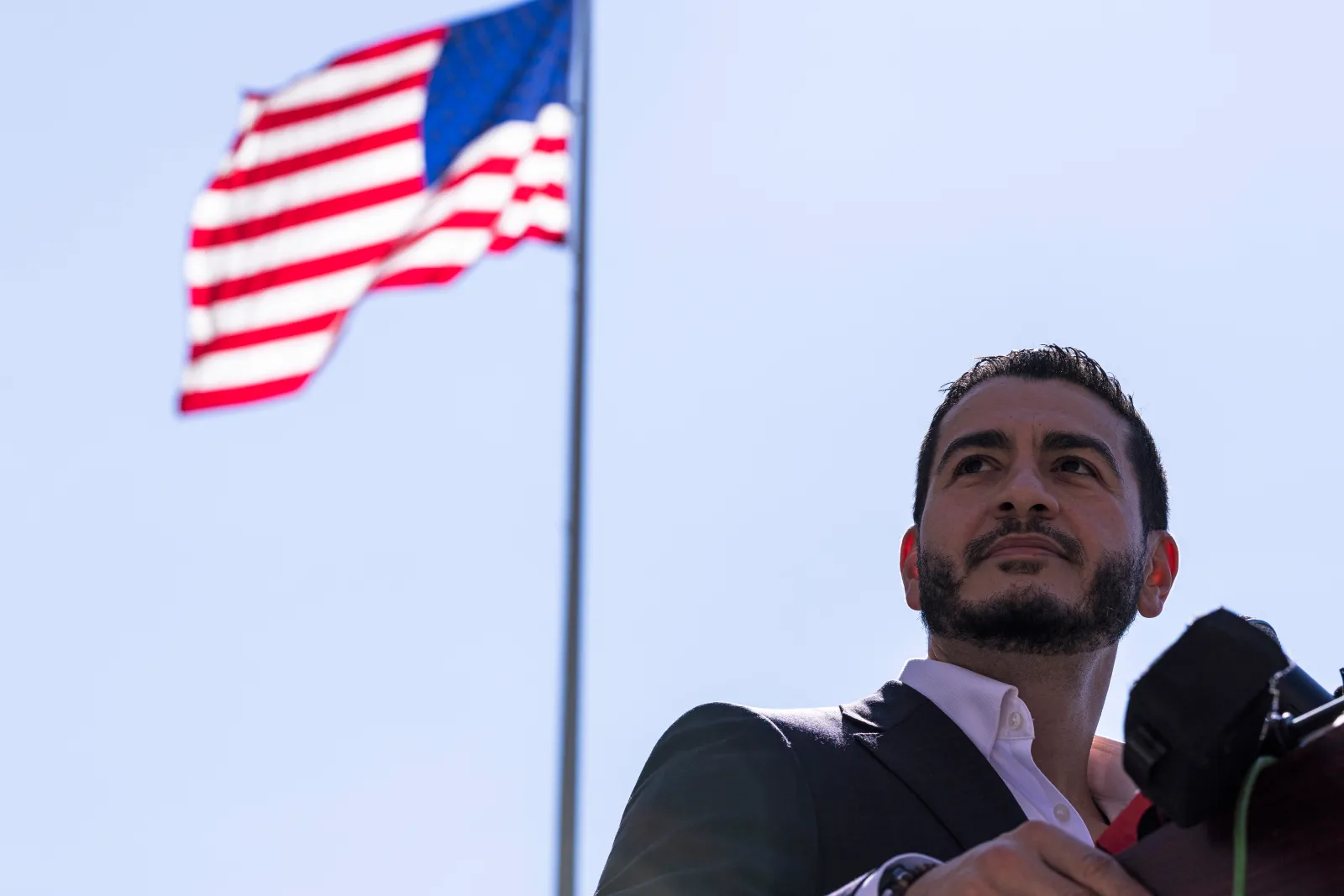
Abdul El-Sayed’s Chances of Winning Michigan Senate Race: Fox News Poll
A June 23-27 Fox News poll surveyed 1,002 Georgia registered voters, finding Ossoff in the lead with 56 percent support to Collins' 43 percent.
The poll found Ossoff with a 58 percent favorability rating and Collins with 44 percent, both ahead of Trump's 42 percent. The poll had a margin of error of plus or minus 3 percentage points.
The University of Virginia's Center for Politics shifted Georgia's Senate race from “lean Democratic” to “likely Democratic” in its latest Crystal Ball ratings last month.
Recent public polling has generally shown Ossoff with a mid-to-high single-digit lead.
Newsweek has reached out to the Ossoff and Collins campaigns for comment via email on Friday.
North Carolina
The North Carolina Senate race between Democratic former Governor Roy Cooper and Republican Michael Whatley is expected to be one of the most competitive of the midterms, with Democrats viewing it as one of their top flip opportunities. The state has frequently produced ticket-splitting outcomes, with voters supporting candidates from both parties in statewide and federal contests.
North Carolina is an electoral battleground that backed Trump by about 3 points in 2024. Two-term Republican Senator Thom Tillis announced he was retiring at the end of his term, leaving vacant—and vulnerable—a battleground seat.
Democrats believe Cooper, a two-term governor, is a strong candidate who can flip the seat in a favorable national environment, fueled by Trump’s declining national approval rating. Republicans, however, note that most polling still shows Cooper below 50 percent support and that the state has favored their candidates in recent federal elections.

...
A July Fox News poll of 1,005 North Carolina registered voters found Cooper with a 9-point lead, 53 percent to Whatley’s 44 percent, with about 2 percent undecided.
The poll found Cooper with a 54 percent favorability rating and Whatley and Trump both at 40 percent.
The poll was conducted July 23-27 and had a margin of error of plus or minus 3 percentage points.
Jeff Allen, Cooper's campaign manager, told Newsweek in an email Friday, "Roy Cooper has spent his career putting North Carolinians first, while Washington DC insider Michael Whatley spent his delivering for billionaires and special interests at the expense of the middle class. A Democrat has not won statewide federal office in North Carolina in nearly two decades and we know this race will be very close, which is why we’re building a campaign to earn every vote and make sure North Carolinians know that Roy Cooper will fight for them in the Senate."
The Cook Political Report and Sabato’s Crystal Ball rate the race as a “Lean Democrat.” Other recent polling has shown Cooper, who benefits from high name recognition, with a lead.
A New York Times and Siena poll, which surveyed 601 likely voters June 15-27, showed Cooper with a 7-point lead at 50 percent support to Whatley’s 43 percent.
Newsweek has reached out to Whatley's campaign for comment via email on Friday.
Ohio
Republican Senator Jon Husted is facing off former Senator Sherrod Brown in Ohio. Brown, who lost his reelection bid in 2024, is seeking a comeback in a special election against Husted, who was appointed by Governor Mike DeWine to fill the seat vacated by Vice President JD Vance.
Trump carried the state by about 11 percentage points in 2024, an improvement on his 2020 and 2016 performances, when he won by about 8 points in each. But Ohio was viewed as more competitive for Democrats not long before. President Barack Obama narrowly carried Ohio in 2008 and 2012. It has shifted as Trump performed well among the state’s working-class voters.
Ohio has been competitive in some recent elections. Brown won reelection in 2018, then lost in 2024 by fewer than 4 percentage points. Democrats hope their candidates can improve on that this year in a more favorable national environment.
An August Fox News poll found Brown leading Husted by 8 points, 53 percent to 45 percent, with about 2 percent undecided.
Brown leads among independents in Ohio by 38 points, 66 percent to 28 percent for Husted. The poll of 1,008 registered Ohio voters was conducted August 6-10.
Forecasters like the Cook Political Report and Sabato’s Crystal Ball view the race as a pure toss-up. Sabato’s Crystal Ball shifted it from Lean Republican earlier in June after Brown and Husted formally won their parties’ nominations.
Both campaigns have emphasized costs for Ohioans, with Husted campaign spokesperson Amy Natoce telling Newsweek in an email Friday: “Sherrod Brown spent 32 years in Washington raising Ohioans' taxes and giving benefits to illegal immigrants. Polls will go up and down all summer. What won’t change is that voters fired Brown two years ago after looking at his record of failure, and they’re not willing to go backwards now."
On the other hand, Patrick Eisenhauser, Brown's campaign manager told Newsweek, “Ohioans across the state are fed up with skyrocketing costs and of Jon Husted voting to make things worse. Families are being crushed by rising costs, and now they’re seeing gas prices and inflation spike even further out of control. As we visit towns across Ohio, it's clear that Ohioans are ready to hold Jon Husted accountable for his role in the affordability crisis.”
Iowa
Republican Representative Ashley Hinson is going against Democratic state Representative Josh Turek in the Iowa Senate race. They are running to succeed Republican Senator Joni Ernst, who chose not to run for reelection. Democrats haven't secured a Senate seat in the state since Tom Harkin's election in 2008.
Turek is a two-time Paralympic gold medalist and state House member, first elected in 2022. Obama endorsed him in a late-July video, while Trump has endorsed Hinson, who was first elected in 2020 after serving in the state House and working as a journalist.
Iowa was viewed as a battleground for much of the 2000s, with Obama carrying the state by about 10 points in 2008 and 6 points in 2012. But Trump performed well in the state in each of his presidential bids, winning by 10 points in 2016, 8 points in 2020 and 13 points in 2024.

...
A Fox News poll of 1,003 Iowa registered voters found Turek leading Hinson 50 percent to 46 percent, with 4 percent undecided. The poll was conducted June 23-27 and had a margin of error of plus or minus 3 percentage points.
An Emerson poll this month found Hinson with a slight lead, 47.5 percent to 45 percent. She was viewed favorably by 44 percent of respondents and unfavorably by 40 percent, while Turek was viewed favorably by 42 percent and unfavorably by 27 percent.
It surveyed 712 likely voters August 2-4 and had a margin of error of plus or minus 3.7 percentage points.
The Cook Political Report and Sabato’s Crystal Ball rate the race as “leans Republican.” Polling averages suggest a competitive contest. RealClearPolling's average shows the race nearly tied, with Hinson having 47 percent support and Turek 46.3 percent.
Newsweek has reached out to the Turek and Hinson campaigns for comment via email on Friday.
Texas
The GOP's decadeslong hold on Texas statewide offices will be tested in November, with the Senate race between Republican Attorney General Ken Paxton and Democratic state Representative James Talarico nearly deadlocked.
Texas has not elected a Democrat to statewide office since 1994, making it one of the nation's longest-running Republican strongholds. Democrats have repeatedly targeted the state as demographic shifts and population growth have reshaped its electorate, but they have fallen short in a series of closely watched campaigns, including Beto O'Rourke's 2018 Senate bid against Ted Cruz.
Surveys show both Paxton, who is endorsed by Trump, and Talarico, who has served as a state representative since 2018, holding narrow leads at different points in the campaign. The matchup comes after Paxton defeated longtime Senator John Cornyn in the Republican primary in late May.

...
A Fox News poll of 1,006 registered Texas voters found that 51 percent back Talarico and 48 percent Paxton, with 1 percent undecided. The survey was conducted July 23-27 and had a margin of error of plus or minus 4 percentage points.
However, polls appear to flip-flop on who is leading, as a recent Emerson College Polling/Nexstar Media poll of 1,000 likely Texas voters puts the Senate race in a near dead heat, with 47 percent backing Paxton and 46 supporting Talarico.
About 5 percent are undecided and 2 percent back a different candidate. The poll was conducted August 9-11 and had a margin of error of plus or minus 3 percentage points.
The Cook Political Report and Sabato’s Crystal Ball rate the race as “leans Republican.”
Newsweek has reached out to the Talarico and Paxton campaigns for comment via email on Friday.
Maine
In Maine, Republican Senator Susan Collins faces a competitive reelection bid from Democrat Troy Jackson, who became his party's nominee after Graham Platner withdrew from the race.
Platner, who won the primary in June, formally withdrew from the race after allegations emerged about his past conduct, including accusations of inappropriate behavior and alleged sexual assault, which he has denied.
A Fox News poll conducted August 6-10 found Jackson ahead of Collins 48 percent to 46 percent, putting the race within the poll's 3 percent margin of error, highlighting how close the election could be.

...
According to the poll, which surveyed 1,000 registered voters in the state, Jackson’s strongest support comes from liberals, younger voters, college-degree holders and union households. He also leads among voters under 45, while men overall are evenly split between the two candidates.
Collins’ support is strongest among conservatives, white evangelical Christians, voters without college degrees, and rural voters, the poll shows.
A Fox News poll in June showed Collins with 50 percent to Platner's 47 percent.
Both Sabato’s Crystal Ball and The Cook Political Report categorize Maine as a toss-up.
Newsweek has reached out to the Jackson and Collins campaigns for comment via email on Friday.
Michigan
With Democrats eyeing a Senate comeback, Michigan is widely viewed as a must-win battleground. The state backed Trump in two of the past three presidential elections, but Democrats have continued to notch major statewide victories, emphasizing Michigan's status as one of the nation's most closely divided battlegrounds.
Democratic nominee Abdul El-Sayed will go against Republican Mike Rogers for the open Senate seat following Democrat Gary Peters' decision to retire. Democrats have held the seat for decades.

...
Michigan has long defied easy political labels, often producing razor-thin elections and unexpected outcomes.
In 2016, Democratic primary voters backed independent Vermont Senator Sanders over Hillary Clinton before narrowly helping deliver the state to Trump months later. Since then, Michigan has alternated between Democratic and Republican presidential support, cementing its battleground status.
Many of the races have been close. Trump won the state in 2024 with 49.7 percent to Vice President Kamala Harris’ 48.3 percent. In 2020, President Joe Biden won the state over Trump, 50.6 percent to 47.8 percent. Trump narrowly secured the state in his first campaign in 2016, beating Clinton by about .20 percent.
While the progressive El-Sayed made headlines with his win against Representative Haley Stevens this the primary this month, Fox News polling shows Rogers flipping the seat.
The poll of 1,006 registered Michigan voters found Rogers ahead at 51 percent to El-Sayed’s 47 percent, with 2 percent undecided. The poll, which was conducted August 6-10 had a margin of error of plus or minus 3 percentage points.
The Cook Political Report and Sabato’s Crystal Ball rate the race as a toss-up.
“Michiganders of all political stripes are fed up with Donald Trump’s toxic agenda and Mike Rogers’ price hikes. Dr. Abdul El-Sayed is running to take on corruption, get money out of politics, and put money back in the pockets of working families across our state who are getting crushed by the higher cost of health care, groceries, and gas," a campaign spokesperson for El-Sayed told Newsweek in an email Friday morning.
The statement continued: "That message energizes Democrats, independents, and Republicans alike, and it’s why they’ll send Abdul El-Sayed to the U.S. Senate in November.”
Alyssa Brouillet, Rogers' communications director, told Newsweek in an email Friday night, "Mike Rogers is carrying the momentum and defying the map–and it’s easy to see why. Turns out Michiganders have an issue with Abdul raising their taxes, taking over their healthcare, emptying the prisons, and killing their dogs."
She continued: "They know Mike Rogers will hold the line against this insanity and deliver real results for Michigan. We have a state to save."
Voters across the country will head to the polls in November to decide a series of closely watched Senate contests, with the outcomes to determine which party controls the chamber for the rest of Trump's term.
Contact Newsweek editors on this story: Jason Lemon and Dave Siminoff.
Correction 8/14/26, 5:45 p.m. ET: This article has been updated to say that El-Sayed will be facing Mike Rogers in November.
View 0 Comments
Submit Correction
View Editorial & AI Guidelines