...

By Anna Skinner
Associate News Editor
0
Share
Newsweek is a Trust Project member
See more of our trusted coverage when you search.Prefer Newsweek on Googleto see more of our trusted coverage when you search.
Farmers in Louisiana and Texas are facing growing threats from invasive species that are damaging rice fields and disrupting crawfish harvests, raising concerns for two industries that are closely linked and economically significant in the southern United States.
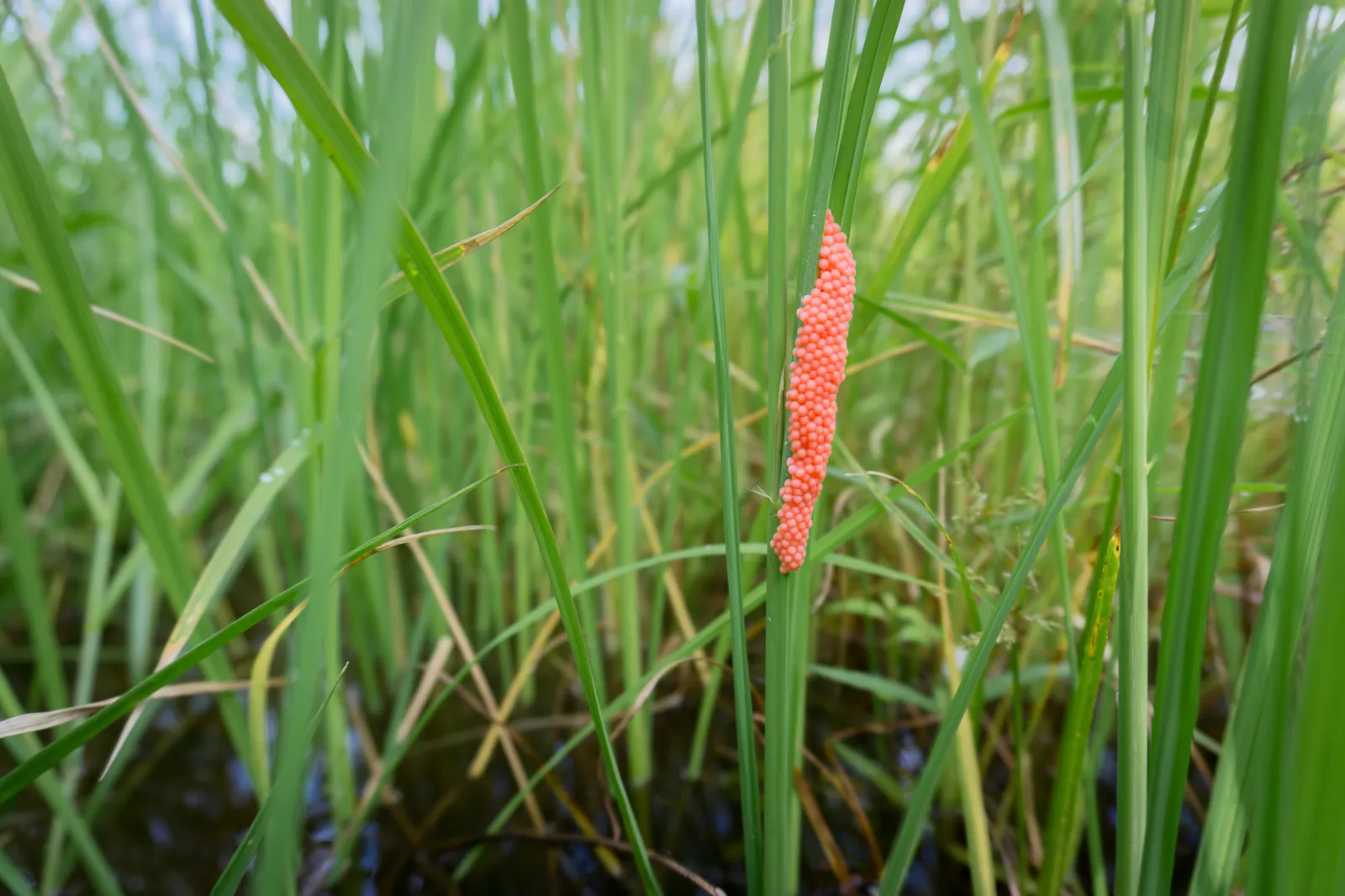
Invasive apple snails have spread rapidly across rice—crawfish fields in southern Louisiana, clogging traps and devouring young rice plants. At the same time, rice delphacids—tiny sap-sucking insects—have emerged as a major threat to rice crops. Researchers say the insects can cut yields dramatically by weakening plants and spreading rice viruses, with some Texas farmers reporting losses of up to half their second crop, The Associated Press reported.
...
Read More on U.S.
Unfortunately, experts worry there isn't much that can be done to combat the issue.
"I don't think there's going to be a silver bullet that's going to make the problem go away," Louisiana State University sugarcane and rice entomologist Blake Wilson said in a video summary of the AP report. "It's almost impossible to eradicate or eliminate an invasive species once they've become firmly established in the region. You're introducing a new problem that's going to require management for the foreseeable future."
Newsweek reached out to Wilson by email for comment.
The stakes are high for U.S. agriculture. Rice is a major domestic and export crop, with the U.S. rice market valued at roughly $6—7 billion annually and the United States ranking among the world’s top exporters, exporting about 40—45 percent of its rice production, according to data from the U.S. Department of Agriculture (USDA). Most of that rice is grown in Southern states where farmers often rotate rice and crawfish in the same flooded fields, meaning losses to one crop can threaten the financial viability of the other.
Crawfish production is similarly concentrated and economically vital. Louisiana produces more than 90 percent of the nation’s crawfish, harvesting roughly 100 to 120 million pounds each year and generating hundreds of millions of dollars in economic activity. The apple snails described in The Associated Press report frequently outnumber crawfish in traps, adding labor costs and slowing harvests, while chemical controls are limited because pesticides that kill snails can also harm crawfish.
Scientists say climate change may be compounding the problem. Warmer temperatures, milder winters and more frequent extreme weather events can make it easier for invasive species to survive, reproduce and expand into new areas. In some cases, the invasive species situation can become so severe that farmers can no longer plant the crop in the same region.
"From an agricultural standpoint, that’s generally what happens when you get one of these intractable pests," Hannah Burrack, professor and chair of the entomology department at Michigan State University, said in The Associated Press report. "People are no longer able to produce the thing that they want to produce in the place that they’re producing it."
In the meantime, farmers are planting rice in dry fields to allow the plants to get as strong as possible before flooding the fields. To deal with the rice delphacids, experts use large butterfly nets and other tools to try to capture the pests.
The future is uncertain when it comes to the lasting impact of the invasive species. Scientists caution that early detection and coordinated management could slow the damage, but acknowledge that once an invasive species becomes established, eradication is often unlikely. As a result, communities may increasingly be forced to adapt to altered landscapes, underscoring how unpredictable and costly the future impact of invasive species could be.
View 0 Comments
Submit Correction
View Editorial & AI Guidelines