...

By Anna Skinner
Associate News Editor
0
Share
Newsweek is a Trust Project member
See more of our trusted coverage when you search.Prefer Newsweek on Googleto see more of our trusted coverage when you search.
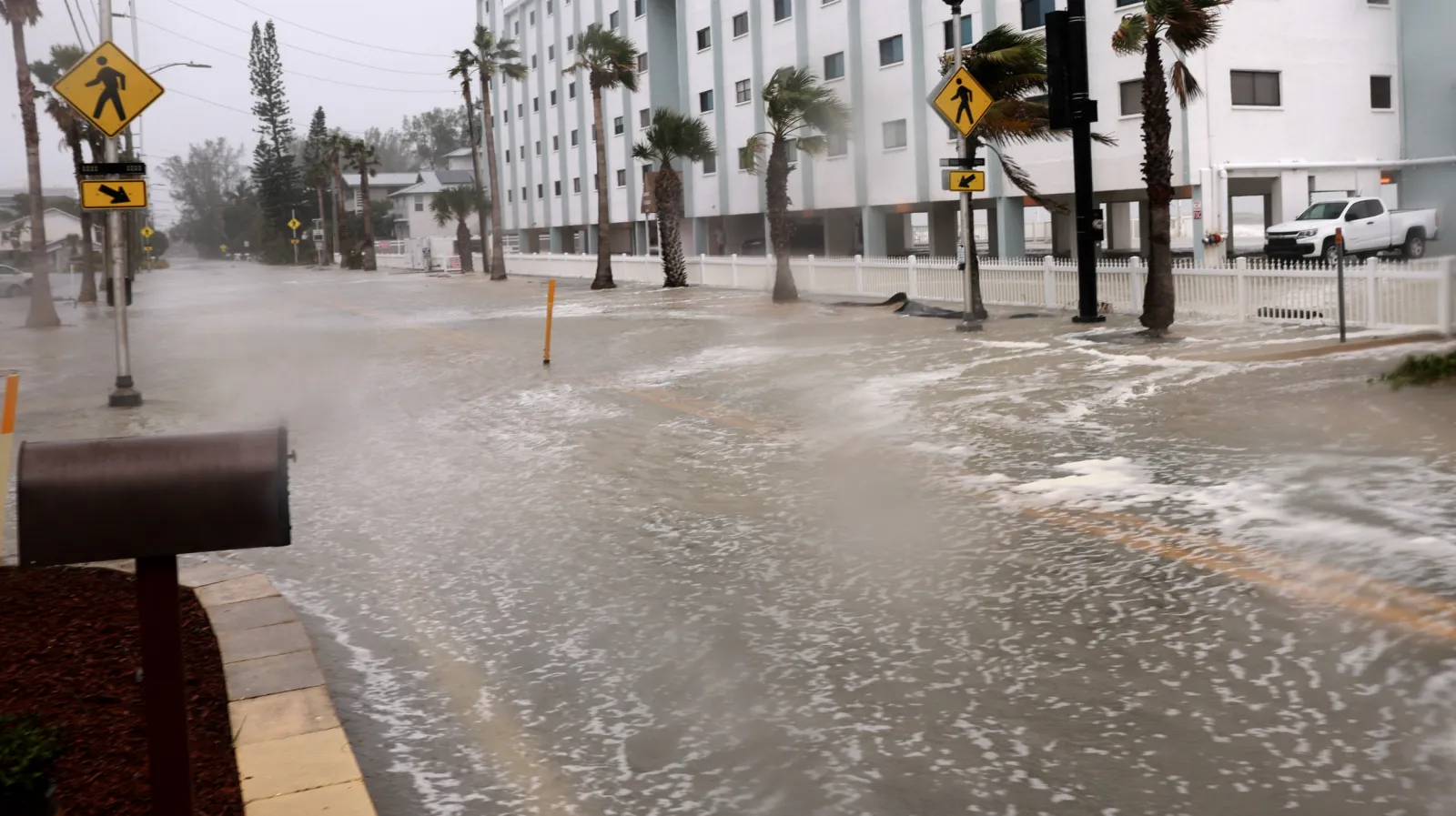
Dozens of Florida storm victims are facing homelessness this week as a federal deadline ends temporary housing aid for those displaced by Hurricane Helene and Hurricane Milton last year. In communities like St. Pete Beach, residents say local delays in the construction permitting process have kept them from repairing their homes in time to return—and now, with nowhere else to go, many are preparing to sleep in their cars or on the streets.
"I begged FEMA, please let me stay till the 18th. That's all I need," Andrea Simhony, whose St. Pete Beach condo remains uninhabitable, told WTVT. "If [the city] had been quicker with the permits, maybe my place would have been fixed and I wouldn't be homeless right now."
Newsweek reached out to FEMA, Governor Ron DeSantis' press office, and the mayor of St. Pete Beach, Florida, by email for comment.
Read More on U.S.
Why It Matters
The housing crisis in St. Pete Beach is one example of a much broader issue across Tampa Bay. More than 10,000 homes in the region were designated as substantially damaged after the storms, requiring either demolition or major reconstruction under updated building codes. Local permitting departments, overwhelmed by the demand, are struggling to keep up—delaying the return of many residents.
In the hardest-hit cities and counties, the scale of displacement and repair has been significant. Tampa Bay accounted for over half of all national FEMA flood insurance claims following Helene and Milton, with more than $4 billion in reported damage, according to the Tampa Bay Times.
What to Know
The FEMA-funded hotel assistance program, implemented after Hurricanes Helene and Milton devastated parts of the Gulf Coast in 2024, officially ends on Wednesday. Most recipients must vacate by Thursday morning, according to WTVT.
Robert Czyszczon, the owner of the Plaza Beach Resort, told Newsweek he is currently housing 63 storm survivors at the hotel. Of those, 51 will be homeless on Thursday if the housing deadline isn't extended.
He has asked that DeSantis grant a 90-day extension for the survivors, but his requests have gone unanswered.
A 60-day extension was granted on Wednesday, but it only applies to the survivors within FEMA's Direct Temporary Housing Assistance Program, which only applies to 12 of the survivors at Plaza Beach Resort.
While they wait for an extension, Czyszczon has offered to keep some rooms open for people to shower and use the bathroom. Many survivors are planning to pitch tents in a park near the hotel. Czyszczon said he was providing tents to some people who didn't have one.
"Hopefully, they don't get arrested," Czyszczon told Newsweek. "These are taxpayers, homeowners, attorneys, doctors, lawyers. They're working-class citizens. We are not able to take care of our own people."
In St. Pete Beach, more than 6,800 permit applications have been submitted since the storms, the Tampa Bay Times reported. As of April, about 2,675 had been issued, while over 300 remain pending or incomplete.
...
Robert Pardo, another displaced resident in St. Pete Beach, said he's considered sleeping in his truck if no housing solution appears.
"I've got a tent that I've considered to put over the bed of my truck and try to accommodate myself there," he told WTVT.
Local governments have started offering assistance, but funds are limited. Pinellas County is providing up to $30,000 in grants to eligible homeowners, and St. Petersburg has expanded zero-interest loan and roof repair programs. But many of these programs require documentation that applicants are still struggling to obtain from FEMA or their insurers, according to the Tampa Bay Times.
What People Are Saying
Czyszczon told Newsweek: "A lot of the people we are housing are my neighbors that I've known and grown up with."
He added: "The big issue is unfortunately, our city and other cities and municipalities were not issuing [construction] permits immediately. It took St. Pete Beach 92 days to issue permits. The FEMA Transitional Sheltering Assistance Program is designed to help people in 180 days. It expires April 10, which is tomorrow. The problem with that is the survivors never got 180 days, they only got 90 days because nobody was able to get a permit for the first 90 days. The hardship is a lot of people's houses are still under construction, and they're not going to be done by tomorrow."
Craig Fugate, former FEMA administrator, in an interview with the Tampa Bay Times: "Some people won't recover. They'll be financially bankrupt."
What Happens Next
Recovery from the 2024 hurricane season will take years, especially for residents navigating red tape and financial uncertainty.
View 0 Comments
Submit Correction
View Editorial & AI Guidelines