...

By Jasmine Laws
Reporter
0
Share
Newsweek is a Trust Project member
See more of our trusted coverage when you search.Prefer Newsweek on Googleto see more of our trusted coverage when you search.
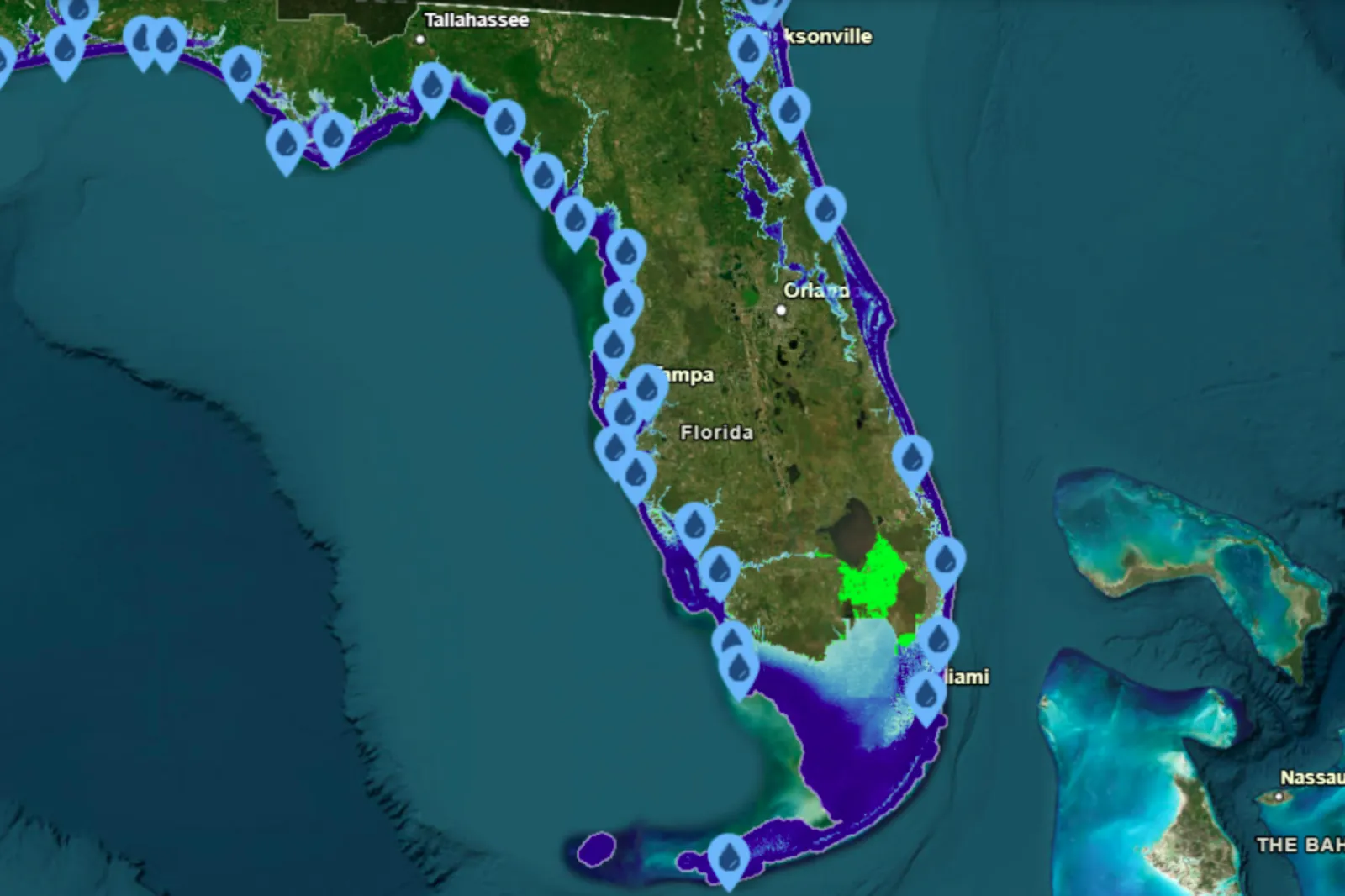
Florida's coastal landscape would dramatically change if sea levels rise over a certain level, a projection map by the National Oceanic and Atmospheric Administration (NOAA) shows.
The map reveals how many cities and beaches in the state would be submerged in water if there was a 10-foot sea level rise - something that experts have said is a future possibility.
While a sea level rise of 10 feet (or just under 3 meters) is "quite low this century," William Butler, a professor in the Department of Urban and Regional Planning at Florida State University, told Newsweek, a rise of between 2 to 3 meters is "not out of the question in the next century and increasingly likely without significant curbing of greenhouse gas emissions."
Read More
What MIT Physicist Nuno Loureiro Was Working on Before Fatal Shooting4 min read

Donald Trump’s Presidential Address Sparks Avalanche of Memes3 min read

Uncommon Knowledge: The Quiet Promise That Could Define Trump’s 20264 min read

"Given the limited progress we seem to be making on that front, we are heading in the wrong direction," he added.
Why It Matters
There are multiple factors contributing to rising sea levels, such as higher global temperatures due to increased greenhouse gas emissions, and increased sea volume as glaciers and ice caps melt.
There is growing concern that even if countries prioritized reducing greenhouse gas emissions now, there would be "potentially centuries of continued sea level rise," as "a certain amount of sea level rise is already baked into the climate system with current greenhouse gas levels," Butler said.
"In some ways, the question we should be asking is, how much can we slow this process and how much time does that buy us to get ready for several meters of sea level rise," he said. "Rather than asking 'how high', we might need to be asking 'when?'"
...
Which Cities, Beaches in Florida Would Be Affected?
Based on the NOAA's map, Florida is one of the states that will be the most impacted by a 10-foot rise in sea levels, with a vast expanse of its famous coastline and beaches disappearing underwater.
The beaches that would likely disappear include Butler Beach, Flagler Beach, Daytona Beach, New Smyrna Beach, Cocoa Beach, Satellite Beach, Bethune Beach, Jensen Beach, Sunny Isles Beach, Miami Beach, Holmes Beach, Barefoot Beach, Fort Myers Beach, Horseshoe Beach, Keaton Beach and many others.
Cities in the state like Jacksonville, Port Orange, Melbourne, Port St. Lucie, Fort Lauderdale, Hollywood, Naples, Venice, Sarasota, Tarpon Springs, Crystal River, Cedar Key, Tampa, St. Petersburg, and Panama City would also be underwater.
In the south of the state, a great amount of landscape and numerous wildlife reserves would also be submerged if sea levels rise 10 feet.
The Everglades National Park and the Biscayne National Park would be flooded with water, as would the Southern Glades Wildlife and Environmental Area, Crocodile Lake National Wildlife Refuge, Key West National Wildlife Refuge, National Key Deer Refuge, Pine Island National Wildlife Refuge and others.
Pine Island off the coast of Florida would also be submerged in water.
The Impacts of a 10-Foot Sea Level Rise
Butler said that the impacts of a 10-foot sea level rise would be "devastating to coastal cities in the U.S., especially in the Gulf, Southeastern, and Mid-Atlantic states but New York and Boston too," and that Miami would become "an archipelago."
He said that stormwater infrastructure, as well as water and sewer systems will "fail," while "roads will be underwater, bridges will be cut off at entrance ramps, subway systems will be flooded, high-rise buildings will be columns surrounded by water, and municipal budgets will be stretched or cities will go bankrupt as property taxes become less and less viable as a way to collect revenue and fund adaptation projects."
Americans will also likely become displaced from coastal areas, he added, saying this could lead to "millions moving from coastal cities in the Southeast to anywhere they can find viable employment, family connections, or other reasons to take them to a new city."
Even before a 10-foot sea level rise, "the impacts are already reshaping coastal cities," Butler said. "Low-lying areas are already flooding more frequently, even on sunny days."
Insurance markets are also adjusting rapidly to the changing reality, he said, including many companies "abandoning the most at-risk markets like Florida and Louisiana."
Another major issue is the intrusion of salt water into freshwater wells, which is rising salt levels high enough in some areas to force wells to close, he added.
"This is all happening now, with less than 1 foot of sea level rise in the last 120 years," he said. "10 feet would make what we're dealing with now look like a walk in the park even though it is costing billions just to adapt to the current context."
What Should Be Done?
Butler told Newsweek that going forward, it's important to prioritize planning, so that various scenarios can be mapped out, areas of vulnerability can be determined, areas to protect can be decided and where new development should be avoided can be identified.
Engineered responses can be deployed to retrofit and floodproof infrastructure and buildings, as well as elevate land, like what is happening at Miami Beach, he said, and pumps and valves can be installed to hold back sea water and pump out stormwater.
It's also important to reduce greenhouse gases, Butler said. "The U.S. could take the lead in reducing greenhouse gas emissions by supporting economic investment and business development in alternative energy technologies, reforestation projects, carbon capture technologies, and other ways to reduce existing carbon dioxide in the atmosphere."
"While this will not stop sea level rise in the next few centuries, it will slow it, and it will bring the peak number lower, reducing the longer term impacts to coastal cities," he said.
However, a major barrier to all of these measures is funding, he added. "A concerted effort on the part of the federal government to support and expand these efforts could accelerate them."
View 0 Comments
Submit Correction
View Editorial & AI Guidelines