...

By Jasmine Laws
Reporter
0
Share
Newsweek is a Trust Project member
See more of our trusted coverage when you search.Prefer Newsweek on Googleto see more of our trusted coverage when you search.
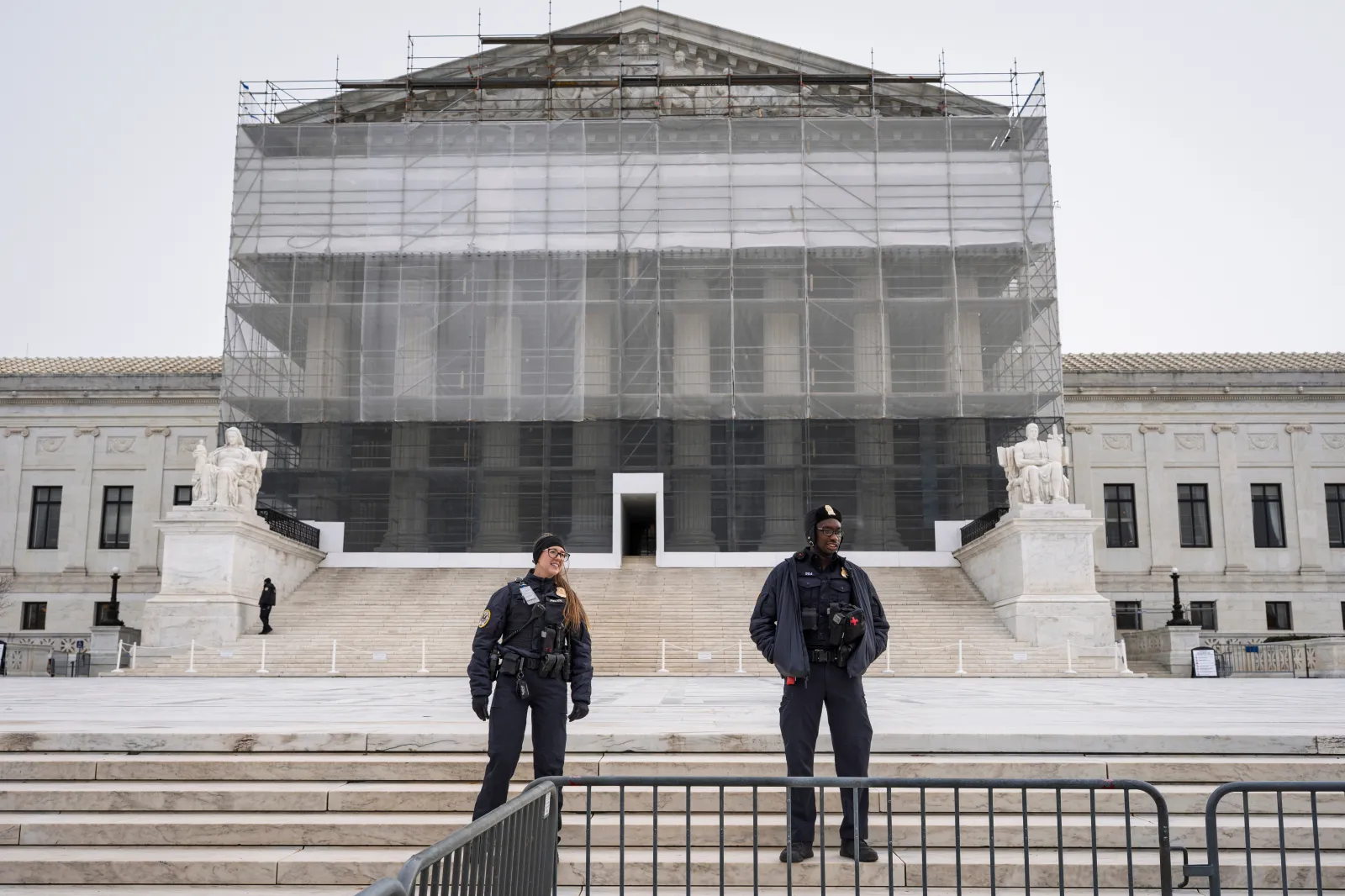
There are a number of major cases that the Supreme Court is preparing to hear or give a ruling on that could bring huge changes to the United States.
From birthright citizenship, a case with significant implications on immigration policy, to potential changes to election voting procedures, which could lead to the rejection of hundreds of thousands of ballots in the future, the cases cover vast legislative ground.
The Supreme Court is set to give its rulings on these cases in the coming months.
Read More on News
Emergency tariffs
One of the major cases the Supreme Court is set to give a ruling on includes whether President Donald Trump correctly used the International Emergency Economic Powers Act (IEEPA) by imposing tariffs on countries like China, Canada and Mexico, as the act indicates the president may only do so in the event of a "national emergency."
The case is therefore concerned with the "validity" of the Trump administration's claim that the tariffs on these countries were "necessary to rectify America’s country-killing trade deficits and to stem the flood of fentanyl across our border," the court document reads.
In November, the Supreme Court heard oral arguments in the case challenging Trump's authority to impose the tariffs without the consent of Congress, and justices are yet to make a ruling. If they rule in the administration's favor, it will vastly expand Trump's executive power.
On December 23, Trump issued a message to the Supreme Court on his social media platform Truth Social, boasting that the tariffs were "responsible for the GREAT USA Economic Numbers JUST ANNOUNCED…AND THEY WILL ONLY GET BETTER!"
This came after the Commerce Department released new economic data showing the U.S. economy grew at a faster pace than expected in the third quarter of the year.
...
Birthright citizenship
A key upcoming Supreme Court hearing is on the Trump vs. Washington case, which relates to Trump's executive order 14160, titled "Protecting the Meaning and Value of American Citizenship."
The January 2025 order directs federal agencies to not recognize citizenship for children born in the U.S. to "temporary visitors and illegal aliens" if their birth occurs more than 30 days after the order takes effect.
The ruling will have huge implications on immigration policy, and could redefine how the country interprets the Latin phrase jus soli, meaning "right of the soil"—the principle that a person becomes a citizen simply by being born within a country’s territory.
The principle is over 100 years old, and was implemented under the 14th Amendment to overturn a ruling that Black people could not be U.S. citizens, and in the amendment the clause states that: "All persons born or naturalized in the United States, and subject to the jurisdiction thereof, are citizens of the United States and of the state wherein they reside."
After Trump's order was passed, one district judge wrote: "U.S. citizenship is a right no less precious than life or liberty," and that the policy "conflicts with the plain language of the 14th Amendment, contradicts 125-year-old binding Supreme Court precedent and runs counter to our nation’s 250-year history of citizenship by birth."
However, there is debate among scholars over what the amendment's principle means, with some arguing that being born in the U.S. is a clear right to citizenship, while others say birth alone does not give a person direct citizenship.
Harold Krent, professor of law at the Chicago-Kent School of Law, said in a Bloomberg Law podcast on December 27 that he thought the Supreme Court would "deal the Trump administration a blow" in this case, and find that the order is "inconsistent" with the amendment.
Lisa Cook Firing
Trump attempted to have Federal Reserve Governor Lisa Cook fired before the September meeting of the Fed's interest rate-setting committee—which would have been the first time a president fired a sitting governor in the agency's 112-year history.
However, the Supreme Court has said that Cook will remain in her position until it has heard arguments from her and the Trump administration in January.
Trump tried to have Cook fired over concerns about potential mortgage fraud, alleging she claimed two properties as "primary residences" in July 2021, allegations she has denied and documents unearthed by Reuters have also challenged Trump's claims.
Krent said in the Bloomberg podcast that he thought the Supreme Court might "deviate from Trump" and rule against him in this case.
At the same time, the Trump vs. Slaughter case is also being heard by the Supreme Court, which, if approved, could give the president the power to fire the heads of independent agencies at will, changing a 90-year-old policy.
Asylum metering
In November, the Supreme Court said it would also be reviewing a first Trump administration immigration policy that turned away undocumented migrants attempting to cross the border from Mexico without considering their asylum claims.
This applies to those who have been stopped on the Mexican side of the U.S.-Mexico border, as between 2016 and 2021 the first Trump administration used a "metering" policy that enabled the Department of Homeland Security to turn back migrants, without reviewing their asylum claims before they crossed the border onto U.S. soil.
This policy was adopted on the basis that a person arrives in a country when they come within that country's borders, so stopping migrants before they crossed into the U.S.—even if that was only 2 feet from the border—was then used as a way of regulating migrant arrivals.
While the policy was rescinded, the second Trump government has sought Supreme Court clarity on whether "metering" is legal, as it seems the administration hopes to bring the policy back.
"I think the Trump administration might win on the narrow ground that if you're 2 feet away from a border, you're 2 feet away from a border and immigration agents can apply force to prevent somebody from applying for asylum," Krent said in the Bloomberg Law podcast.
He added that this was "just a guess," but he thought the administration had a greater chance of succeeding in this case compared to the case on birthright citizenship.
Mail-in ballots
Another important case the Supreme Court is set to give a ruling on is whether states should count mail-in ballots that arrive after Election Day.
Currently, around 14 states as well as the District of Columbia and other territories, accept and count a mailed ballot if it is received after Election Day, but postmarked on or before (sometimes only before), according to the National Conference of State Legislatures.
If the Supreme Court rules that all ballots must be received by Election Day, it could lead to the rejection of potentially hundreds of thousands of ballots—in 2024, 725,000 ballots postmarked by Election Day arrived within the legally accepted post-election window, according to The New York Times.
The news cycle is loud. Algorithms push us to extremes. In the middle—where facts, ideas and progress live—there's a void. At Newsweek, we fill it with fearless, fair and fiercely independent journalism.
Common ground isn't just possible—it's essential. Our readers reflect America's diversity, united by a desire for thoughtful, unbiased news. Independent ratings confirm our approach: NewsGuard gives us 100/100 for reliability, and AllSides places us firmly in the political center.
In a polarized era, the center is dismissed as bland. Ours is different: The Courageous Center—it's not "both sides," it's sharp, challenging and alive with ideas. We follow facts, not factions. If that sounds like the kind of journalism you want to see thrive, we need you.
When you become a Newsweek Member, you support a mission to keep the center strong and vibrant. Members enjoy:
Help keep the center courageous. Join today.


View 0 Comments
Submit Correction
View Editorial & AI Guidelines