
By Tahar Rajab
News and Features Journalist
0
Share
Newsweek is a Trust Project member
See more of our trusted coverage when you search.Prefer Newsweek on Googleto see more of our trusted coverage when you search.
Among the many traditions and rituals that come into play following the death of a pope, one that has once again garnered attention following the passing of Pope Francis is the fate of the Fisherman's Ring. Francis died on Easter Monday, April 21, after suffering a stroke and cardiac arrest.
His death marks a defining moment for the Catholic Church, and with his passing, a series of deeply rooted rituals are activated, including the ceremonial treatment of the historic Fisherman's Ring, a powerful symbol of papal authority.
What Is The Pope's Fisherman's Ring?
The Fisherman's Ring, also known as the Piscatory Ring, is an iconic symbol of the papacy. Traditionally, it bears an image of a fish—a tribute to St. Peter, the fisherman remembered as the first pope and one of Jesus' original 12 disciples—and is used to seal official documents, thereby affirming their authenticity.
Read More on News
More than a decorative accessory, the ring represents the belief of unbroken spiritual lineage connecting every pontificate to the legacy of St. Peter. It stands as a tangible symbol of the enduring authority and continuity of the Catholic Church.
...
What Do We Know About Pope Francis' Ring?
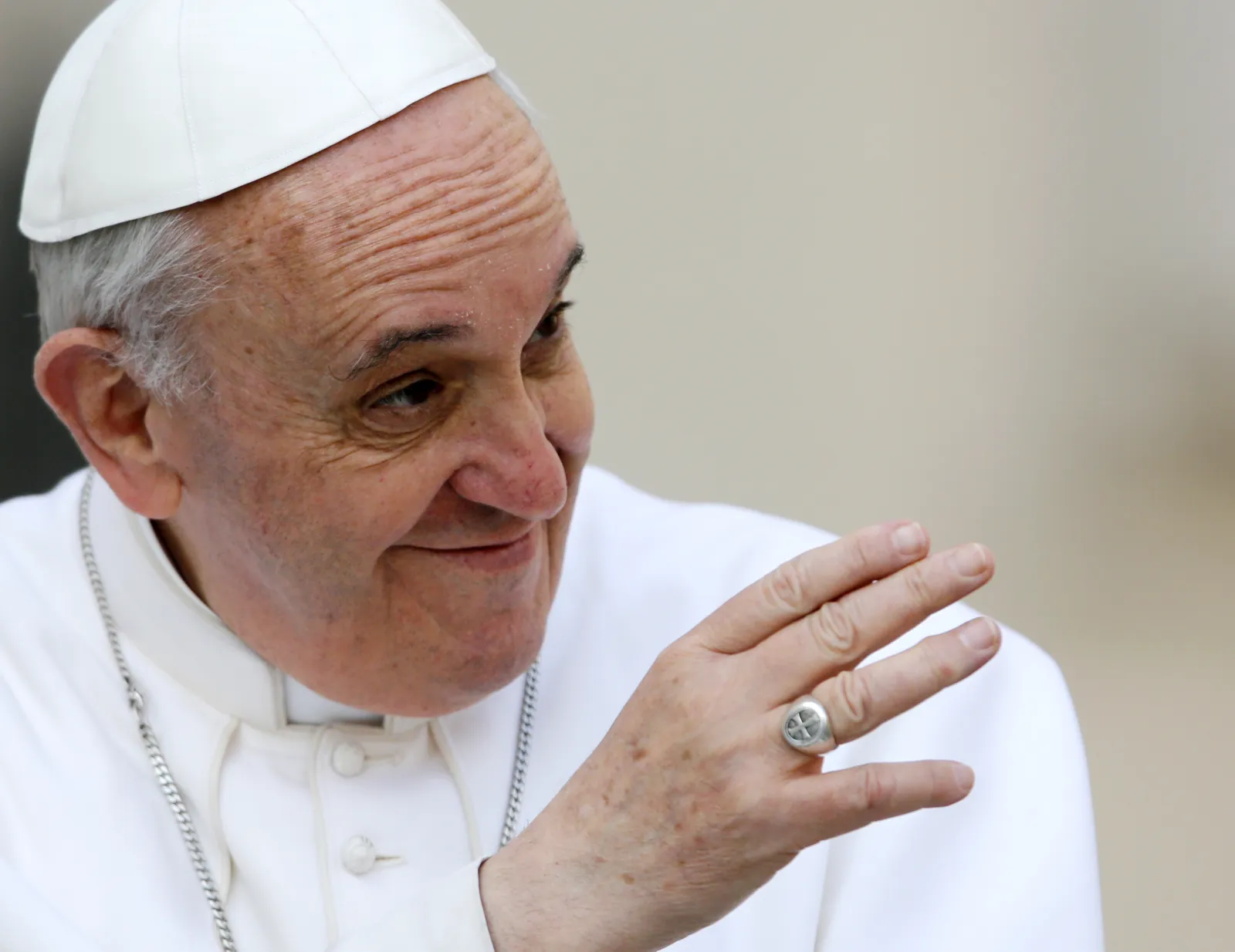
The Fisherman's Ring is traditionally crafted from gold, but the ring given to Francis was made of gold-plated silver and designed by goldsmith Enrico Manfrini.
Manfrini designed the ring for Pope Paul VI, but it wasn't yet cast into metal and the pope instead chose a ring commemorating the Second Vatican Council.
Years later, the ring was made of gold-plated silver from the wax cast and offered to Francis, who opted for the modest ring featuring an image of St. Peter holding two keys. He was also often seen wearing a simple silver ring with a cross, which was his ring in his years as a bishop before being elected pontiff.
Other Fisherman's Rings
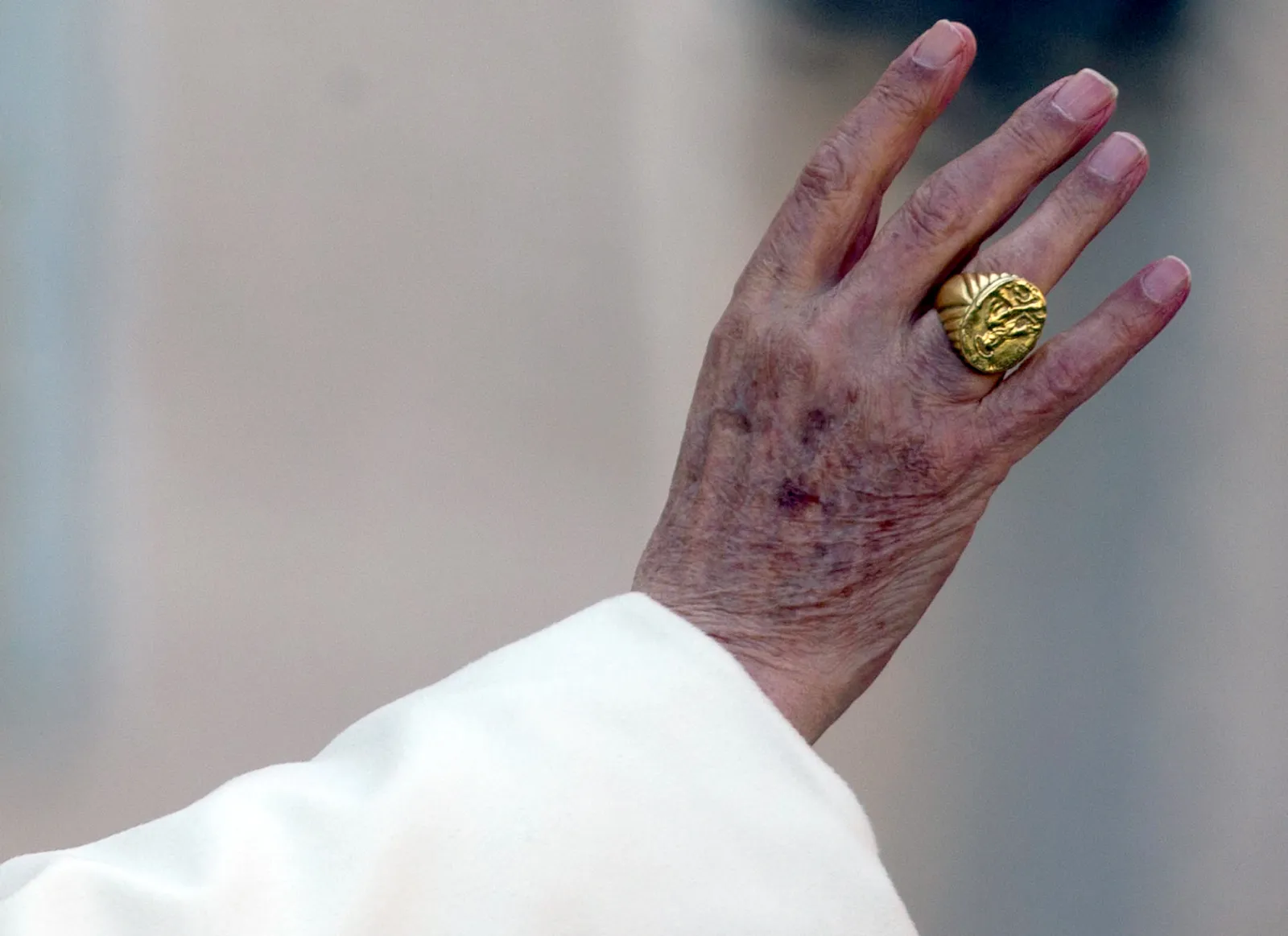
Pope Benedict's ring was inspired by a Michelangelo painting. More than 200 illustrations were reviewed before the final design was chosen. Cast from 35 grams of pure gold, it required eight skilled artisans working 15-hour days for more than two weeks to complete. The ring is inscribed with "Benedictus XVI"—the Pope's title in Latin—and features an image of St. Peter.
...
Why Is The Ring Destroyed After The Pope's Death?
In accordance with time-honored traditions, the Fisherman's Ring is ceremoniously destroyed—typically melted down—following the death of a pope. This deliberate act serves two main purposes. First, it prevents any possibility of the ring being misused or replicated, which could lead to fraudulent claims of papal authority. Second, the destruction of the ring symbolizes the definitive end of the pontificate. By eliminating the physical emblem of papal power, the Church underscores that the authority of the previous pope cannot be transferred, thus paving the way for the election and consecration of a new leader.
Do Catholics Kiss The Ring When Greeting The Pope?
For centuries, it was Catholic tradition to kiss the papal foot. Nowadays, many faithful choose to bow and kiss the papal ring. However, Francis and Benedict XVI before him have tried to discourage the practice of kissing the pope's ring or hand when the pope is receiving visitors.
In 2019, Francis repeatedly pulled his hand away when worshippers attempted to kiss his papal ring at the Holy House of Loreto in Italy. However, two days later, he allowed nuns and priests to kiss his papal ring.
Vatican spokesman Alessandro Gisotti said Francis did not intend to buck centuries of tradition but was interested in preventing disease.
"The Holy Father told me that the motivation was very simple: hygiene," Gisotti said after speaking directly with Francis about the matter. "He wants to avoid the risk of contagion for the people, not for him."
What Is The Fisherman's Ring Worth Today?
While the raw material value of the Fisherman's Ring can be roughly estimated based on its gold content—about 30 grams of 24-karat gold might be valued in the range of $2,000 to $2,500 at current market prices—the ring's true worth is far more substantial. Its historical and symbolic significance elevates it to a status that defies mere monetary appraisal. The ring embodies centuries of papal history and the enduring legacy of the Catholic Church. As such, while its physical gold value is measurable, the artifact itself is considered priceless.
View 0 Comments
Submit Correction
View Editorial & AI Guidelines