...

By Micah McCartney
Reporter
0
Share
Newsweek is a Trust Project member
See more of our trusted coverage when you search.Prefer Newsweek on Googleto see more of our trusted coverage when you search.
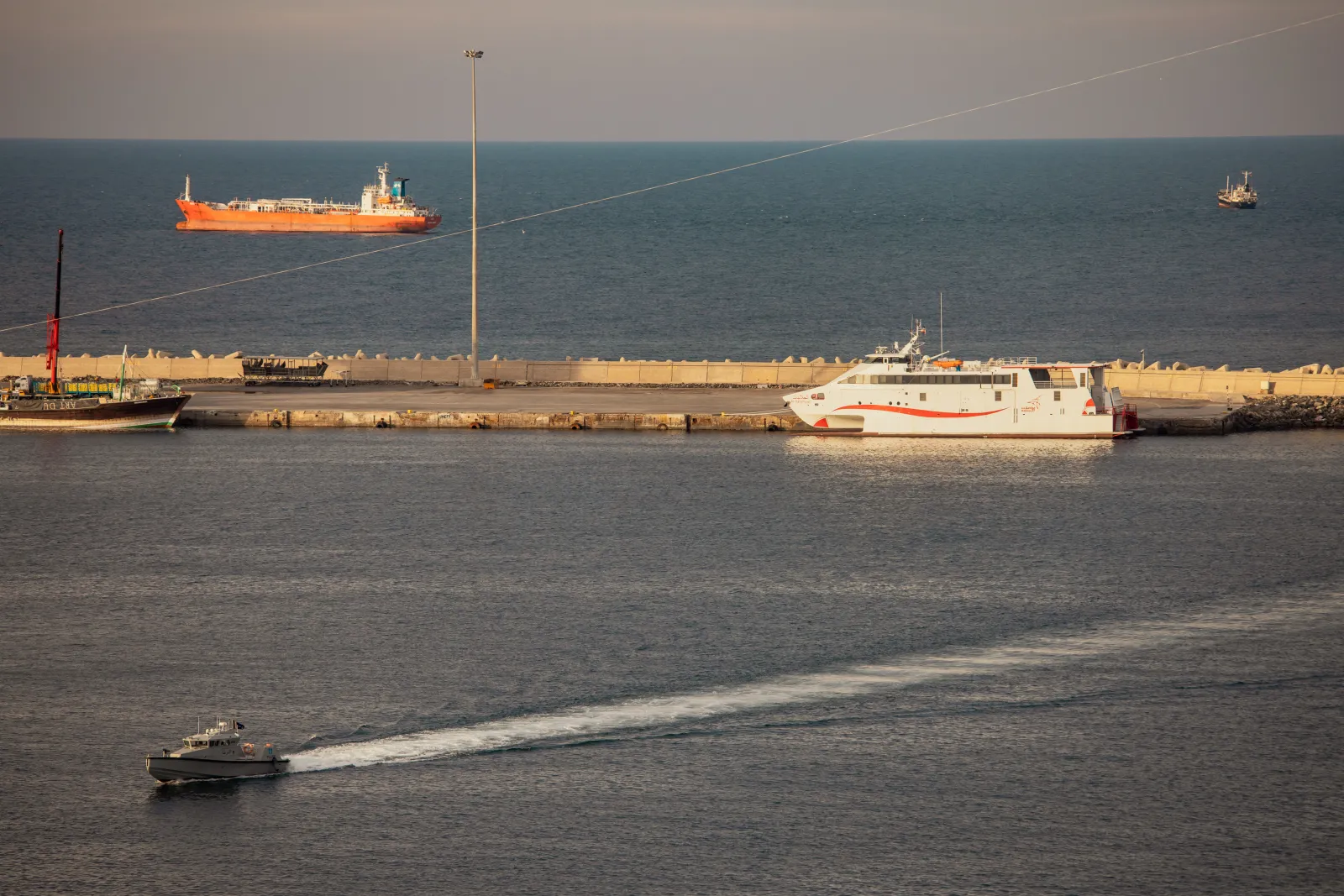
A U.S.-sanctioned Chinese tanker passed through the Strait of Hormuz on Tuesday, according to tracking sites, becoming the first known oil-carrying ship to do so under a U.S. blockade China has labeled "dangerous."
The Chinese-owned Rich Starry had made it through the narrow waterway and was sailing southwest in the Gulf of Oman on Tuesday, according to MarineTraffic. The Malawi-flagged Rich Starry and its owner, Shanghai Xuanrun Shipping, were sanctioned by the U.S. in 2023 for shipping Iranian oil.
The vessel was bound for the deep-sea port of Sohar in Oman, but it made an abrupt turn in the gulf later on Tuesday and was last seen traveling north back toward the strait, signals captured by the tracking service showed.
Read More on World
The data showed the 616-foot vessel departed from Sharjah anchorage, a major waypoint in the Persian Gulf off the coast of the United Arab Emirates, on Monday before following a route that took it past Iran's Larak Island. That would appear to show it adhering to a corridor the Islamic Republic has designated under a vetting regime for ships to go through the strait. There are reports that ships have to pay a "tollbooth" fee to transit the waterway.
The Rich Starry was one of four Iran-linked and three sanctioned vessels tracked emerging from the strait since the blockade entered effect Monday, according to an analysis of ship-tracking data by BBC Verify.
...
The tankers will be watched closely to see whether they will be intercepted by U.S. forces in the Gulf. Newsweek has contacted U.S. Central Command and Shanghai Xuanrun Shipping for comment by email.
President Donald Trump had announced a U.S. naval blockade on Sunday aimed at blocking "any and all ships trying to enter, or leave, the Strait of Hormuz," saying it was a measure aimed at countering Iran's "extortion."
The U.S Central Command, the military division in charge of Middle East operations, later clarified that the blockade operation that began on Monday would only apply to ships leaving Iranian ports, not just any ships transiting the strait.
Prior to Central Command's clarification on Monday, Trump had written that: "No one who pays an illegal toll will have safe passage on the high seas."
China's Foreign Ministry on Tuesday called the U.S. escalation "dangerous and irresponsible."
"The U.S. side has increased its military deployment and adopted targeted blockade actions, which will only intensify contradictions, exacerbate tensions, undermine the already fragile ceasefire situation, and further impact the safety of passage in the strait," spokesperson Guo Jiakun told reporters.
The tankers' test of the U.S. blockade comes after a fragile ceasefire was reached last week to facilitate negotiations between Tehran and Washington. Trump announced the blockade after 21 hours of talks in Islamabad in Pakistan on Saturday failed to produce an agreement.
Pakistan, the key broker of the meetings, said on Tuesday it was arranging another meeting for later this week.
Iran's key leverage in the talks has been its ability to control and thus shut down the Strait of Hormuz, a narrow waterway essential to the flow of oil from Gulf producers to international markets. China has a particularly strong stake in seeing shipping resume, as the country relies on the strait for roughly 40 percent of its oil.
Since the start of the war on February 28, Tehran has effectively shut down the strait by attacking and threatening to attack ships carrying oil through the waterway without its permission.
Update 4/14/26, 10:49 a.m. ET: This article has been updated with additional information.
View 0 Comments
Submit Correction
View Editorial & AI Guidelines