
...
By Billal Rahman
Immigration Reporter
0
Share
Newsweek is a Trust Project member
See more of our trusted coverage when you search.Prefer Newsweek on Googleto see more of our trusted coverage when you search.
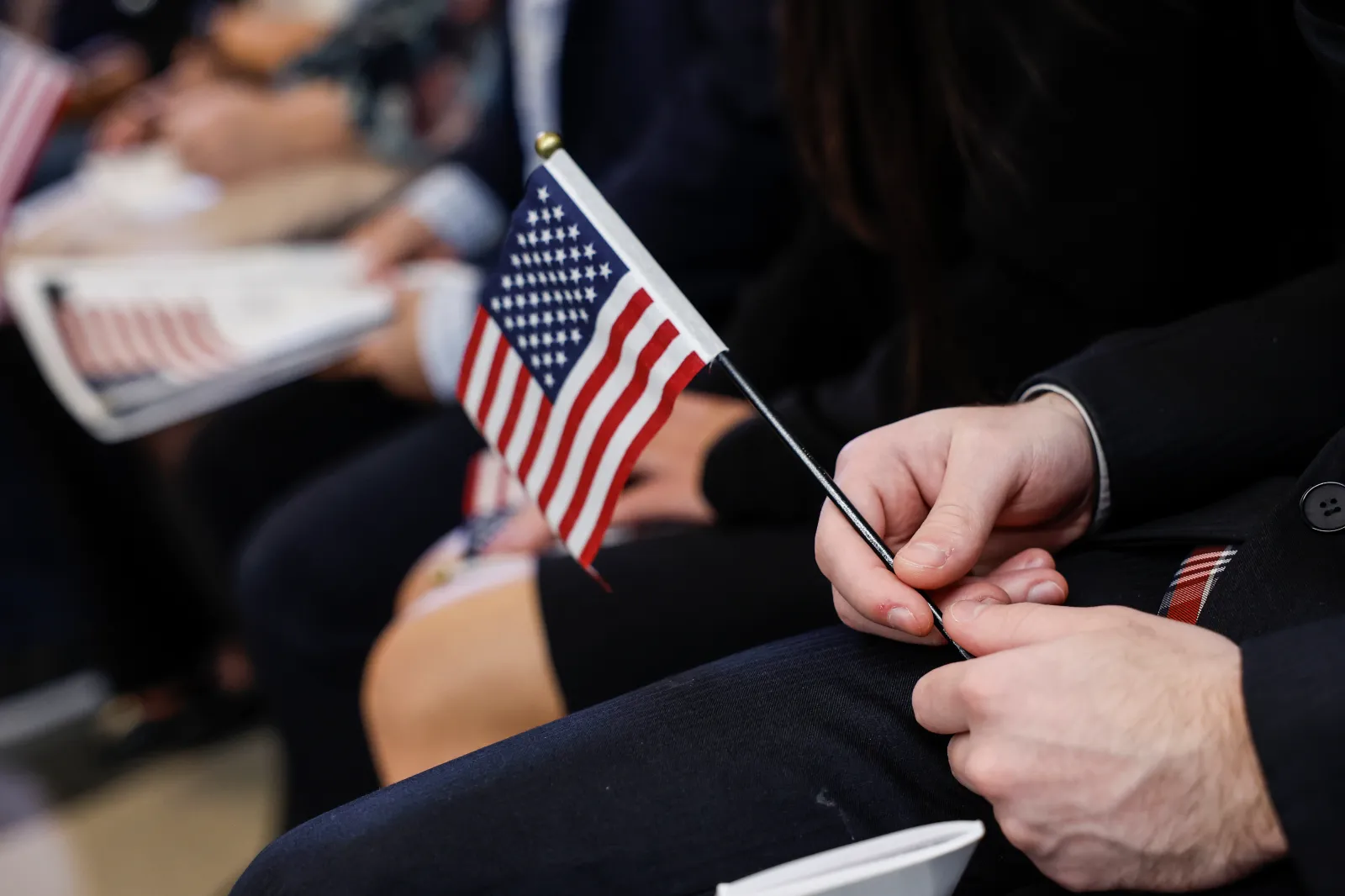
Naturalization ceremonies across the United States have been thrown into confusion in recent weeks as approved citizenship applicants report being removed from oath lines or facing months-long delays despite having completed every legally required step.
Why It Matters
After an Afghan refugee was charged in last month’s shooting of two National Guard members in Washington, the Trump administration has clamped down on legal immigration pathways. The White House has ordered a halt to the entire immigration process for people from 19 countries previously placed under a travel ban earlier this year, and officials say the suspension is part of a broader security review. The measures amount to one of the most significant crackdowns on green card processing and legal migration in years, affecting thousands of applicants who had been advancing through the system.
Read More on News
...
What To Know
Reports from Boston, New York, Houston, and several other field offices indicate that some applicants, particularly those from countries designated “high-risk,” have been told on the day of their ceremony that they may no longer proceed.
“People are devastated, and they’re frightened,” Gail Breslow, executive director of Project Citizenship, told GBH News. “People were plucked out of line. They didn’t cancel the whole ceremony.”
Project Citizenship, a nonprofit supporting immigrants across Massachusetts and New England, reported that 21 of its clients have been notified this month that their oath ceremonies, the final step in becoming U.S. citizens, have been canceled. The ceremony, often attended by family and friends to witness this milestone, is typically conducted by a judge or a USCIS official.
Raouf Vafaei, an Iranian-born mental health worker who emigrated from Austria, told The New York Times that he had completed all required steps for citizenship, including obtaining a green card, passing his civics test, and undergoing multiple background checks. After eight years in the United States, he was just days away from his naturalization ceremony when he received an email canceling it.
“I was so excited,” Vafaei told the outlet. “This is one wish that many people have all over the world.”
Ricky Murray, a former senior USCIS official who worked at the agency until November 29, told Newsweek that the removals from oath ceremonies are only part of a much larger, systemic problem now unfolding inside the agency.
"Beyond people being pulled from oath ceremonies, the significantly reduced number of expected naturalizations for the individual USCIS field offices also plays a significant role," Murray told Newsweek in a statement. "The first quarter of FY 2025 was under the previous administration, and this included robust naturalization goals. These numbers were slashed under the current administration."
Murray said the cuts mean that the number of approved cases awaiting oath ceremonies “has ballooned,” creating widespread delays.
"In the Houston Field Office, we have clients that were approved for naturalization in July and August but have yet to be scheduled for an oath ceremony. This is extremely problematic as it is unacceptable to have applicants complete all necessary steps for naturalization and have to wait more than four to five months for an oath ceremony," he said.
Federal law requires USCIS to make a decision on an N400 naturalization application within 120 days of the applicant’s interview, either approving or denying the case, and in the situations now drawing scrutiny, the agency has already issued those decisions. The N400 is the form lawful permanent residents file to apply for United States citizenship, and approval is typically followed by an oath ceremony.
But while the 120-day rule governs how quickly USCIS must adjudicate the application itself, there is no comparable legal deadline for scheduling the oath ceremony.
"There is no direct recourse for the applicant in these cases where they are being pulled from naturalization ceremonies and waiting months for naturalization," Murray said.
This gap leaves applicants in a bureaucratic limbo with no direct remedy, he said.
"This will cause a rise in applicants’ filing writs of mandamus to compel USCIS to allow them to take the oath of allegiance," Murray said.
"The reevaluation of already approved cases," Murray added, is stretching the agency thin.
"Completing more work on already adjudicated cases takes away from work on new cases. Meaning the backlog will continue to grow the more already approved cases are scrutinized," he said.
USCIS and its parent agency, the Department of Homeland Security (DHS), defended the move as part of a nationwide vetting effort in the wake of the shooting.
"It's important to remember challenging a denial of an N400 goes to the United States Federal Courts and not to immigration courts, where DOJ has shown a willingness to adhere to the political agenda," Murray said.
The countries currently banned by the Trump administration include Afghanistan, Myanmar, Chad, Congo, Equatorial Guinea, Eritrea, Haiti, Iran, Libya, Somalia, Sudan, and Yemen. Those under a partial travel ban include Burundi, Cuba, Laos, Sierra Leone, Togo, Turkmenistan, and Venezuela.
What People Are Saying
**Ricky Murray, a former senior USCIS official, told Newsweek: "**It is unclear how USCIS is going to approach any notices of intent to deny these approved applications. In order to reopen an approved application, they need to issue a notice of intent to deny. This must state the reason for the potential denial. In these cases where the applicant is pulled from the naturalization oath ceremony due to the additional scrutiny of those from the 19 “high-risk” countries, there is no individualized evidence of wrongdoing by the vast majority of these applicants. It is unclear how the USCIS could use this blanket concern to deny individual applications."
“One of our clients said that she had gone to her oath ceremony because she hadn’t received the cancellation notice in time,” Gail Breslow, executive director of Project Citizenship, told GBH News. “She showed up as scheduled, and when she arrived, officers were asking everyone what country they were from, and if they said a certain country, they were told to step out of line and that their oath ceremonies were canceled.”
“There is no time frame—nobody knows how long this is going to be,” immigration attorney Teresa Coles-Davila told The New York Times. “Literally, no one knows what is happening.”
USCIS Director Joseph Edlow said in a statement: "Effective immediately, I am issuing new policy guidance that authorizes USCIS officers to consider country-specific factors as significant negative factors when reviewing immigration requests. American lives come first.”
What Happens Next
Applicants are now stuck in limbo, with some removed from ceremonies at the last moment and others waiting for months without any updates.
View 0 Comments
Submit Correction
View Editorial & AI Guidelines