...


By Matthew Robinson and Jack Beresford
0
Share
Newsweek is a Trust Project member
See more of our trusted coverage when you search.Prefer Newsweek on Googleto see more of our trusted coverage when you search.
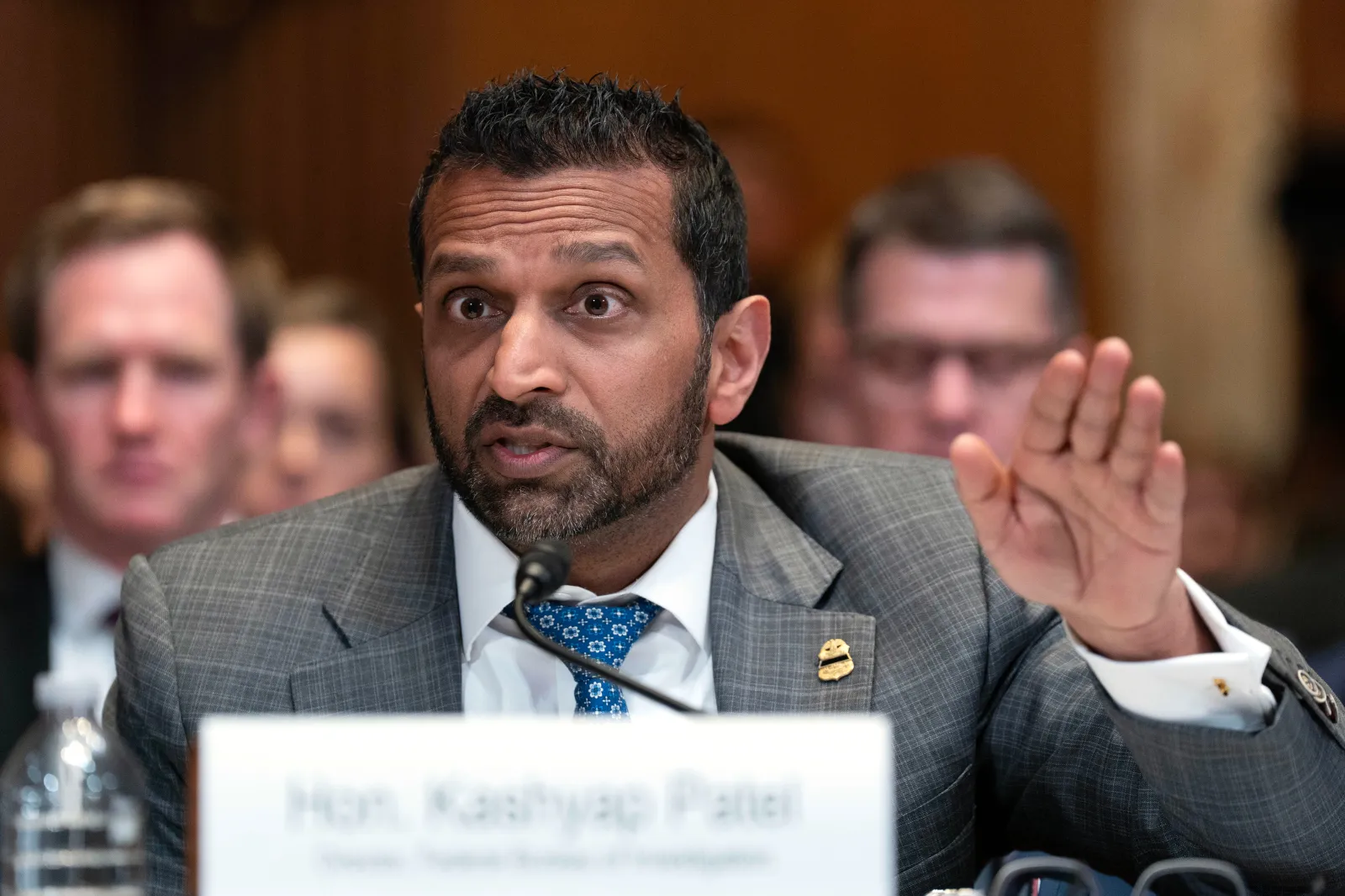
FBI Director Kash Patel is asking Americans to help track down some of the nation's most-wanted alleged fraudsters, a group accused of schemes that authorities say cost victims tens of millions—and, in one case, more than $1 billion.
The FBI last week unveiled an updated list of wanted fugitives tied to fraud investigations spanning investment scams, mortgage fraud, healthcare fraud, money laundering and illegal gambling operations.
Officials say the cases highlight the wide range of tactics used to steal money from individuals, businesses and government programs—and the growing role the public can play in helping investigators locate suspects who remain at large.
Read More on News
"I want all Americans to take a look at these most wanted individuals and look at the amounts—the tens of millions and billions of dollars in fraud that they have decimated our societies from," Patel said last week.
"We rely on you, our best form of information, the American public. Let us know any information. There is no bad piece of information."
Who Is on the FBI's Most-Wanted Fraud List?
- Rodney Dean Allen—wire fraud—alleged total losses: $7.3 million
- Christopher Burns—mail fraud—alleged total losses: $10 million
- John Michael Dimitrion—mortgage fraud—alleged total losses: $1.3 million
- Julanne Balduzeta Dimitrion—mortgage fraud—alleged total losses: $1.3 million
- Said Abdullahi Ereg—wire fraud and money laundering—alleged total losses: $4.2 million
- Elaine Angene—wire fraud and money laundering—alleged total losses: $32 million
- Herbert Kimble—healthcare fraud—alleged total losses: $1.2 billion
- Michael Lizaso Marasigan—conspiracy to operate an illegal gambling business—alleged total losses: $34 million
Largest Alleged Fraud Cases Involve Healthcare
The most significant case on the list involves Herbert Leon Kimble, who is accused of orchestrating a healthcare fraud scheme that generated more than $1.2 billion in fraudulent Medicare charges.
According to the FBI, Kimble operated a call-center network that persuaded Medicare beneficiaries to seek orthopedic braces that were often medically unnecessary. Prescriptions were allegedly obtained through telemedicine consultations and sold to suppliers, who then billed Medicare.
Another major case involves Michael Lizaso Marasigan, who authorities say participated in a scheme that diverted millions of dollars from Guam Shrine Club's Hafa Adai Bingo operation.
Federal prosecutors allege that more than $10.7 million was siphoned away from funds intended to support children's medical transportation programs.
Marasigan was sentenced in absentia in May 2026 after authorities say he failed to return from a trip to the Philippines and cut off contact with officials.
How the Alleged Schemes Worked
Wire Fraud
This involves using electronic communications—including internet transactions, emails and digital transfers—to deceive victims out of money or property.
Rodney Dean Allen is accused of misleading clients of KA Investments between 2016 and 2017 by providing falsified account statements showing profits while accounts allegedly suffered substantial losses.
Authorities say he has not been seen since April 2017.
Said Abdullahi Ereg is accused of exploiting the Federal Child Nutrition Program during the COVID-19 pandemic through a Minnesota grocery operation linked to Feeding Our Future.
Prosecutors allege he falsely claimed to have served more than 1.4 million meals, resulting in more than $4.2 million in payments.
Mail Fraud
This refers to a scheme to defraud someone of property or money by making use of postal services, including unsolicited letters.
Christopher Burns is accused of running a fraudulent peer-to-peer lending operation that allegedly cost investors at least $10 million.
Authorities say he falsely represented that loans were backed by collateral that either did not exist or was worth substantially less than claimed.
The FBI says Burns disappeared in September 2020, shortly before he was scheduled to provide documents to the Securities and Exchange Commission.

...
Mortgage Fraud
This scheme is broken down into two forms: the first involves property professionals who use misstatements, misrepresentation, or omission to steal money and equity from homeowners or lenders.
It can also involve borrowers who lie about their income or assets on loan applications or influence an appraiser to change a property's value, according to the FBI.
John Michael Dimitrion and Julanne Balduzeta Dimitrion pleaded guilty to a mortgage fraud scheme that prosecutors say left multiple families without homes after proceeds from property sales were diverted to fund a lavish lifestyle.
Authorities issued warrants after the pair failed to appear for sentencing in 2010.
...
Scams Americans Should Watch For
Alongside its wanted list, the FBI continues to warn consumers about several common fraud schemes.
Investment and Business Fraud
These scams often promise guaranteed returns or low-risk investment opportunities that do not exist.
Common examples include Ponzi schemes where existing investors are paid with funds collected from new investors; pyramid schemes involving recruiting new members rather than selling a genuine product; and fraudulent telemarketing operations where scammers try to steal money over the phone.
Romance Scams
Romance scams involve an individual using a fake identity to gain a victim's affection, the FBI says. The scammer then uses the illusion of intimacy to steal from the victim.
The scammers can propose marriage or make false plans to meet in person that never materialize, before asking for money.
Business Email Compromise
This type of fraud involve scammers sending emails to individuals that appear to come from a known or reliable source, making a legitimate request often involving sending money.
The FBI says that an example includes an apparent vendor that a company regularly trades with sending an invoice from an updated or altered email address.
Tech Support Scams
Scammers pose as bank representatives, computer technicians, internet providers or cybersecurity experts in an effort to gain access to devices or financial accounts.
Cryptocurrency Scams
Fraudsters convince victims to invest in fake cryptocurrency opportunities, often promising extraordinary returns before disappearing with deposited funds.
The FBI has urged anyone with information about individuals on its most-wanted fraud list to contact law enforcement.
View 0 Comments
Submit Correction
View Editorial & AI Guidelines