10
Loading video...


By Hugh Cameron and Gabe Whisnant
0
Share
Newsweek is a Trust Project member
See more of our trusted coverage when you search.Prefer Newsweek on Googleto see more of our trusted coverage when you search.
A Senate committee has voted to hold Anthony Fauci in contempt of Congress, following a hearing in which he declined to answer questions from lawmakers, and as details regarding his pandemic-era activities—documented in diaries and phone records—continue to emerge.
Last week, the retired immunologist—who held several critical roles during the height of the COVID-19 pandemic—invoked the Fifth Amendment over 100 times during a hearing last week. Fauci’s legal team has maintained that he was on “solid legal ground” in asserting his right to plead the Fifth in response to every question during his testimony. However, Republican Senator Rand Paul, who chairs the Senate Committee on Homeland Security and Governmental Affairs, warned Fauci that he would face "repercussions" over his refusal to testify.
The measure passed along party lines, and after the committee’s Republican majority voted down multiple efforts by Democratic members to delay the vote. The referral was sent directly to the Justice Department rather than the full Senate, according to Paul's remarks, although Democrats have challenged the legal basis for that process.
Read More on News

...
Later Thursday, the Justice Department confirmed that copies of the referral were sent to department leadership and federal prosecutors in Washington, D.C.
"We have received the document, we are reviewing it and will work with the Senate accordingly," the spokesperson said.
In a statement shared with Newsweek, one of Fauci's lawyers David Schertler, called the "partisan committee vote" a "crude political stunt intended to punish Dr. Fauci for exercising his constitutional rights.
"The Senate should reject Senator Paul’s meritless and politically-motivated contempt resolution," he continued. "For years, Senator Paul has proclaimed to anyone who would listen that Dr. Fauci should be prosecuted and put in prison. Dr. Fauci has committed no crime – and Senator Paul knows it."
What Sparked the Contempt Vote?
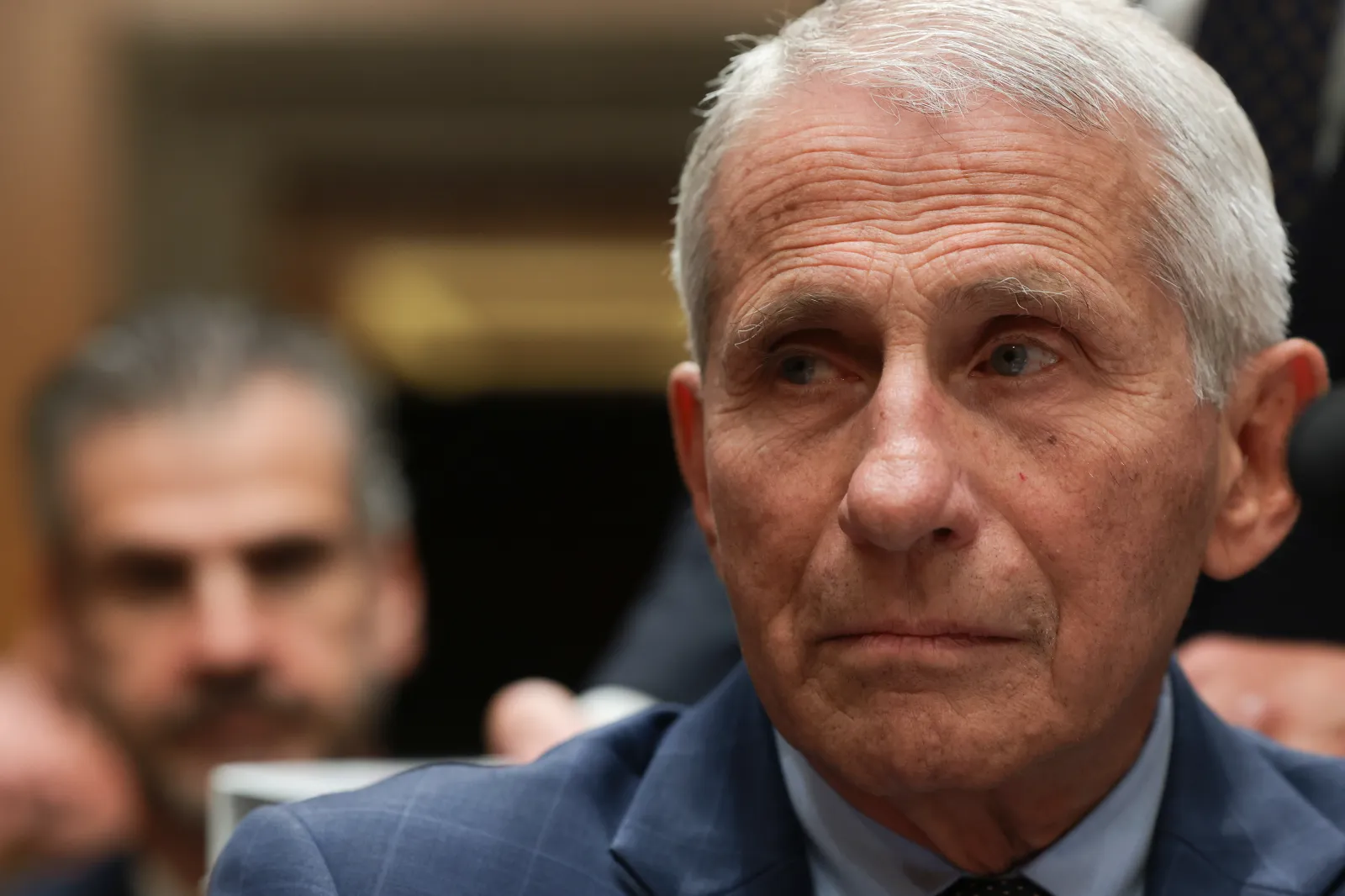
During last week’s testimony, Fauci repeatedly pleaded the Fifth Amendment after stating in his opening statement that Senator Paul had an "obvious obsession" with prosecuting him.
"The only conclusion I can reach is that the sole reason he is calling me before this committee is to get me to say something - anything - that could vindicate his repeated public pledges that I end up, in his words, 'behind bars,'" Fauci said.
...
Paul argued during the hearing that Fauci should not have any such concerns, given the broad, pre-emptive pardon granted to him by Joe Biden at the end of his presidency.
This pardon protected him from federal prosecution over actions taken between 2014 and 2025, but does not shield him from state and local charges, and federal charges after this date.
President Donald Trump was asked Thursday at the White House if the Justice Department should prosecute Fauci, and he pointed to the prosecutions of former aides Peter Navarro and Steve Bannon, who were convicted of contempt of Congress for defying subpoenas from the House January 6 committee, as he argued that Fauci should face similar scrutiny.
"They prosecuted Peter Navarro and they prosecuted Steve Bannon—two very decent people. They went to jail for a number of months. Merrick Garland prosecuted two very decent people and sent them to jail," Trump said. "I wasn't president, but I would have given them a pardon in two seconds. So when you see that happen, you sort of say, maybe he should [be prosecuted]. What he did is far more serious than a lot of crimes, frankly."
On Tuesday, Paul released his contempt resolution against Fauci, and accused him of “obstruction of a congressional investigation.”
“Dr. Fauci appeared under subpoena and invoked the Fifth Amendment to refuse answering questions,” Paul said in a press release. “During the hearing, I ruled that the Fifth Amendment did not apply because of the pardon, and that Fauci had waived any remaining privilege by giving opening testimony. I ordered him to answer and warned him about contempt, yet he still refused.”
“Dr. Fauci was subpoenaed to testify, and refused to answer over 100 times,” Senator James Lankford, one of the Republicans on the committee, posted to X. “That's not accountability to the people we serve. I voted today to hold him in contempt.”
Committee Obtains Phone Ahead of Vote
Ahead of the Contempt of Congress vote, Republicans on the Homeland Security Committee said they had obtained a “copy” of Fauci’s phone.
Writing on X, Senator Ron Johnson of Wisconsin said he hoped the device would “address many of the questions he refused to answer at last week’s hearing.”
According to the Wall Street Journal, which first reported that the committee had obtained the phone, it was used by Fauci during his time as director of the National Institute of Allergy and Infectious Diseases.
This comes after excerpts of Fauci’s diary were released ahead of his Senate hearing. These revealed that he harbored personal doubts about the virus’s origins, as well as concerns about President Donald Trump’s handling of the crisis.
While Johnson did not outline what he or the committee had seen on the phone, a cache of Fauci’s government phone records appeared in Bloomberg in 2024, following a Freedom of Information Act suit filed by the reporter Jason Leopold.
In one exchange, then Republican Senator Mitt Romney urged Fauci to implement tougher quarantine restrictions—"No restaurants, no movies, no shopping, no airplanes, no going to work”—a suggestion Fauci said he would raise with the White House’s COVID task force.
However, Leopold wrote that Fauci “appeared to be aware that his correspondence would be scrutinized,” and that “the messages largely center around the important people who reached out to Fauci in Covid’s early days.”
What Happens Next?
Ahead of Thursday’s vote, Paul pledged to send the committee’s recommendation to the Justice Department, which would bypass a full Senate vote on the matter.
A Senate vote to hold Fauci in contempt would likely fail to meet the 60-vote threshold needed to move forward, given Republicans hold only a narrow majority in the upper chamber.
However, Paul’s resolution outlines that Senate President JD Vance would certify the report on Fauci's refusal to answer questions and forward this to U.S. Attorney for the District of Columbia Jeanine Pirro, leaving any decision on whether to bring charges to the Justice Department.
“There is not a lot of precedent for a lot of this, but it isn’t law so there isn’t any exact procedure that it has to follow,” Paul told CNN on Tuesday. “It’s a referral, it’s a recommendation.”
"A small amount of justice today as Fauci was just voted to be held in contempt of Congress. No one is above the law and especially not a power hungry narcissist," Senator Bernie Moreno posted to X on Thursday. "Next step: DOJ must investigate and prosecute."
"Today’s resolution is a continuation of Senator Paul’s personal vendetta against Dr. Fauci, who spent 50 years in public health and has saved countless lives," Fauci's lawyer told Newsweek. "It is shameful and wrong that Senator Paul is abusing his power by trying to weaponize the Justice Department against an honorable public servant.”
Newsweek has reached out to the Justice Department via email on Thursday morning for comment.
View 0 Comments
Submit Correction
View Editorial & AI Guidelines