...

By Daniella Gray
Reporter
0
Share
Newsweek is a Trust Project member
See more of our trusted coverage when you search.Prefer Newsweek on Googleto see more of our trusted coverage when you search.
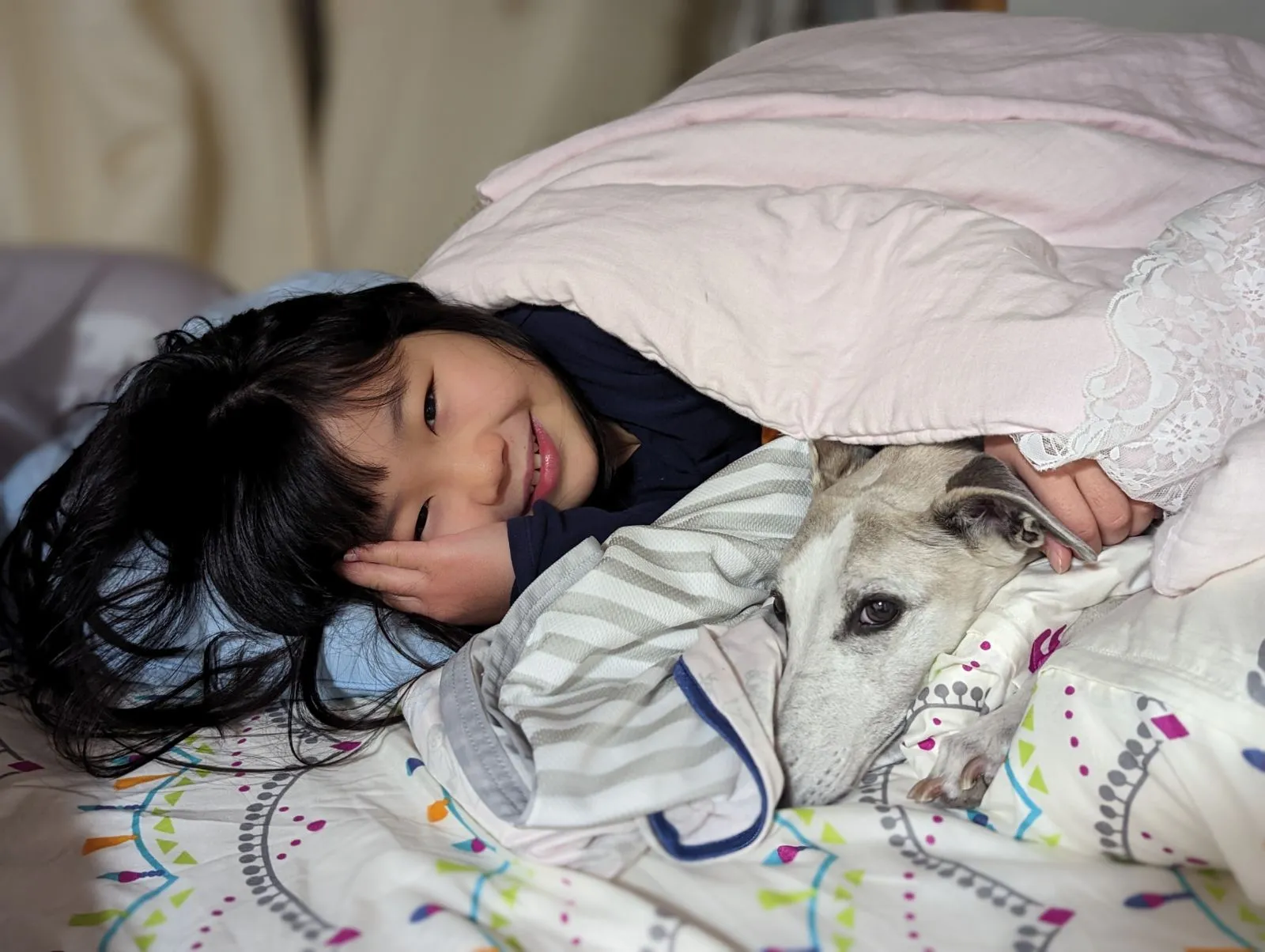
Scientists have long known that dogs can lift our moods. Now, researchers say they may finally understand how.
A new study published in the journal iScience reports that growing up with a family dog reshapes the microbes living in a child’s body—changes that appear to support stronger mental health, empathy and prosocial behavior during adolescence.
“Raising dogs has beneficial effects, especially for adolescents, and these effects may be mediated through symbiosis with microorganisms,” said lead author Takefumi Kikusui of Azabu University, Japan, in a statement.
Read More on Family & Parenting
...
Kikusui’s team has previously shown that children who live with dogs early in life and continue that companionship into adolescence score higher on measures of social support and emotional connectedness.
Other research has suggested that dog owners often show greater diversity in their gut microbiomes. The new study sought to determine whether these microbial differences might be part of the mechanism behind dogs’ mental health benefits.
The researchers followed participants beginning at age 13 and found that owning a dog predicted higher mental health and improved behavioral scores. Adolescents with dogs at home showed notably fewer social problems compared to those without pets. To pinpoint whether the microbiome played a role, the team analyzed oral microbiome samples from the teens.
While the overall microbial diversity was similar between dog-owning and non–dog-owning adolescents, the composition differed. Certain bacteria were more abundant in the group with dogs, leading researchers to suspect these microbes might be tied to psychological outcomes.
To test that theory, they turned to mice. Lab animals treated with microbiota from dog-owning teens behaved differently: they spent more time sniffing cage mates and demonstrated stronger social motivation—especially in a standard test measuring willingness to help a trapped peer. In other words, the microbes alone appeared capable of boosting prosocial tendencies.
“The most interesting finding from this study is that bacteria promoting pro-sociality, or empathy, were discovered in the microbiomes of adolescent children who keep dogs,” Kikusui said.
“The implication is that the benefits of dog ownership include providing a sense of security through interaction, but I believe it also holds value in its potential to alter the symbiotic microbial community.”
The researchers caution that more work is needed to understand the exact mechanisms, but the implications are clear: living with a family dog may nudge the adolescent microbiome in a direction that fosters mental well-being and social connectedness.
Do you have a tip on a health story that Newsweek should be covering? Do you have a question about pets and the gut microbiome? Let us know via health@newsweek.com.
Reference:
Miyauchi, E., Yamaoka, M., Kamimura, I., Mizuta, M., Takenaka, M., Akiyama, U., Kawasumi, M., Sasaki, N., Ohno, H., Ando, S., Yamasaki, S., Nishida, A., Mogi, K., Nagasawa, M., & Kikusui, T. (2025). Dog ownership during adolescence alters the microbiota and improves mental health. iScience. https://doi.org/10.1016/j.isci.2025.113948
View 0 Comments
Submit Correction
View Editorial & AI Guidelines