
...
0
Share
Newsweek is a Trust Project member
See more of our trusted coverage when you search.Prefer Newsweek on Googleto see more of our trusted coverage when you search.
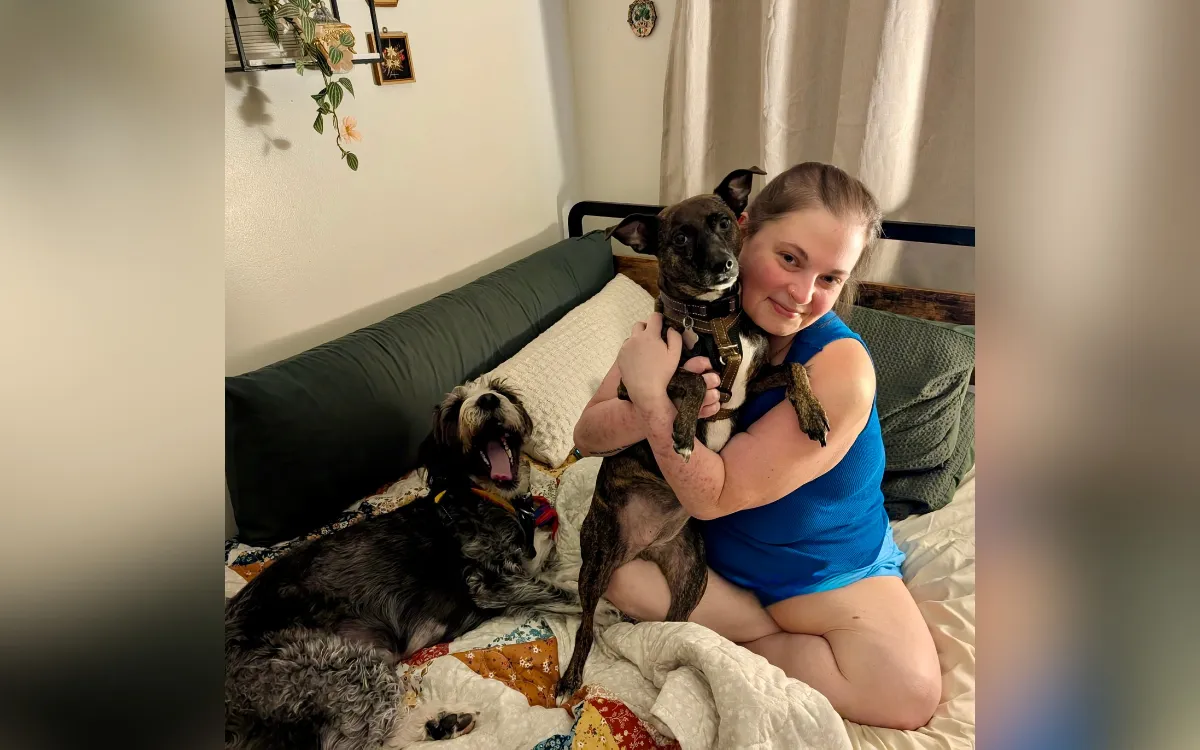
My name is Lizzie. I'm from central Indiana, and for the most part, my life was pretty unremarkable.
I grew up in a loving family with my mom, dad and older brother. My brother and I were adopted because my mother had severe autoimmune issues and couldn't have children herself. In 2002, my childhood changed dramatically when my mother died. I was 16 years old. Soon after, my brother moved out, and my dad and I were on our own until I graduated from high school.
Although I grew up culturally Christian, I didn't become deeply involved in church until I was a teenager. That intensified in 2005 after I met the man who would become my husband. He had been raised in a strict evangelical environment, and together we became immersed in that world: multiple church services each week, Bible studies, youth groups, worship teams and purity culture.
Read More on My Turn
We were taught that sex outside marriage was sinful, that women should become wives and mothers, and that having children was God's plan. We married in 2008, and I fully expected to start a family and stay at home with our children.
Instead, I had my first miscarriage in 2010.
I was about six weeks pregnant when I began bleeding heavily while home alone. I spent hours in agonizing pain, terrified and confused about what was happening to my body. The response I received was that the miscarriage was simply God's plan and that I needed to move on.
Outwardly, I did. Internally, I fell apart.
...
Preparing for Birth and Death
My depression, anxiety and post-traumatic stress disorder returned with full force, and I became obsessed with being the best Christian I could be. I convinced myself that I must have done something wrong. I prayed constantly while enduring years of infertility treatments, medical tests and invasive procedures that left me feeling humiliated and broken.
After six years of trying, I finally became pregnant again in 2016.
But at 19 weeks and four days, everything changed. During our anatomy scan, we were told we were having a daughter, but that her defects were incompatible with life. She had a giant omphalocele, severe scoliosis, a malformed umbilical cord and underdeveloped lungs.
A maternal-fetal medicine specialist recommended terminating the pregnancy. Another encouraged us to continue and let nature take its course.
Because of Indiana law at the time, I had only three days to decide. If I chose termination, I would have needed to travel out of state, something we couldn't afford.
I was devastated and overwhelmed. This pregnancy was supposed to be my redemption after years of infertility and loss. At our next appointment, my husband immediately said we wanted to give our child every possible chance to live. I agreed.
I don't blame him. We were both operating under the same religious beliefs and the same hope that somehow a miracle would happen.
So I carried the pregnancy to term.
The second half of my pregnancy was filled with grief, prayer and denial. We convinced ourselves that if enough people prayed, our daughter would be healed. Deep down, I suspected otherwise.
As her due date approached, we began planning for her death. We asked friends and family to write Christmas cards to her because we knew it would be the only Christmas she would ever have. What surprised me most was how uncomfortable people became. Many simply stopped asking how I was doing. It often felt as though everyone wanted to pretend she didn't exist because the reality was too painful.
On January 24, 2017, I gave birth to Maggie by C-section.
She weighed 4 pounds and measured 16.5 inches long.
...
The moment I saw her, I fell completely in love.
She met family members and was baptized. We took the only photographs we would ever have as a family of three. Then my husband and I spent precious time alone with her.
She died about five and a half hours after she was born, in her father's arms.
A few days later, we returned home to an empty apartment and an empty nursery.
We had Maggie cremated and held a memorial service a month later. Then life continued. There were more losses, more struggles and eventually more miscarriages. After my second and third miscarriages in 2019, I made the difficult decision to stop trying for children. I realized that if I wanted to survive, I could no longer keep sacrificing my body in pursuit of motherhood.
Life After Motherhood
Around the same time, I began pursuing a master's degree and critically examining the religious beliefs that had shaped my life. My husband and I moved to Iowa, and the physical distance from Indiana gave me the emotional space to think clearly.
Over time, I completely deconstructed my evangelical faith and ultimately left Christianity behind.
Today, I consider myself politically engaged, fiercely supportive of LGBTQIA+ rights, committed to therapy and passionate about women's health care. In my 40s, I finally feel like the person I was supposed to be all along: compassionate, curious, well-informed and free.
As I deconstructed my faith, I began asking questions I'd never allowed myself to ask before: Did carrying my daughter to term really help her? Was she suffering? Who did that decision actually serve?
For years, I focused entirely on what was best for my unborn child. I never considered that I mattered too.
The trauma I endured has had lifelong consequences. Alongside preexisting conditions—including polycystic ovary syndrome, depression, anxiety, complex PTSD and adenomyosis—I now live with inflammatory arthritis, fibromyalgia, lupus-related connective tissue disease, eosinophilic esophagitis, mast cell activation syndrome, hypertension and diabetes.
I cannot know for certain whether terminating the pregnancy would have prevented some of those outcomes. But I do know that pursuing motherhood nearly destroyed me physically, emotionally, financially and socially.
That is why I eventually reached a difficult conclusion: I wish I had terminated the pregnancy.
That statement does not mean I didn't love Maggie. It does not mean I regret meeting her, holding her or becoming her mother.
What it means is that I now believe abortion can be a compassionate choice. I believe women deserve the right to make deeply personal medical decisions without religious, political or legal interference.
The grief would have existed regardless. I still would have loved my daughter.
But perhaps I would not be living with some of the lasting consequences of carrying a pregnancy that had no chance of a happy ending.

...
Today, I see Maggie everywhere. My husband and I joke about "Maggie energy" whenever we see videos of mischievous little children. I carry her ashes in a Claddagh ring. I tell stories about her openly, whether it makes people uncomfortable or not.
Maggie was real.
In her memory, I advocate for reproductive health care, compassion and the right of every woman to make her own decisions. I can't take away anyone's grief, but I can remind people facing loss that they are not alone, and that they deserve the freedom to choose what is right for them.
Contact Newsweek editors on this story: Rebecca Flood, Jack Beresford and Shakeema Edwards.
View 0 Comments
Submit Correction
View Editorial & AI Guidelines