...

By Giulia Carbonaro
Senior Reporter
0
Share
Newsweek is a Trust Project member
See more of our trusted coverage when you search.Prefer Newsweek on Googleto see more of our trusted coverage when you search.
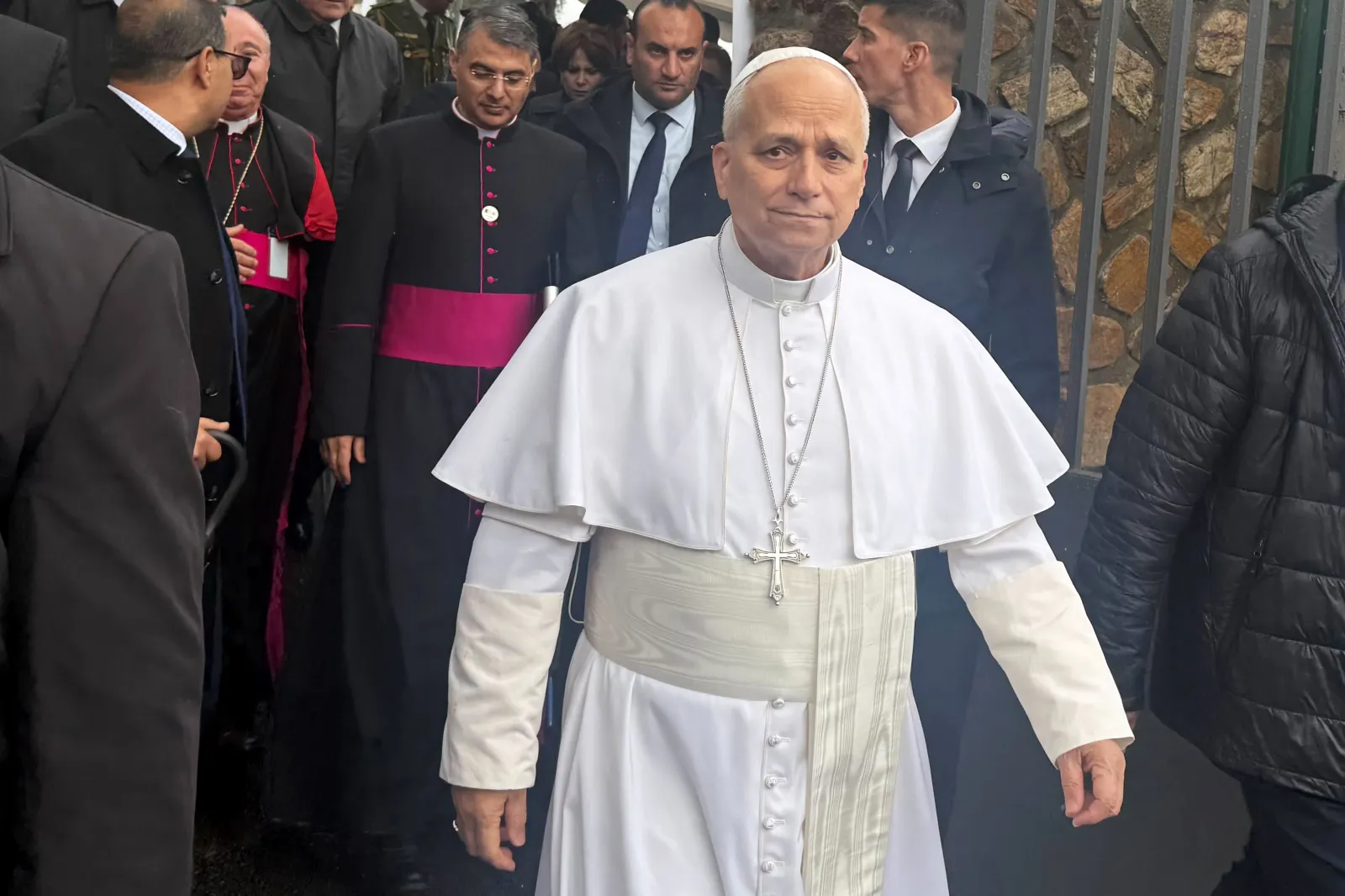
In his latest rebuke of Pope Leo XIV, President Donald Trump accused the pontiff of focusing his criticism of the Iran war on the U.S. instead of lamenting the Middle Eastern country’s violent crackdown on protesters earlier this year.
“Will someone please tell Pope Leo that Iran has killed at least 42,000 innocent, completely unarmed, protesters in the last two months, and that for Iran to have a Nuclear Bomb is absolutely unacceptable,” Trump wrote on Truth Social. “Thank you for your attention to this matter. AMERICA IS BACK!!!”
Leo, who became the first American-born pope last year after being chosen to succeed Francis, has been a staunch critic of the Iran war. In an April 10 post on X, the pontiff condemned the “absurd and inhuman violence” that is “spreading ferociously through the sacred places of the Christian East.”
Read More on News
During evening prayer at St. Peter’s Basilica a day later, Pope Leo blamed the war on the “delusion of omnipotence that surrounds us and is becoming increasingly unpredictable and aggressive.”
How Many Protesters Have Been Killed In Iran?
...
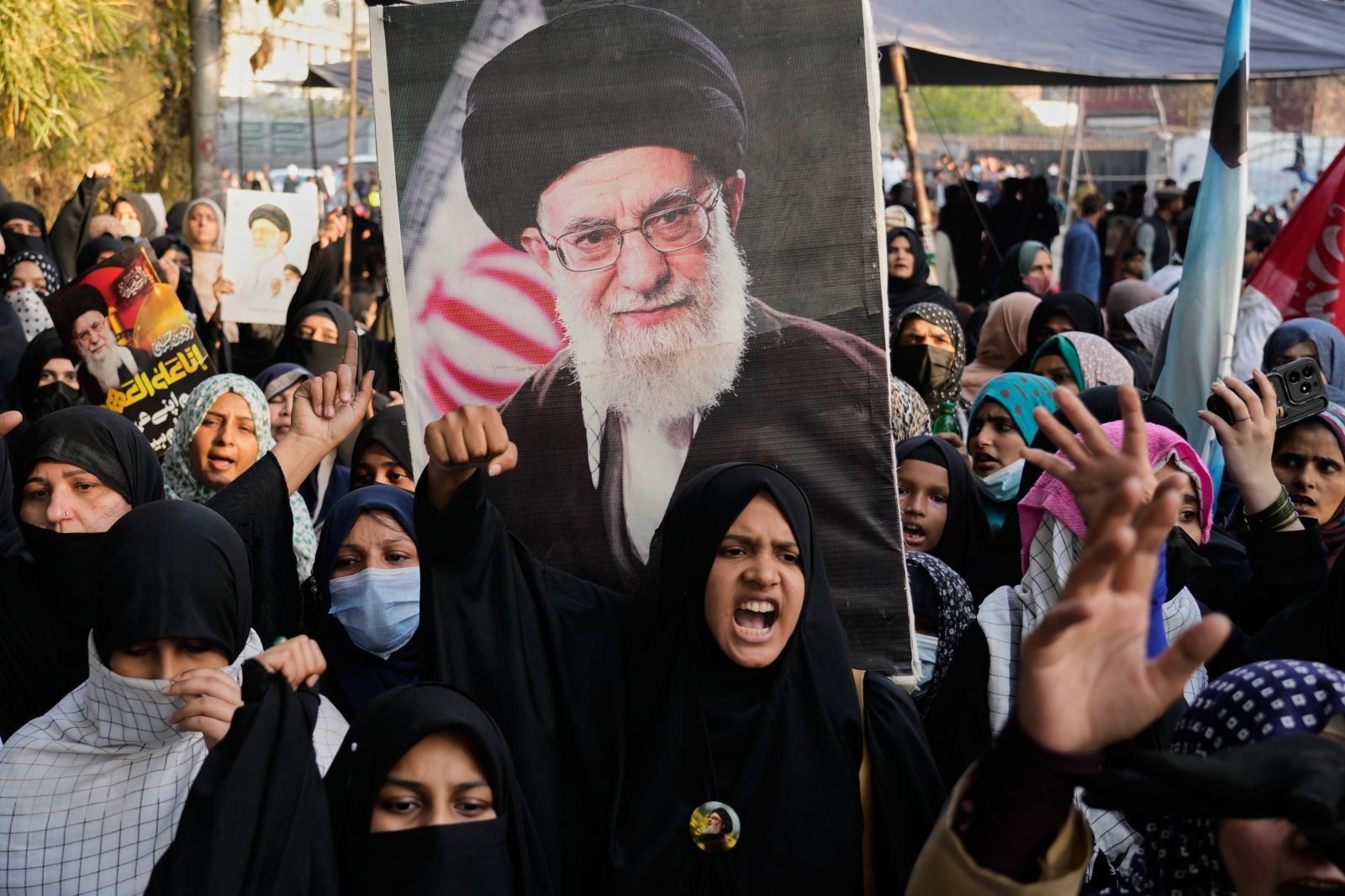
Between late December and January, as inflation soared and living conditions in the country worsened, Iran was stormed by hundreds of protests all across the country.
The regime, led by Supreme Leader Ali Khamenei, responded to the demonstration with a violent crackdown, arresting and reportedly killing thousands of protesters while cutting all internet access. On February 28, after the U.S. and Israel launched joint strikes on the country, the government once again cut access to the internet, leaving many with limited information about the war occurring at their doorstep.
Estimates of the number of protesters killed by Khamenei’s regime in January vary, but they are considered to be in the thousands. Amnesty International called January “the deadliest period of repression by the Iranian authorities” in decades of its research.
During a public speech on January 17, Khamenei said “thousands of people” were killed, as reported by Amnesty International. On 21 January, Iran’s Supreme Council of National Security issued a statement saying that 3,117 people were killed during the protests.
Other sources estimate higher figures. The UN Special Rapporteur on Iran, Mai Sato, said in an interview on January 16 that at least 5,000 people had been killed, but based on information from medical sources the death toll could have been as high as 20,000.
U.S.-based nonprofit NGO Human Rights Activists in Iran (HRANA) reported in late January that 42,324 protesters had been arrested, not killed. The organization estimated the number of reported deaths at 6,221.
What Has Pope Leo Said About the Protests?
The only time Pope Leo spoke about the protests in Iran and the Iranian regime’s violent crackdown on the demonstrations was during a speech on January 11, though the statement was not directly targeted at the Middle Eastern country.
“My thoughts turn to the situation currently unfolding in the Middle East, especially in Iran and Syria, where ongoing tensions continue to claim many lives,” the pontiff said during the Angelus, a prayer designed to commemorate the mystery of Jesus’ Incarnation, while addressing the crowd gathered in St. Peter’s Square.
“I hope and pray that dialogue and peace may be patiently nurtured in pursuit of the common good of the whole of society.”
...
While the Holy See does not intervene directly into the internal affairs of individual states, there were signs that Vatican officials were dismayed by the situation in Iran in January.
“I wonder how it is possible to attack one’s own people, to the point of causing so many deaths,” Cardinal Pietro Parolin, the Vatican secretary of state, said during a celebration for the exposition of a relic in Rome on January 19, as reported by EWTN.
And What About the Iran War?
Since the U.S. and Israel launched joint strikes on Iran on February 28, the pope has repeatedly condemned the war in the Middle East.
During the Angelus on March 1, Leo said: “I am following with deep concern what is happening in the Middle East and in Iran during this tumultuous time. Stability and peace are not achieved through mutual threats, nor through the use of weapons, which sow destruction, suffering, and death, but only through reasonable, sincere, and responsible dialogue.
“Faced with the possibility of a tragedy of immense proportions, I make a heartfelt appeal to all the parties involved to assume the moral responsibility of halting the spiral of violence before it becomes an unbridgeable chasm. May diplomacy regain its proper role, and may the well-being of peoples, who yearn for peaceful existence founded on justice, be upheld. And let us continue to pray for peace.”
A week later, on March 8, he repeated his worries about the then expanding conflict.
“Deeply disturbing news continues to arrive from Iran and the entire Middle East,” he said during the Angelus in St. Peter’s Square.
“In addition to the episodes of violence and devastation as well as the widespread climate of hatred and fear, there is also the concern that the conflict will spread and that other countries in the region, including beloved Lebanon, may again sink back into instability.”
On March 11, speaking again in St. Peter’s Square, he urged faithfuls to “continue to pray for peace in Iran and throughout the Middle East, especially for the many civilian victims, including many innocent children.”
During his Palm Sunday speech on March 29, he made an indirect comment on the Iran war, saying: “Brothers and sisters, this is our God: Jesus, King of Peace, who rejects war, whom no one can use to justify war. He does not listen to the prayers of those who wage war, but rejects them.”
On March 31, he made a direct appeal to Trump, telling reporters at his residence in Castel Gandolfo, near Rome, that the U.S. president was “hopefully” looking “for an off-ramp.”
“Hopefully he’s looking for a way to decrease the amount of violence,” he said, as reported by the Associated Press.
On April 7, he made a direct criticism of Trump after the president threatened to eradicate a “whole civilization” in Iran. “Today, as we all know, there was this threat against the entire people of Iran, and this is truly unacceptable,” he told reporters, as quoted by Reuters.
“There are certainly issues here of international law, but even more than that, it is a moral question for the good of the [world’s] people,” he said.
On April 10, he made another vague remark about the Iran war, saying that “God does not bless any conflict.”
On Monday, April 13, after Trump called him “weak” on crime and “terrible” for foreign policy, urging him to “get his act together as Pope,” Leo told reporters he had “no fear” of the Trump administration.
“I have no fear of the Trump administration, or speaking out loudly of the message of the Gospel, which is what I believe I am here to do,” he told The New York Times.
“I do not look at my role as being political, a politician. I don’t want to get into a debate with him,” he added. “I don’t think that the message of the Gospel is meant to be abused in the way that some people are doing.”
View 0 Comments
Submit Correction
View Editorial & AI Guidelines