
...

By Amanda Greenwood
Associate News Editor
0
Share
Newsweek is a Trust Project member
See more of our trusted coverage when you search.Prefer Newsweek on Googleto see more of our trusted coverage when you search.
Amazon spent the last decade training shoppers to expect two-day, then next-day shipping. In 2026, it’s making the case that even same-day delivery is no longer the ceiling.
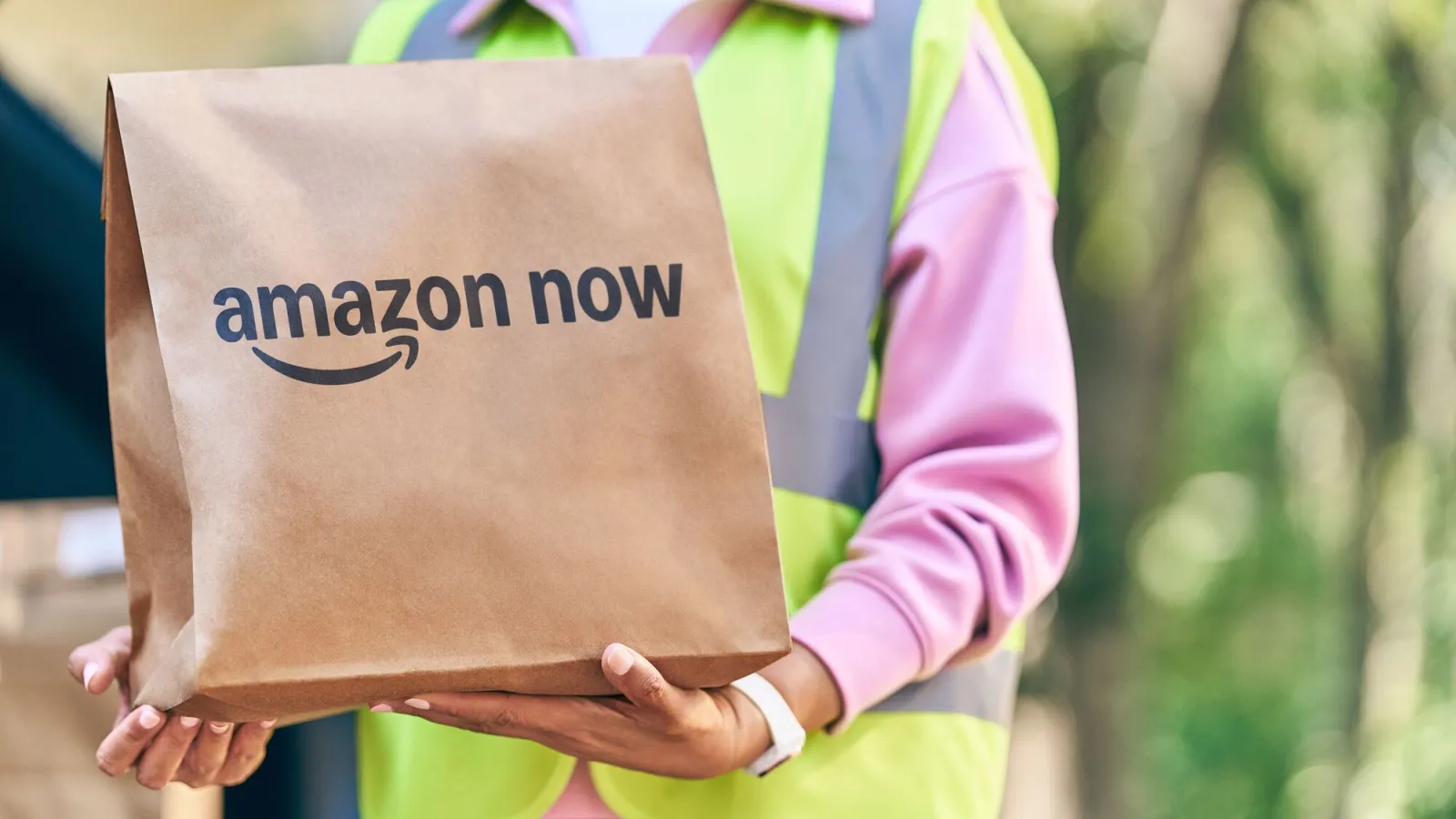
The company’s newest push—“Amazon Now,” a 30-minute-or-less delivery service rolling out across some major metros—signals that Amazon is stepping up, into the realm of true “quick commerce,” a space traditionally led by Instacart, DoorDash, and Uber Eats.
And it’s not happening in isolation.
Read More on News
Amazon Now arrives alongside a wave of Prime delivery upgrades already underway this year, including 1-hour and 3-hour delivery windows for a broad selection of items (similar to what you’d find in big-box supercentre stores like Walmart or Target), plus a continued expansion of same-day and next-day delivery into smaller towns and more rural communities.
Below is what Amazon is doing in 2026 to get your packages to your doorstep faster—and what this could mean for how you shop going forward.
...
Amazon Now: 30-Minute Delivery
This is Amazon’s most aggressive mainstream speed play yet.
Amazon Now is designed to help you get what you need, the moment you realize you’re out of something—like milk right before breakfast, batteries for a remote, a phone charger before you’re about to head out on a long road trip, or cough medicine after symptoms just hit.
Amazon said the service will deliver thousands of items in about 30 minutes or less, and it’s expanding rapidly across the U.S.
...
Key points
- Rolling out in dozens of cities: It’s already widely available in Atlanta, Dallas–Fort Worth, Philadelphia, and Seattle, with rapid expansion underway in places like Austin, Houston, Minneapolis, Orlando, Phoenix, Denver, and Oklahoma City, among others.
- Focused on groceries and essentials: The assortment is built around emergency purchases, such as fresh groceries, over-the-counter medical supplies, and household staples.
- Powered by small urban fulfillment hubs: Amazon said it’s using a network of smaller fulfillment locations placed closer to where customers live and work to cut delivery time to 30 minutes or less.
- Prime members pay reduced fees: Prime members will pay a $3.99 delivery fee per order, while non-Prime shoppers will pay $13.99 (with additional small-order fees for baskets under $15).
Put simply: This is not for big-item purchases, like TVs or furniture—it’s for “I forgot something” emergency shopping.
Prime’s New 1-Hour And 3-Hour Delivery Expansion
If “Amazon Now” is the flashy new headline, the 1-hour and 3-hour delivery expansions are the quieter shift that could affect more people more often.
Amazon said it’s expanded its 1-hour and 3-hour delivery eligibility to cover over 90,000 products, with 1-hour delivery available in “hundreds of cities and towns” and 3-hour delivery now available in over 2,000 locations.

...
Key points
- Broad category coverage: Eligible items available for 1-hour or 3-hour delivery span similar “supercenter” staples as Amazon Now, including groceries and pantry items, toiletries, over-the-counter medicine, electronics, toys, clothing, home and garden, and more.
- Available in hundreds of locations: According to Amazon, 1‑hour delivery is currently offered in major cities and metro areas, including Los Angeles, Chicago, Oklahoma City, and Nashville, while 3‑hour delivery reaches a broader mix of large, mid-sized, and smaller communities—such as Cornwall, Pennsylvania; Harrah, Oklahoma; and Arabi, Louisiana.
- Checking if products are eligible for 1 or 3-hour delivery: Amazon shoppers can use tools, including zip-code availability checks and search filters (“in 1 hour” / “in 3 hours”) that will surface products that can be delivered in either 1 or 3 hours.
Amazon isn’t just competing with other online stores anymore—it’s trying to compete with supermarkets, convenience stores, and delivery apps such as DoorDash for those urgent, everyday needs.
Same-Day And Next-Day Delivery Are Expanding Beyond Big Cities

...
Since June last year, Amazon has been investing to push same-day and next-day delivery deeper into smaller communities, including plans to expand faster Prime delivery to more than 4,000 smaller cities, towns, and rural communities, backed by a multi-billion-dollar buildout intended to scale through 2026.
Even if you don’t live in a top-tier city, Amazon is aiming to make faster delivery available to more suburban and rural Prime customers by positioning high-demand items, such as dog food, batteries, and paper towels, closer to where they live.
Drone Delivery Is Quietly Expanding
Drone delivery remains the most futuristic pillar of Amazon’s delivery strategy—and arguably, it’s also the one with the most “asterisks.”
Amazon said its Prime Air drones can deliver packages that weigh up to five pounds in under 60 minutes, and has been pushing regulators for standards that would allow broader scaling.
But outside Amazon’s own framing, the program has faced technical challenges, safety incidents, and regulatory hurdles that complicate mass expansion.
The upshot: drones are part of the roadmap, but they’re not yet the backbone.
The Hidden Story: Amazon Is Trying To Become Your “Default Emergency Store”
The strategic shift is bigger than speed. Amazon used to compete loudly on price and selection. Now it’s pushing into immediacy. It’s trying to be faster than driving to the store.
That puts it in tighter competition with retailers and delivery platforms that have leaned into convenience—Walmart, Instacart, DoorDash, Uber Eats, for example.
But What’s The True ‘Cost’ Of Faster Delivery. And Who Can Actually Get It?
Here’s the fine print that matters most to shoppers:
- Amazon Now: Prime members must pay $3.99 per order, while non-Prime members need to pay $13.99 per order, with small-order fees applying to orders under $15.
- 1-hour / 3-hour delivery: Offered only in eligible areas for certain, qualifying items.
- Geographic limits apply: All ultra-fast options are ZIP-code dependent and tied to what inventory is nearby.
View 0 Comments
Submit Correction
View Editorial & AI Guidelines