10
Loading video...

By Aliss Higham
Reporter
0
Share
Newsweek is a Trust Project member
See more of our trusted coverage when you search.Prefer Newsweek on Googleto see more of our trusted coverage when you search.
All four active U.S. district judges in Middle Tennessee have recused themselves from a lawsuit brought by Republican Tennessee Senator Marsha Blackburn against former special counsel Jack Smith over the collection of her phone records.
Blackburn filed the lawsuit on September 30 over Smith’s Arctic Frost investigation into efforts to overturn the 2020 election. As part of that inquiry, investigators obtained phone metadata linked to Blackburn and several other lawmakers.
She said obtaining the records violated her constitutional rights, while Smith has said the records did not include call contents and that his office consulted the Justice Department’s Public Integrity Section before issuing the subpoenas.
Read More
Amy Coney Barrett Raises ‘Quibble’ in Big Oil Supreme Court Case4 min read

Judge Weighs Case Against Trump, Natalie Harp After Truth Social Change5 min read

What Supreme Court Said About Rare Power Trump Uses To Defy Congress5 min read

An order filed October 5 in the U.S. District Court for the Middle District of Tennessee said, “All District Judges of the Middle District of Tennessee have recused in this matter.”
The order, signed by Chief U.S. District Judge William L. Campbell Jr., said a judge from outside the district will now be designated by the U.S. Court of Appeals for the 6th Circuit and the case will then be reassigned.
The October 5 order does not state a reason for the recusals and does not say that any judge has a specific conflict of interest or bias in connection with the litigation. Two of the judges were appointed by President Donald Trump, one by President Bill Clinton and one by President Barack Obama.
"New Civil Liberties Alliance (NCLA) received notice that the district judges in the Middle District of Tennessee have recused themselves from the case, but has no further information concerning the basis for recusal," Margaret Harker, attorney for Blackburn, told Newsweek. "We look forward to vindicating Senator Blackburn’s civil liberties as the case continues.”
...
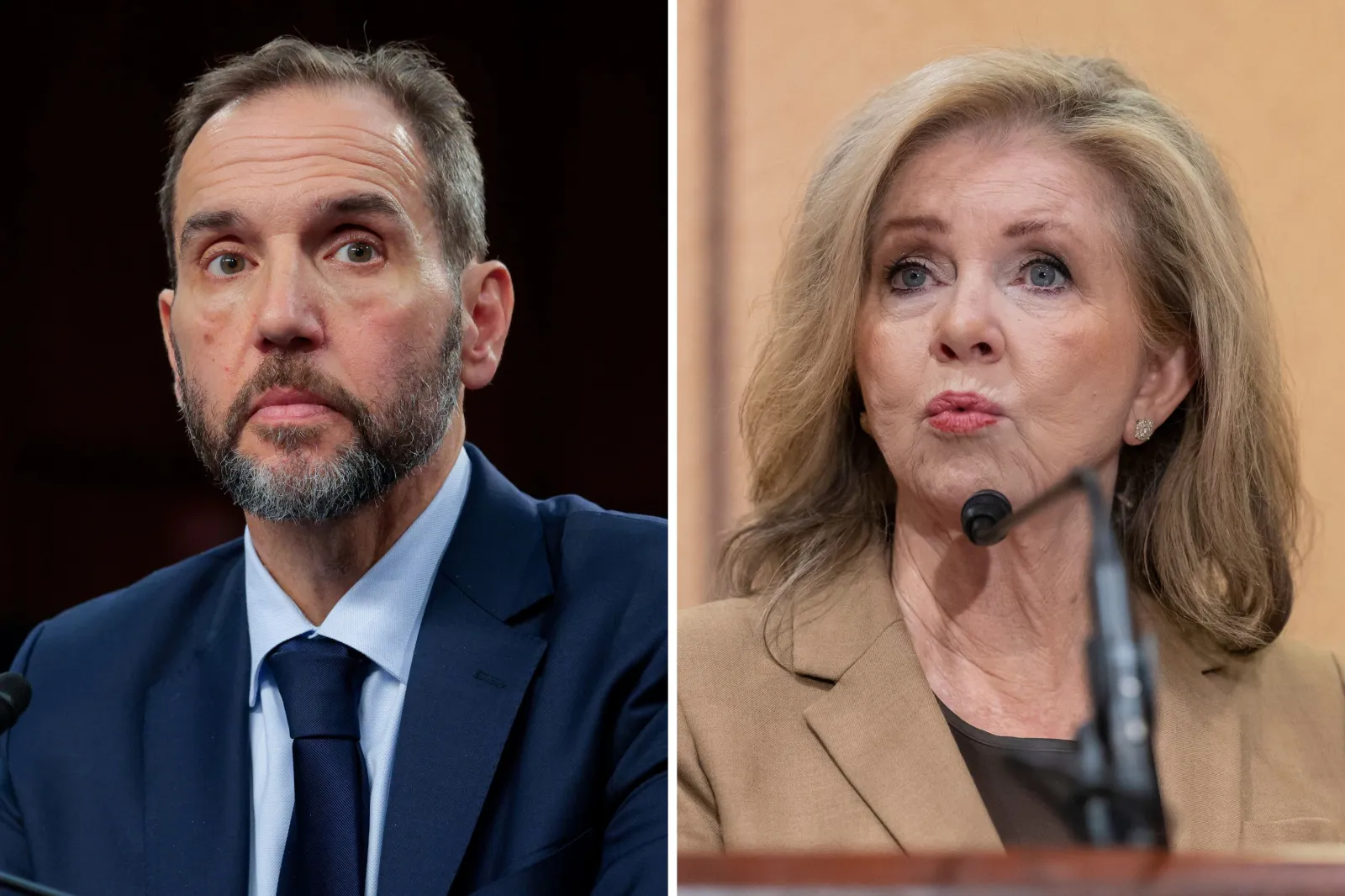
Blackburn vs. Smith
Blackburn filed the lawsuit against Smith personally on September 30, focusing on phone toll records obtained during the federal investigation known as Arctic Frost, which examined efforts surrounding the certification of the 2020 presidential election.
According to Blackburn’s 46-page complaint, Smith and others who worked on the investigation subpoenaed toll records associated with a cellphone she used for legislative purposes. The lawsuit said those records revealed who Blackburn communicated with and the times and durations of the communications. It does not allege that investigators intercepted the contents of her calls.
Smith has previously said his efforts obtain lawmakers’ phone records was cleared by the Justice Department’s Public Integrity Section and complied with all department regulations.
"Through his Arctic Frost witch hunt that targeted conservatives across America and even the President of the United States, Jack Smith perpetrated one of the worst abuses of government power in our nation's history," Blackburn said. "This lawsuit is solely about holding Mr. Smith accountable and ensuring that our nation's justice system can never again be weaponized against the American people."
The lawsuit alleges violations of the Speech or Debate Clause, First Amendment and Fourth Amendment, and also challenges the legality of Smith’s appointment as special counsel.
Blackburn is seeking declarations that Smith’s appointment and the collection of her records were unlawful, orders requiring the return or destruction of certain records, and $1 in nominal damages from Smith.
Why Can Federal Judges Recuse Themselves?
The October 5 order simply records that the judges have recused and provides no further explanation.
Federal law requires judges to step aside from cases under a range of circumstances intended to protect the impartiality of the courts.
Under 28 U.S.C. § 455, a federal judge must disqualify themselves whenever their “impartiality might reasonably be questioned.” The statute also identifies more specific grounds, including personal bias or knowledge of disputed facts, previous involvement in the matter as a lawyer or government official, certain financial interests, or specified relationships involving a party, lawyer or person with an interest in the case.
The federal judiciary’s Code of Conduct for United States Judges contains similar rules, requiring disqualification when a judge’s impartiality could reasonably be questioned.
Who Are the Judges?
The Middle District currently has four district judges. They are:
- William L. Campbell Jr., the court’s chief judge, nominated to the Middle District of Tennessee by President Donald Trump in July 2017 and confirmed by the Senate in January 2018. He has served as chief judge since 2024.
- Aleta A. Trauger, nominated by President Bill Clinton in September 1998 and confirmed the following month.
- Waverly D. Crenshaw Jr., nominated by President Barack Obama in February 2015 and confirmed in April 2016. He served as the district’s chief judge from 2017 until 2024.
- Eli J. Richardson, nominated by President Trump and confirmed by the Senate in October 2018.
What Happens Next
The case will now remain without a permanent assigned district judge until the Sixth Circuit designates a judge from outside Middle Tennessee to hear it.
Contact Newsweek editor on this story: Matthew Cannon and Edward Pearcey.
View 0 Comments
Submit Correction
View Editorial & AI Guidelines