...

By Monica Sager
Live News Reporter
0
Share
Newsweek is a Trust Project member
See more of our trusted coverage when you search.Prefer Newsweek on Googleto see more of our trusted coverage when you search.
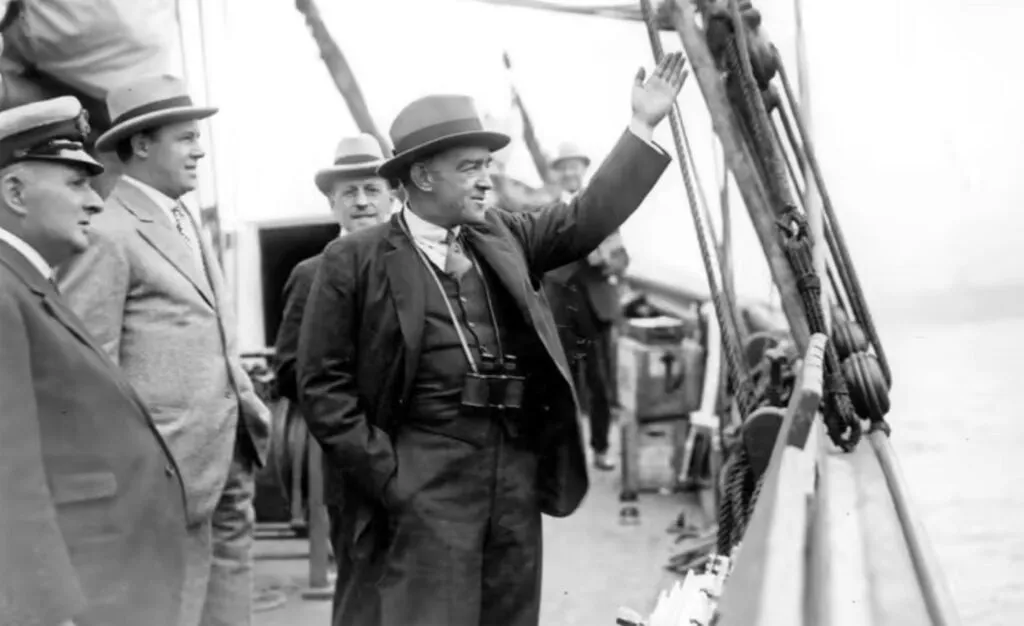
An expedition of shipwreck hunters has found the wreckage of the last ship of legendary polar explorer Sir Ernest Shackleton on the bottom of the Atlantic Ocean.
The vessel, called Quest, was discovered on Sunday by a team led by the Royal Canadian Geographical Society (RCGS), sitting mostly intact on the floor of the Labrador Sea, between Greenland and Newfoundland.
"Finding Quest is one of the final chapters in the extraordinary story of Sir Ernest Shackleton," said expedition leader John Geiger. "Shackleton was known for his courage and brilliance as a leader in times of crisis."
Read More on News
...
Geiger announced the discovery at a press conference on Wednesday.
"This is a very important vessel," Geiger said. "There's huge interest in Shackleton. This is the 150th anniversary of his birth this year."
Shackleton led three British expeditions to the Antarctic before he died of a heart attack aboard the Quest in 1922. The ship continued to be used for various purposes until it sunk in 1962.
"The tragic irony is that his was the only death to take place on any of the ships under his direct command," Geiger said of the legendary explorer.

...
The hunt for 'Quest'
Geiger led an international team of deep-sea explorers on a months-long hunt to find the remains of Shackleton's last ship. They consulted ship logs, newspaper clippings and legal documents, according to the RCGS.
In a telegram to the ship's then-owners in Norway, captain Olav Johannessen noted in 1962 Quest's final position: 53'10 N, 54'27 W.

...
The group cross-referenced the coordinates with historic weather and ice data to determine with a "high degree of accuracy Quest's final resting place on the seabed," and then used advanced sonar to locate the wreckage.
"I can definitively confirm that we have found the wreck of Quest," said shipwreck hunter David Mearns. "Data from high resolution side-scan sonar imagery corresponds exactly with the known dimensions and structural features of this special ship and is also consistent with events at the time of the sinking."
The sonar equipment spotted the remains of the125-foot long Schooner-rigged steamship 1,280 feet below the Labrador Sea on Sunday.

...
The wreckage was largely intact and sitting upright on the seafloor, according to the expedition. The mast, which is the line coming out of the ship in the sonar image, is broken and hangs over the portside.
The detailed imagery allowed the team to measure the dimensions of the ship, which Mearns said identically match Shackleton's vessel. The next step is to deploy remote-operated vehicle to photograph the Quest up close.
"The vessel's ultimate resting place is poignant given that Shackleton originally intended to use Quest for a Canadian Arctic expedition before the government of then-Prime Minister Arthur Meighen pulled the plug," according to the RCGS.
"Forced to change plans at the eleventh hour, Shackleton then headed south to Antarctica. The find creates a tangible link between Canada and a towering figure in polar exploration."

...
Shackleton is perhaps best known for leading the ship Endurance on an ill-fated mission to the South Pole more than 100 years ago. The Endurance became trapped in the Antarctic ice pack in 1915 and sunk, though Shackleton and the entire crew made it out alive in what is still considered one of the most harrowing tales of survival on the high seas.
The Endurance's wreckage was discovered in 2022, almost perfect intact on the Antarctic seafloor.
View 0 Comments
Submit Correction
View Editorial & AI Guidelines