...

By Jordan King
Reporter
0
Share
Newsweek is a Trust Project member
See more of our trusted coverage when you search.Prefer Newsweek on Googleto see more of our trusted coverage when you search.
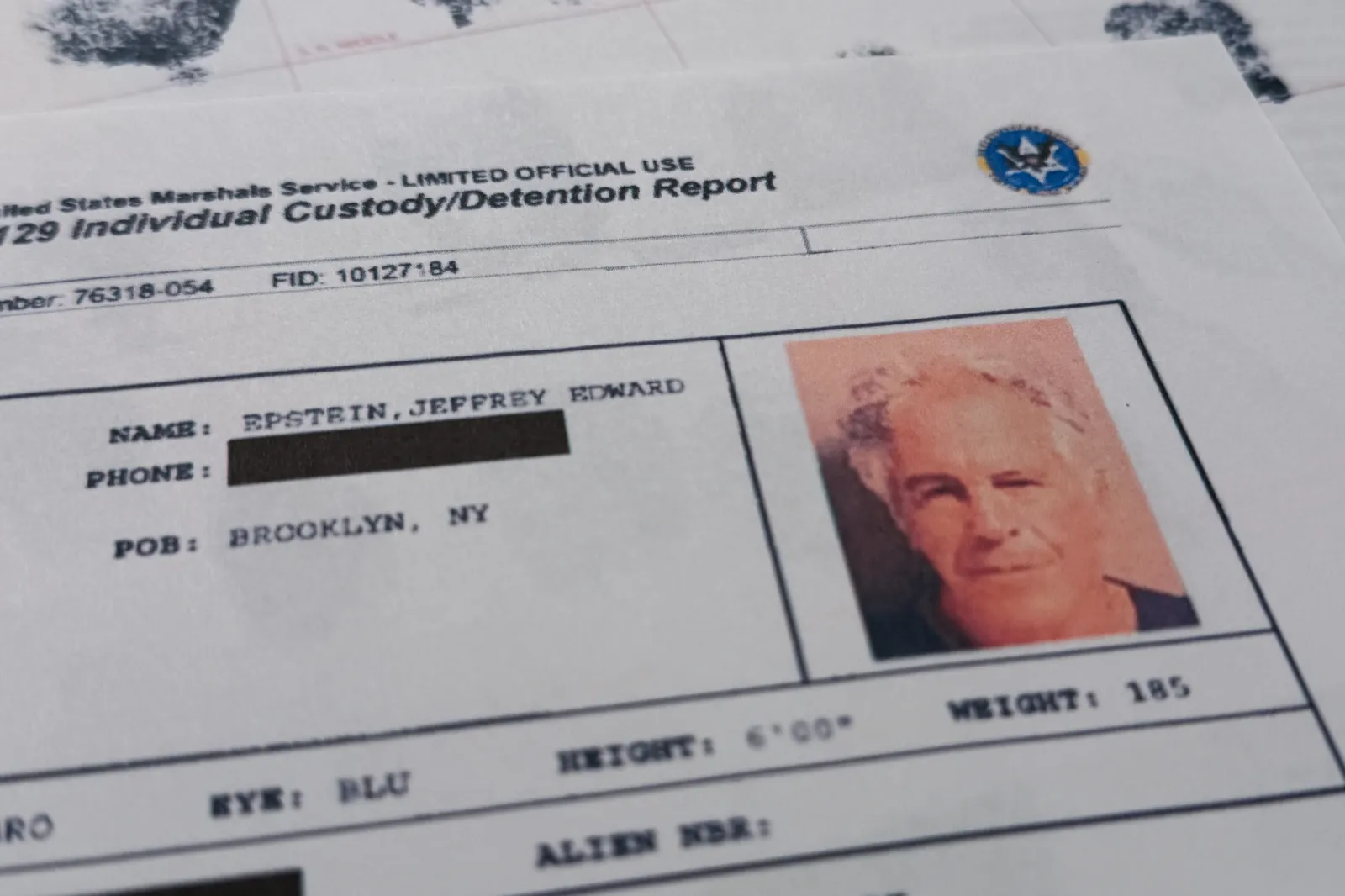
Lawyers for hundreds of alleged Jeffrey Epstein victims have asked two federal judges in New York to order the Department of Justice (DOJ) to temporarily take down its Epstein files website, citing an "unfolding emergency" and alleging widespread redaction failures that exposed victims' identities.
Newsweek obtained the letter sent by Brittany Henderson and Brad Edwards to U.S. District Judges Richard Berman and Paul Engelmayer in the Southern District of New York on Sunday.
They wrote: "On Friday, January 30, 2026, the Department of Justice publicly released more than 3.5 million Epstein-related documents while failing to redact victim names and other personally identifying information in thousands of instances, despite repeated representations that redaction was the sole reason for delayed release and DOJ’s acknowledgment that failure to redact would cause extraordinary harm to victims."
Read More on News
Deputy U.S. Attorney General Todd Blanche said on Sunday that redaction errors impacted "about 0.001 percent of all the materials," adding that, given the volume of the material being reviewed, there "would be times when this happened."
"We’re working hard to fix that, and I expect that will continue," he told ABC News' This Week.
Newsweek reached out to the DOJ via online contact form for comment outside of normal working hours.
Why It Matters
The government’s release of the Jeffrey Epstein files was meant to fulfill a promise of transparency after criticism from lawmakers and victims' advocates of secrecy around how federal authorities handled investigations into his sex trafficking network.
The DOJ has said repeatedly that the main reason for the delay in making the files public has been the process of redacting identifying information for Epstein’s alleged victims to protect their privacy and safety, but lawyers for alleged victims say this has not been done properly.
In a case that has already reshaped public understanding of Epstein’s network and the limits of institutional accountability, how the DOJ balances victim protection with legal obligations for openness will continue to shape both public perception and potential legal outcomes.
What To Know
On Friday, the DOJ published more than 3 million new pages relating to the late financier and convicted sex offender, under the Epstein Files Transparency Act, signed into law by President Donald Trump in November.
The batch includes about 2,000 videos and 180,000 images, Newsweek previously reported. Newsweek has also reported on some of the major figures named in the files here.
But Henderson and Edwards said that, within 48 hours of the files being published on Friday, they reported "thousands of redaction failures on behalf of nearly 100 individual survivors whose lives have been turned upside down by DOJ’s latest release."
...
The attorneys said that "concerns regarding victim protection and the necessity of proper redactions were first raised with Attorney General Pam Bondi on February 28 2025," after her release of "The Epstein Files: Phase 1."
They also said that a second batch of files released on November 12 was "littered with failed redactions, causing widespread panic amongst the survivors of Jeffrey Epstein all over the world."
The Epstein Files Transparency Act was signed into law a week later, but when the DOJ carried out its first release under the act on December 20, Henderson and Edwards notified the DOJ of hundreds of alleged redaction failures.
They said they received "countless messages from women who this release is actively harming...Women who trusted me and trusted you to ensure that this would not happen. Women who are in direct contact with you and with your office regarding the prevention of the disclosure of their names.
"These same women have been up all night using DOJ’s search bar to identify and read every single document that was posted publicly identifying them despite being promised by your office that this would never happen."
One anonymous alleged victim said in testimony included in the letter: "I have never come forward! I am now being harassed by the media and others. This is devastating to my life…Please pull my name down immediately as every minute that these document with my name are up, it causes more harm to me…Please, I’m begging you to delete my name!!! I can only imagine the devastation your errors are causing to so many other victims of Jeffrey Epstein."
They continued: "Wasn’t the only job to redact victim names? Hasn’t every person with authority promised repeatedly that victims have nothing to worry about because our names will be redacted? Hasn’t the entire delay of producing documents been allegedly because you have been redacting names?"
Edwards and Henderson have demanded an "immediate takedown of the DOJ website hosting Epstein materials" and an independent Special Master "to oversee redaction and republication."
"Done correctly and with competent supervision and intention, the entirety of the documents could be re-published, with proper redactions, within a day of taking them down," they wrote.
What People Are Saying
Deputy Attorney General Todd Blanche told ABC News: "We took great pains...to make sure that we protected victims. Every time we hear from a victim or their lawyer that they believe that their name was not properly redacted, we immediately rectify that."
He added: "The nature of this type of review was so -- the volume of materials that were reviewed, that there would be times when this happened. And so we're, we're working hard to make sure that we fix that, and I expect that that will continue."
An unnamed Epstein accuser said: "My name and personal information including my full address have not been redacted yet on the files already released. To the contrary, more files including my personal information and even a PHOTO of mine have been released."
They added: "I am especially in a life-threatening situation because I live overseas in [my home country] where I received many death threats because of Epstein."
What Happens Next
The judges could consider ordering the DOJ to temporarily remove the files, implement additional safeguards, or appoint a special master to oversee redactions before any reposting, as requested by victims’ counsel.
The DOJ has urged anyone affected by potentially inappropriate disclosures to contact the department and has said it will correct any redaction errors.
In a polarized era, the center is dismissed as bland. At Newsweek, ours is different: The Courageous Center—it's not "both sides," it's sharp, challenging and alive with ideas. We follow facts, not factions. If that sounds like the kind of journalism you want to see thrive, we need you.
When you become a Newsweek Member, you support a mission to keep the center strong and vibrant. Members enjoy: Ad-free browsing, exclusive content and editor conversations. Help keep the center courageous. Join today.


View 0 Comments
Submit Correction
View Editorial & AI Guidelines